Rock surface choice
Mount the lichen on stable, non-calcareous rock like granite or basalt, as acidic rocks better match its natural habitat and support long-term attachment.

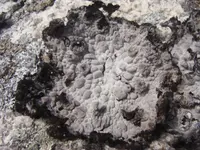
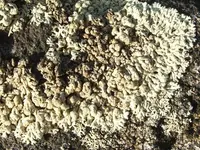
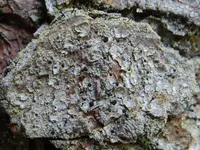
Blistered navel lichen, Lasallia pustulata, is a foliose lichen, not a true plant, formed by a partnership between a fungus and photosynthetic algae. It grows as a single, rounded thallus that hugs rock surfaces, with a blistered, warted texture and a central navel-like attachment point.
It naturally occurs on exposed acidic rocks in cool, humid regions of Europe and North America, especially in mountains and coastal areas. This lichen grows very slowly and is sensitive to air pollution and disturbance, which makes it challenging to cultivate and explains why guides on how to care for blistered navel lichen are limited.
In general, it prefers clean air, steady moisture from rain or fog, and shaded to lightly exposed rock rather than soil or organic substrates.

Care Difficulty
Hard Care

Light Preference
Full Sun

Water Requirements
Low Water

Temperature Preference
Cold Hardy

Hardiness Zone
3–8

Soil Texture
Rocky, Sandy

Soil pH
Strongly acidic (4.5–5.5), Acidic (5.5–6.5)

Soil Drainage
Well-drained

Fertilization
Minimal (feed rarely)
Scan your plant to receive care tips personalized for your specific plant
Available on iOS and Android
This rock-dwelling lichen thrives in bright, cool sites with filtered to partial sun exposure.
This lichen absorbs water from rain, mist, and surface moisture rather than from soil like a typical plant.
This hardy lichen tolerates wide outdoor temperatures but performs best in consistently cool to mild conditions.
Humidity strongly influences growth and survival of this rock-dwelling lichen in cultivation.
This lichen anchors to rock rather than using true soil, but a mineral-based substrate can help in cultivation setups.
This species is only marginally suitable for container growing and is best treated as an experimental or educational culture.
Lasallia pustulata, a rock-dwelling lichen, obtains nutrients primarily from rain, dust, and its substrate, so extra fertilizer is not needed.
Lasallia pustulata does not require conventional pruning, but limited cleaning can help maintain healthy thalli on display surfaces.
This lichen is normally established on stable rock rather than grown in pots, so management focuses on careful transplanting rather than frequent repotting.
Reproducing Lasallia pustulata is slow and specialized, so most growers rely on conserving existing colonies rather than active propagation.
Blistered navel lichen is naturally cold hardy and usually needs no special winter care in outdoor rock gardens or native habitats.

Plant Health Check
Not sure what's wrong with your plant? Check your plant's health inside the app.
The thallus of this lichen forms a single, rounded leaf-like structure covered with raised, wart-like pustules that give the surface a strongly blistered appearance when dry and moist.
This species grows tightly attached to siliceous rocks in open, sun-exposed sites, often in montane or coastal areas with clean air, and is frequently used as an indicator of low air pollution.
The species declines rapidly in areas affected by acid deposition and industrial emissions, so its presence on exposed rocks often signals relatively unpolluted, stable environmental conditions.

This lichen relies on a green alga as its photosynthetic partner and can completely shut down metabolism during prolonged drying, then rapidly resume activity when moistened, allowing it to survive repeated cycles of desiccation on bare rock surfaces.
Growth is very slow. The thallus usually expands only a few millimeters per year, depending on moisture, light, and air quality. In stable, clean environments, it may take decades to form a hand-sized colony.
Keep your plants happy and healthy with plant identification, disease detection, and easy care guidance.