Succession Sowing
Sow a small batch of seed every 2–3 weeks in early spring to stagger flowering and keep the display of tidy tips going longer into the season.

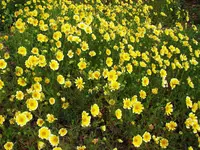
Tidy tips (Layia platyglossa) is a low-growing annual wildflower from dry, open habitats in California and parts of the southwestern United States. It belongs to the daisy family and completes its life cycle in a single growing season.
Plants form small clumps with bright yellow daisy-like flowers edged in white, creating a sharp, clean bicolor look. The stems are usually slender and branching, giving a light, airy appearance in garden beds or meadow plantings.
This species adapts fairly well to poor, well-drained soils and dry conditions, which makes it suitable for low-input, water-wise gardens. Sun-loving and relatively undemanding, it is considered easy to grow once established, so learning how to care for tidy tips is straightforward for most gardeners.

Care Difficulty
Easy Care

Light Preference
Full Sun

Water Requirements
Low Water

Temperature Preference
Warm Climate

Hardiness Zone
6–10

Soil Texture
Sandy, Loamy, Rocky

Soil pH
Slightly acidic (6.5–7.0), Neutral (7.0)

Soil Drainage
Well-drained

Fertilization
Minimal (feed rarely)
Scan your plant to receive care tips personalized for your specific plant
Available on iOS and Android
Layia platyglossa thrives in bright, open sites with strong direct sun.
This annual prefers slightly dry, fast-draining conditions rather than constant moisture.
This spring annual grows best in mild conditions and dislikes hard frost or extreme heat.
This annual wildflower tolerates a wide humidity range and rarely needs special humidity control.
Layia platyglossa prefers lean, fast-draining soil that mimics its native, open habitats.
This species can be grown in containers if the potting setup emphasizes sharp drainage and root aeration.
Layia platyglossa is a low-nutrient annual that usually needs little or no fertilizer, especially in garden soil.
Pruning mainly supports continuous bloom and neat appearance in Layia platyglossa.
This annual wildflower is usually grown in the ground, with transplanting focused on young seedlings rather than mature plants.
New plants are typically produced from seed, which makes growing tidy tips straightforward for most gardeners.
Layia platyglossa is a warm-season annual, so the original plants do not overwinter, but seed can persist for next year.

Plant Health Check
Not sure what's wrong with your plant? Check your plant's health inside the app.
This species is a short-lived annual native mainly to lowland California, where it often appears in great numbers only in winters with sufficient rainfall and then disappears again until the next favorable year.
Its flower heads have bright yellow ray florets with sharply defined white tips, a distinctive pattern created by changes in pigment production toward the outer part of each petal-like ray.
The stems and leaves bear sticky, glandular hairs that release a resinous scent, which is thought to deter some herbivores and may help reduce water loss in its open, often dry habitats.

In the early 20th century, this species was widely used in California wildflower seed mixes to restore colorful spring displays along roadsides and fields, helping popularize native wildflower gardening in the region.
Poor flowering usually comes from too much shade, excess nitrogen fertilizer, or soil that stays wet. Ensure full sun, lean well-drained soil, and avoid high-nitrogen feeds. Deadhead spent blooms to encourage continued bud formation and better display.
Keep your plants happy and healthy with plant identification, disease detection, and easy care guidance.