greyshank bolete Care (Leccinum cyaneobasileucum)

greyshank bolete

About greyshank bolete

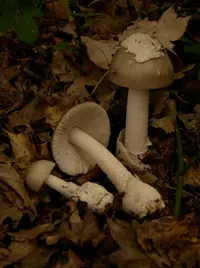
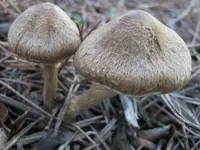
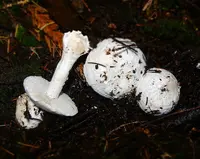
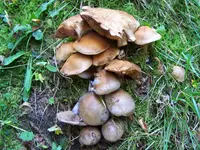
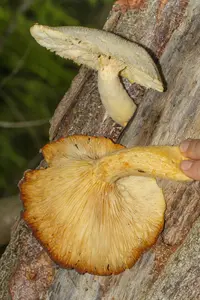
Leccinum cyaneobasileucum, commonly called the greyshank bolete, is a mycorrhizal fungus, not a leafy houseplant. It forms a partnership with tree roots, helping them absorb water and nutrients while taking sugars from the host tree. The mushroom has a pale to grayish cap, a stout stem often shaded bluish or gray near the base, and appears from the forest floor rather than from wood.

This species is typically found in temperate woodlands, especially with birch or related trees, in soil rich in organic matter. It is not practical to cultivate, since the fungus depends on a living tree partner, so any guide on how to care for greyshank bolete focuses mainly on protecting its woodland habitat and host trees.

Main Plant Requirements

Care Difficulty

Hard Care

Light Preference

Partial Shade

Water Requirements

Keep Soil Moist

Temperature Preference

Cool Climate

Hardiness Zone

Unknown

Soil Texture

Loamy, Sandy, Organic-rich

Soil pH

Acidic (5.5–6.5)

Soil Drainage

Moist but well-drained

Fertilization

Minimal (feed rarely)

Get Personalized Care Plan

Scan your plant to receive care tips personalized for your specific plant

Available on iOS and Android

How to Care for the greyshank bolete

This ectomycorrhizal fungus prefers dappled woodland light rather than full, open sun.

  • Provide 2–5 hours of gentle, filtered light under deciduous trees; bright shade the rest of the day supports fruiting bodies best for greyshank bolete.
  • Avoid strong midday sun in open clearings, which can dry the upper soil layer and litter too quickly and shorten mushroom lifespan.
  • In summer, favor morning sun with afternoon shade; in cooler spring and autumn conditions, slightly more indirect light is acceptable without stressing the mycelium.

This species depends on consistently moist, not saturated, forest soil to support healthy mycelium and mushroom production.

  • Aim for soil that feels evenly moist 5–10 cm deep; surface leaf litter may dry slightly between rains but deeper layers should not become dusty or hard.
  • In dry spells, supplemental watering in naturalistic plantings is only needed if the top 5–8 cm stay dry for several days and associated trees begin to wilt.
  • Avoid standing water and heavy compaction, which limit oxygen and can rot fine roots and Leccinum cyaneobasileucum mycelium; foul odor or slimy litter often signals excess moisture.

This fungus develops best in cool to mild conditions typical of temperate forests.

  • Optimal fruiting usually occurs around 55–68°F (13–20°C), with the underground mycelium remaining active over a slightly wider range.
  • Tolerated air temperatures extend roughly from 40–77°F (4–25°C), but rapid swings between day and night can reduce fruit body quality.
  • Frost below 32°F (0°C) can damage exposed mushrooms, while extended heat above 82°F (28°C) dries substrates too fast, so prime seasons are spring and autumn in many regions.

This ectomycorrhizal fungus depends on consistently moist, humid forest conditions rather than controlled indoor humidity.

  • Target ambient humidity around 60–80% with evenly moist, not saturated, upper soil and leaf litter layers.
  • It tolerates only brief dry spells; prolonged air dryness and crusted substrate quickly stop fruiting and mycelial expansion.
  • Signs of humidity stress include caps failing to emerge, aborting pins, and rapid cracking or shriveling of young fruiting bodies.
  • Increase local humidity outdoors by maintaining a thick, damp mulch layer and gentle, infrequent misting of surrounding leaf litter, not the caps.

Leccinum cyaneobasileucum fruits in loose, well‑aerated, organic forest soils closely associated with tree roots.

  • Use a sandy to sandy‑loam substrate rich in well‑decomposed leaf litter or composted bark to mimic natural woodland conditions.
  • Ensure very rapid drainage; water should percolate through within seconds, leaving the surface moist but never waterlogged or anaerobic.
  • Maintain soil pH around 5.0–6.5, favoring slightly acidic conditions typical of birch or mixed temperate forests.
  • Improve aeration and structure by blending coarse sand and fine bark with leaf mold, and avoid compacted clay, peat‑only mixes, or any site that remains soggy.

This species is not well suited to container cultivation because it relies on ectomycorrhizal association with host tree roots in open ground.

This mycorrhizal fungus develops best in nutrient-balanced forest soil and usually does not need additional feeding.

Pruning is not applicable to Leccinum cyaneobasileucum, as it is a wild ectomycorrhizal mushroom rather than a managed garden plant.

Transplanting efforts for this species focus on supporting its tree partners rather than moving the fungus itself.

  • Avoid disturbing existing colonies; digging, soil removal, or root damage can reduce future fruiting.
  • If moving host trees, expect that the mycelium network in the original soil will not transfer reliably.
  • Container culture is generally unsuitable, since the fungus depends on extensive contact with living tree roots.
  • For those aiming to grow Leccinum cyaneobasileucum, maintain undisturbed, well-drained soil around compatible trees instead of transplanting.

Intentional propagation of this ectomycorrhizal bolete is unreliable and usually left to natural spore spread and root associations.

This temperate woodland mushroom is naturally cold hardy and needs no dedicated winter care in outdoor settings.

Care Tips

Host tree selection

Establish this mycorrhizal fungus near suitable host trees such as birch or aspen, since it relies on their roots for nutrients and will not fruit reliably in isolated beds without an appropriate partner.

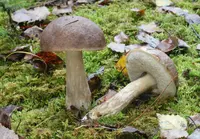
Undisturbed leaf litter

Maintain a loose layer of leaf litter and fine twigs over the colonized area to protect the fungal mycelium, moderate moisture and temperature, and provide a stable environment for fruiting bodies to emerge.

Minimal soil disturbance

Avoid digging, tilling, or compacting the soil where the fungus is established, since mycelial networks are easily damaged by physical disruption and heavy foot traffic.

Spore distribution method

Place mature, soft caps in a bucket of non-chlorinated water, stir, then pour this spore-rich slurry around the root zone of compatible trees to increase the chances of colonization when trying to grow Leccinum cyaneobasileucum.

Targeted harvesting technique

Harvest mushrooms by cutting the stem at soil level with a clean knife rather than pulling, which helps reduce damage to the underground mycelium and preserves future fruiting potential.

Common Pests and Diseases

Mycena galericulata decay

This disease involves fruitbodies being colonized and decomposed by the bonnet mushroom Mycena galericulata, leading to rapid softening and collapse of caps and stems. Symptoms include water‑soaked tissue, loss of structural firmness, and fast disintegration in moist conditions.

Solution

Remove and discard decaying fruitbodies as soon as they soften to reduce local spore load, and avoid piling cut or damaged mushrooms on the ground near healthy ones. Improve airflow and avoid excessive watering or misting over the fruiting area, since drier surfaces slow the spread of saprotrophic competitors.

Bolete fly larvae

This pest involves fly larvae (maggots) tunneling inside the mushroom flesh, especially in older or slower‑developing fruitbodies. Symptoms include small entry holes, spongy or discolored flesh, and visible white larvae when the stem or cap is cut open.

Solution

Harvest fruitbodies promptly when caps are firm and before they fully expand, since early picking greatly reduces infestation rates. In cultivation or garden settings, use fine mesh over the fruiting zone during peak fly activity to limit egg‑laying, and promptly remove heavily infested mushrooms to prevent further breeding nearby; these steps are a key part of caring for greyshank bolete.

Slug and snail grazing

These animals rasp the surface of caps and stems, leaving irregular holes, ragged edges, and slime trails. Symptoms include missing tissue on the lower stem and cap margins, especially in damp, shaded spots.

Solution

Hand‑pick slugs and snails during the evening or early morning and relocate or dispose of them away from the fruiting area. Use physical barriers such as copper tape collars, rough mineral bands, or elevated racks over the soil to make access to emerging mushrooms more difficult without altering the mycorrhizal soil too much.

Mouldy overgrowth

This disease is caused by opportunistic mould fungi colonizing damaged or water‑logged fruitbodies, leading to fuzzy white, gray, or green growth on caps and stems. Symptoms include surface mycelium, off‑odors, and rapid collapse of affected tissue in very humid, stagnant air.

Solution

Remove mouldy or bruised fruitbodies immediately and dispose of them away from the host trees to reduce spore spread. Improve ventilation, avoid overhead watering, and space collection baskets or trays so that mushrooms are not stacked tightly, since lower humidity and better airflow strongly limit mould development.

Bacterial soft rot

This disease develops when bacteria invade bruised or saturated tissue, causing slimy, foul‑smelling decay that starts in moist contact points. Symptoms include wet, greasy patches on stems or caps that quickly turn brown and collapse.

Solution

Handle harvested mushrooms gently, keep them cool, and avoid storing them in sealed, humid containers where condensation forms on the surface. In outdoor patches, avoid trampling and excessive irrigation around fruiting areas, and promptly collect or remove injured mushrooms to limit bacterial build‑up in dense stands.

Interesting Facts

Blue-staining stem base

The stem base of this bolete often shows a distinct bluish discoloration when handled or cut, caused by rapid oxidation of specific pigment compounds in its tissues.

Specialist birch associate

This species forms ectomycorrhizal partnerships with birch trees, exchanging mineral nutrients and water from the soil for sugars produced by the tree through photosynthesis.

Patchy European distribution

Documented records show this bolete from scattered sites in parts of Europe, particularly in cooler, birch-dominated habitats, and it is not considered a widespread or common species.

FAQs about greyshank bolete

This species is generally considered an edible wild mushroom when correctly identified and thoroughly cooked. However, similar-looking boletes can be harmful, so foraging should rely on expert confirmation, not photos or casual field guides.

Grow Healthy Plants with Botan Care

Keep your plants happy and healthy with plant identification, disease detection, and easy care guidance.

Botan plant care app — identify plants on mobile

Explore More Plants