Edge containment
Install a shallow physical barrier 5–8 cm deep around planting areas to keep rhizomes from creeping into beds or lawns while still allowing the colony to fill in as a groundcover.

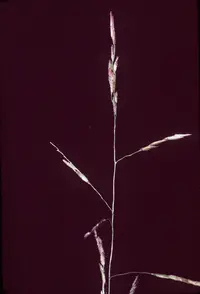
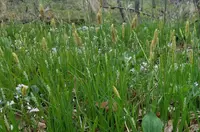
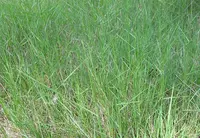
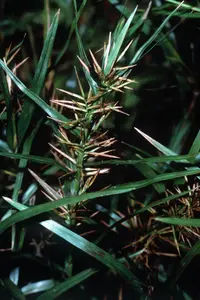
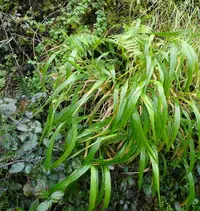
Whitegrass, Leersia virginica, is a native perennial grass commonly found in moist woodlands, streambanks, and shaded lowlands in eastern North America. It forms loose, low patches rather than dense turf. The plant has slender, somewhat rough leaves and delicate, airy flower clusters that give a soft, fine-textured look. It spreads by rhizomes, gradually creating groundcover in consistently damp sites. Whitegrass prefers shade to partial shade and moist, humus-rich soils, and it tolerates periodic flooding. These traits make it fairly easy to grow in the right setting but poorly suited to dry or compacted yards. Gardeners who care for whitegrass should plan for its spreading habit and need for steady moisture.

Care Difficulty
Moderate Care

Light Preference
Partial Shade

Water Requirements
Keep Soil Moist

Temperature Preference
Cold Hardy

Hardiness Zone
4–9

Soil Texture
Loamy, Silty, Organic-rich

Soil pH
Acidic (5.5–6.5), Slightly acidic (6.5–7.0)

Soil Drainage
Waterlogged tolerant

Fertilization
Minimal (feed rarely)
Scan your plant to receive care tips personalized for your specific plant
Available on iOS and Android
Leersia virginica prefers consistent shade to part shade with only brief direct sun exposure.
This species is a moisture-loving grass that performs best in consistently damp soil.
This woodland grass is hardy in cool to warm temperate climates and tolerates seasonal temperature shifts well.
This species prefers consistently moist air but adapts to a fairly wide humidity range.
Leersia virginica grows best in consistently moist, fine-textured soil that mimics a wet woodland or streambank.
This species can be grown in containers if moisture needs are met carefully.
Leersia virginica is a woodland native that usually needs minimal feeding when grown in reasonably rich, moist soil.
Pruning Leersia virginica is mainly for tidiness and to manage spread rather than for flowering.
This species is most often grown in the ground, so focus on dividing and transplanting clumps rather than frequent repotting.
Leersia virginica plant care often includes periodic division, which is the most reliable way to increase plants.
This woodland grass is cold hardy in much of its native range and usually needs little special winter care in the ground.

Plant Health Check
Not sure what's wrong with your plant? Check your plant's health inside the app.
Leersia virginica forms loose colonies in shaded, moist deciduous forests, where its shallow, fibrous roots help it exploit the upper soil layer rich in leaf litter and organic matter.
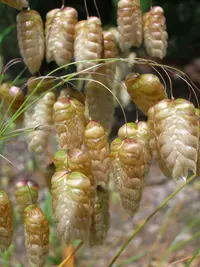
The species produces small, awnless spikelets (grass flowers) that are only weakly rough to the touch, which helps distinguish it from related Leersia species with more bristly, awned flowering structures.
Flowering usually occurs in mid to late summer, but the fruits often mature and persist into fall, allowing the plant to disperse seed after many competing woodland herbs have already senesced.

Leersia virginica is considered an important diagnostic species for some eastern North American forest community types, and its presence is sometimes used by plant ecologists to help characterize moist, shaded, high-quality woodland habitats in vegetation surveys.
This species spreads by short rhizomes and can slowly form patches, especially in consistently moist sites. It is not usually a rampant spreader, but can fill in open soil if conditions remain favorable over several seasons.
Keep your plants happy and healthy with plant identification, disease detection, and easy care guidance.