runner mesemb Care (Leipoldtia schultzei)

runner mesemb

About runner mesemb

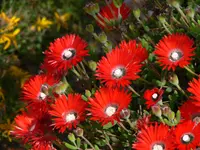
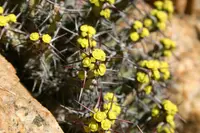
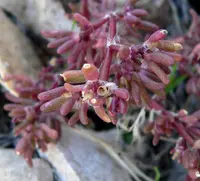
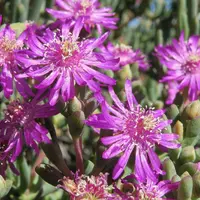
Runner mesemb, Leipoldtia schultzei, is a compact, mat-forming succulent from arid regions of southern Africa. It has small, fleshy, paired leaves that store water and form low cushions or trailing stems. Dense clusters of daisy-like flowers, often in pink to magenta tones, appear above the foliage and create a bright display in dry conditions. This plant is adapted to strong sun, poor soils, and irregular rainfall, which makes it well suited to rock gardens, containers, and windowsills with good light. Its drought tolerance and slow growth rate generally make it easy to maintain once established. Gardeners who care for runner mesemb mainly need to provide sharp drainage and avoid prolonged wetness around the roots.

Main Plant Requirements

Care Difficulty

Moderate Care

Light Preference

Full Sun

Water Requirements

Low Water

Temperature Preference

Warm Climate

Hardiness Zone

10–11

Soil Texture

Sandy, Loamy, Rocky

Soil pH

Slightly acidic (6.5–7.0), Slightly alkaline (7.0–7.5)

Soil Drainage

Well-drained

Fertilization

Minimal (feed rarely)

Get Personalized Care Plan

Scan your plant to receive care tips personalized for your specific plant

Available on iOS and Android

How to Care for the runner mesemb

Leipoldtia schultzei thrives in bright, dry conditions with strong sun exposure.

  • Provide 6–8 hours of direct sun daily, ideally with morning sun and lighter afternoon exposure, especially in hotter regions.
  • Allow light partial shade in the hottest afternoon hours to prevent leaf scorch, especially during heatwaves above 95°F (35°C).
  • Outdoors, choose an open, south- or west-facing spot; in low-light seasons, ensure no shading from taller plants or structures to prevent weak, stretched growth in runner mesemb.

This drought-tolerant succulent needs infrequent but deep watering in very free-draining soil.

  • Water only when the top 3–5 cm of soil are completely dry, then soak thoroughly so water drains quickly away from the roots.
  • Reduce watering sharply in cool seasons, giving just enough to prevent shriveling leaves; in summer growth, slight but firm plumpness indicates adequate moisture.
  • Watch for soft, yellowing, or translucent leaves and a sour soil smell as signs of overwatering, and wrinkled, thin leaves as a cue to water soon for Leipoldtia schultzei.

This species prefers warm, dry air and handles heat better than cold or damp conditions.

  • Aim for 65–85°F (18–29°C) for active growth, with low humidity and good air movement to prevent fungal issues in compact rosettes and stems.
  • Protect from frost; short dips to 32°F (0°C) may be survived if soil is bone-dry, but foliage damage is likely and repeated freezing can kill the plant.
  • In hot spells above 95°F (35°C), provide light afternoon shade and avoid overhead watering in late day to reduce stress and tissue scorching.

This species prefers dry air and usually performs well in typical indoor humidity.

  • Aim for 25–40% humidity, similar to an arid room environment, as higher levels increase rot risk.
  • Dry air is well tolerated; problems arise mainly when air stays humid and cool for prolonged periods.
  • Watch for soft, translucent stems or musty odor as signs of excess humidity and improve air circulation rather than misting.

Leipoldtia schultzei needs a very fast-draining, mineral-heavy substrate to prevent root and stem rot.

  • Use a gritty, sandy mix such as 1 part cactus potting mix with 2 parts mineral material like pumice, coarse sand, or fine gravel.
  • Keep structure open and airy; particles should be coarse enough that water drains through within seconds, not minutes.
  • Aim for slightly acidic to neutral pH around 6.0–7.0, avoiding strongly acidic, peat-heavy blends.
  • Avoid dense loam, clay, or mixes with much compost, which retain moisture and exclude air from the roots.

This species is very suitable for container growing due to its compact, trailing habit.

  • Choose a wide, shallow pot that allows stems to spread while keeping the root zone close to the warm upper soil layer.
  • Use unglazed terracotta if extra evaporation is needed, as it helps the mix dry quickly after watering.
  • Raise the container on feet or mesh so drainage holes remain clear and runoff leaves the pot area rapidly, reducing rot risk.

Leipoldtia schultzei is a low-feeding succulent that benefits from light, infrequent nutrition during its active season.

  • Use a diluted balanced liquid fertilizer (for example 10-10-10) at 1/4–1/2 strength during spring–summer growth.
  • Feed every 4–6 weeks only if growth is active; skip if the plant already grows and flowers well.
  • Avoid rich compost or heavy organic feeds that stay wet, as runner mesemb prefers lean, fast-draining soil.
  • Stop feeding in fall and winter when growth slows, to prevent soft, frost-sensitive tissue.

Leipoldtia schultzei needs only light pruning to maintain a compact, tidy form.

  • Best time is late winter or early spring, just before active growth begins.
  • Use clean, sharp scissors or small pruning shears to remove dead, damaged, or shriveled stems.
  • Shorten overly long, leggy runners to encourage branching and denser growth.
  • After flowering, lightly trim spent flowered tips if they look untidy, avoiding heavy cutting into older woody bases.

This succulent prefers to stay slightly root-bound and only needs occasional repotting or transplanting.

  • Check for roots circling the pot, emerging from drainage holes, or slowed growth as signals to repot.
  • Plan repotting for late winter to early spring, about every 3–4 years, using a fast-draining cactus mix.
  • Choose a pot only 1–2 in wider than the old one to limit excess moisture around the roots.
  • Gently loosen the root ball, remove old soggy soil, and water lightly after repotting to reduce stress and rot risk.

Leipoldtia schultzei is commonly propagated from stem cuttings and sometimes from seed under controlled conditions.

  • Take 5–8 cm non-flowering stem cuttings in spring or early summer, using a clean, sharp blade.
  • Allow cut ends to callus for 2–3 days, then place in barely moist, gritty, well-draining mix.
  • Provide bright, indirect light and warm temperatures around 70–80°F to encourage rooting.
  • For seeds, sow on the surface of a sandy mix, keep slightly moist, and maintain gentle warmth until germination.

This succulent dislikes hard frost and needs protection in colder climates.

  • In regions below 25°F, grow in containers and move plants indoors to a bright, cool, frost-free spot for winter.
  • Keep soil almost dry in winter, watering only enough to prevent complete shriveling of stems.
  • Outdoors in mild climates, use a gravel mulch around the base to improve drainage and reduce cold, wet soil damage.

Care Tips

Encourage Compact Growth

Pinch or lightly trim overly long shoots after flowering to keep the plant low and dense, which helps prevent leggy, weak growth in bright indoor or greenhouse conditions.

Use Wide, Shallow Pots

Plant in a broad, shallow container rather than a deep one so the fibrous, surface-leaning roots can spread horizontally and the soil dries evenly between waterings.

Top-Dress With Grit

Apply a 0.5–1 cm layer of coarse sand or fine gravel on the soil surface to keep stem bases dry, reduce algae growth, and minimize fungus gnat activity.

Rotate For Even Light

Turn the pot 90° every 1–2 weeks during active growth so all sides receive similar light, which promotes symmetrical mats rather than one-sided, stretched stems.

Cool, Bright Winter Rest

If possible, overwinter the plant in a bright spot at 45–55°F with very light watering, which supports a natural rest period and improves flowering performance when growing runner mesemb in the next season.

Common Pests and Diseases

Mealybugs

This pest often hides in stem joints and along the wiry runners, sucking sap and causing yellowing, stunting, and sooty mold on the waxy leaves. Symptoms include cottony white clusters that are easy to overlook among the small, fleshy foliage.

Solution

Isolate the plant, then dab visible insects with cotton swabs dipped in 70% isopropyl alcohol and repeat weekly until clear. Improve light and airflow, rinse stems gently under lukewarm water, and use a systemic insecticide labeled for succulents if infestations keep returning as part of Leipoldtia schultzei care instructions.

Aphids

These insects congregate on soft new growth and flower buds, sucking sap and distorting the slender stems. Symptoms include sticky honeydew, deformed tips, and ants tending the colonies.

Solution

Rinse the plant thoroughly with a firm but gentle stream of water, focusing on new growth and underside of shoots, and repeat every few days. If needed, apply an insecticidal soap or neem oil spray labeled for succulents, ensuring good coverage and keeping the plant in bright, indirect light until foliage is dry.

Spider mites

This pest favors dry, warm indoor conditions and can colonize the fine, trailing stems, causing stippled, dull leaves and fine webbing between joints. Symptoms include leaf speckling and gradual leaf drop, especially if humidity is very low.

Solution

Increase local humidity slightly, then rinse the plant thoroughly, including undersides of leaves and stems, to remove mites and webbing. Follow with repeat applications of insecticidal soap or a miticide labeled for houseplants every 5–7 days until new growth appears clean, and avoid prolonged hot, stagnant air.

Fungal leaf spots

This disease occurs when foliage stays damp and ventilation is poor, leading to small, dark, sunken spots on the fleshy leaves and sometimes along the stems. Symptoms include coalescing lesions that can cause localized tissue collapse on older segments.

Solution

Remove and discard affected leaves and any fallen plant debris, then water at the base so leaves stay dry and allow the soil surface to dry well between waterings. Improve air circulation and, if spots continue to spread, apply a broad-spectrum fungicide suitable for succulents according to label directions while avoiding overhead misting.

Stem and collar rot

This disease develops in overly wet, poorly drained substrates, causing the woody base and lower stems to soften, darken, and collapse. Symptoms include sudden wilting of whole runners even though the soil is wet, with a brown, mushy stem at the soil line.

Solution

Immediately reduce watering and improve drainage by using a very gritty succulent mix and a pot with large drainage holes, then cut and discard all rotted tissue back to firm, healthy stems. Re-root healthy cuttings in fresh, dry medium, keep watering very light until roots form, and maintain bright light and low humidity to prevent recurrence.

Interesting Facts

Karoo desert specialist

This species is native to the arid Namaqualand and Karoo regions of South Africa, where it survives on shallow, rocky soils with very low and erratic rainfall. Its low, mat-forming growth reduces exposure to wind and sun, helping conserve moisture in extreme conditions.

Succulent water storage

The small, opposite leaves are true succulents, meaning they store water inside specialized tissues to buffer long dry periods. Their slightly angular, fleshy shape and reduced surface area limit water loss through transpiration.

Seasonal flowering pattern

In habitat, this plant typically produces its small, daisy-like flowers after seasonal rainfall, often in late winter to spring. The timing aligns with cooler temperatures and higher soil moisture, which support seed set and early seedling survival.

FAQs about runner mesemb

Poor flowering usually comes from insufficient light, irregular watering during its growth phase, or lack of a cool, dry winter rest. Avoid high-nitrogen fertilizer and do not repot frequently, as slightly pot-bound plants flower more reliably.

Grow Healthy Plants with Botan Care

Keep your plants happy and healthy with plant identification, disease detection, and easy care guidance.

Botan plant care app — identify plants on mobile

Explore More Plants