

Use hardwood blocks
Colonize small, debarked blocks of hardwood (such as beech, oak, or maple) rather than loose chips alone, as solid blocks provide a more stable, long-lasting food source and produce denser, more manageable fruiting clusters.

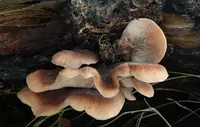
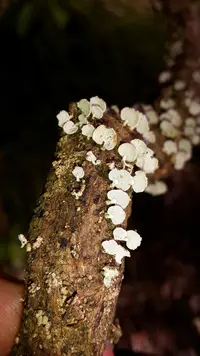
Lentinellus castoreus is a wood-inhabiting fungus, not a leafy houseplant. It forms tough, small to medium fan-shaped caps with serrated gills on decaying wood. Colors range from pale to brownish tones, often blending into bark and forest debris. The texture is firm and not considered good for eating.
This species naturally occurs in temperate forests, usually on fallen logs or stumps in moist, shaded locations. It is specialized and not commonly cultivated, so it is not a beginner-friendly species to grow. Anyone wishing to care for Lentinellus castoreus should understand that it requires consistently damp wood, high humidity, and cool, shaded conditions similar to a natural forest floor.

Care Difficulty
Hard Care

Light Preference
Shade

Water Requirements
Keep Soil Moist

Temperature Preference
Cool Climate

Hardiness Zone
Unknown

Soil Texture
Organic-rich, Peaty

Soil pH
Strongly acidic (4.5–5.5)

Soil Drainage
Waterlogged tolerant

Fertilization
Minimal (feed rarely)
Scan your plant to receive care tips personalized for your specific plant
Available on iOS and Android
This wood-inhabiting fungus favors low to moderate light that mimics shaded forest conditions.
Moist, never stagnant conditions are crucial for reliable fruiting on wood or woody substrates.
This species performs best in cool to mild conditions that resemble shaded woodland microclimates.
This wood-inhabiting fungus prefers consistently moist air to maintain healthy fruiting bodies.
This species fruits best on structured, well-aerated, organic substrates rather than typical garden soil.
This fungus can be grown in containers if the vessel supports stable moisture and gas exchange.
This wood-decay fungus typically grows on nutrient-rich logs and does not benefit from routine fertilization in cultivation or observation settings.
Active pruning is not relevant for Lentinellus castoreus, since it is a bracket-like fungus rather than a leafy plant.
This fungus is usually left on its natural woody substrate, so transplanting is rarely appropriate outside specialized culture.
Propagation of this fungus is specialized and usually limited to mycologists or advanced growers, not typical home cultivation.
This species is adapted to outdoor temperature fluctuations and typically needs no dedicated winter care.

Plant Health Check
Not sure what's wrong with your plant? Check your plant's health inside the app.
This species produces a distinctive smell often described as musky or beaver-like, which is the origin of its name castoreus, meaning beaver-related in Latin.
Its gills are strongly saw-toothed and crowded, a defining feature within the genus that helps mycologists distinguish it from superficially similar wood-decaying fungi.
Although not considered poisonous, the fruiting body has a very strong bitter taste, so it is regarded as inedible and is not used as an edible mushroom.

This fungus is a saprotroph that specializes in decaying dead wood, contributing to nutrient recycling in forest ecosystems by breaking down complex plant polymers such as lignin and cellulose.
This fungus is considered inedible due to its very tough texture and strongly bitter taste. It is not used as a culinary mushroom and should not be collected for food, even when abundant on wood.
Keep your plants happy and healthy with plant identification, disease detection, and easy care guidance.

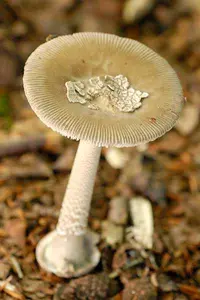
Peeling Paint Ringless Amanita
Amanita submembranacea
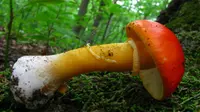
Yellow Patches
Amanita flavoconia
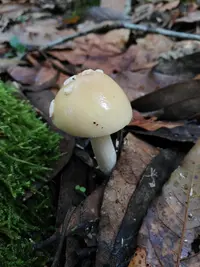
Cottony Volva Amanita
Amanita xylinivolva
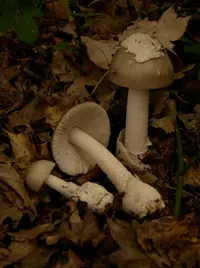
grisette
Amanita vaginata
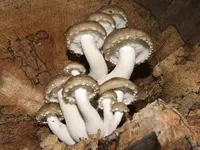
Elm Mushroom
Hypsizygus ulmarius
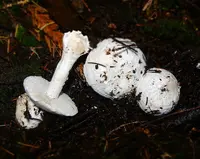
Western Woodland Lepidella
Amanita silvicola
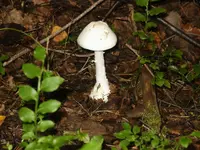
European destroying angel
Amanita virosa
Panellus luxfilamentus
Panellus luxfilamentus