Use Clean Substrate
Always prepare a fresh, pasteurized substrate mix and avoid reusing old mushroom compost to reduce the risk of competitor fungi and pathogens when growing Chestnut Dapperling.

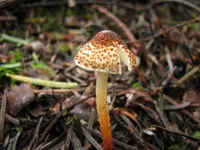
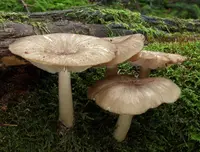
Chestnut dapperling, Lepiota castanea, is a small woodland mushroom rather than a leafy houseplant. It produces compact chestnut-brown caps with pale gills and a slender, fragile stem, often appearing in groups. This species typically grows on soil rich in decaying organic matter, especially in temperate forests, lawns, and park edges.
It has a delicate structure and short life cycle, so it is not a practical choice for long-term indoor display. Conditions that mimic its natural habitat, such as moist, well-drained soil and dappled light, are important if someone attempts to care for Chestnut Dapperling.

Care Difficulty
Hard Care

Light Preference
Partial Shade

Water Requirements
Keep Soil Moist

Temperature Preference
Cool Climate

Hardiness Zone
Unknown

Soil Texture
Loamy, Organic-rich

Soil pH
Acidic (5.5–6.5)

Soil Drainage
Moist but well-drained

Fertilization
Minimal (feed rarely)
Scan your plant to receive care tips personalized for your specific plant
Available on iOS and Android
This small woodland fungus prefers soft, filtered light rather than direct sun exposure.
This woodland species needs consistently moist but not waterlogged soil to fruit well.
This fungus thrives in mild, cool to moderately warm conditions typical of shaded woodland floors.
Humidity plays no meaningful role in Lepiota castanea cultivation compared with moisture in the growing substrate, so standard ambient levels are acceptable.
Lepiota castanea develops best in a loose, organic-rich substrate that mimics naturally decaying leaf litter.
This species is generally unsuitable for long-term container growing outside controlled mycology setups, so regular plant-style container guidance does not apply.
Lepiota castanea is a saprophytic fungus that obtains nutrients from decaying organic matter and is not managed with standard houseplant-style fertilization.
Lepiota castanea is not pruned like ornamental plants, since its fruiting bodies are temporary and its main organism lives hidden in the substrate.
This species is not a typical container specimen, so repotting or transplanting focuses on adjusting the growing substrate rather than handling individual fruiting bodies.
Propagation of Lepiota castanea is specialized and not recommended for casual growers, since it involves managing spores and mycelium under controlled conditions.
In natural settings, Chestnut Dapperling requires no specific winter care from gardeners, as the fungus persists as mycelium in soil or organic debris.

Plant Health Check
Not sure what's wrong with your plant? Check your plant's health inside the app.
This small brown mushroom is considered seriously poisonous and has been linked to human poisoning cases, with symptoms typically affecting the gastrointestinal tract and sometimes the liver.
It often appears in nutrient-rich, disturbed soils such as flowerbeds, compost-enriched borders, and short grass in gardens and parks, rather than in deep woodland.
Its small size, chestnut-brown cap, and rather inconspicuous appearance make it easy to confuse with harmless lawn mushrooms, which is one reason mycologists advise against eating any small Lepiota species.
This small mushroom is considered highly poisonous and must never be eaten. It contains potent toxins that can damage the liver and other organs. Identification is difficult, so avoid consumption even if it resembles edible species.
Keep your plants happy and healthy with plant identification, disease detection, and easy care guidance.