Root-zone ventilation
When planting in the ground, set the plant slightly raised on a low mound and keep the root zone free of heavy mulch to improve air flow and reduce risk of root rot in this very sensitive protea-family species.

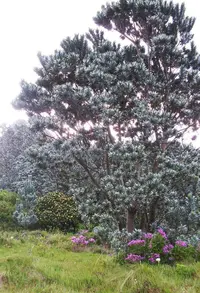
Leucadendron argenteum, commonly called silver tree, is a long-lived evergreen tree from the fynbos shrublands of South Africa, especially around Cape Town. It is valued for its striking, silky silver leaves and upright, columnar form that creates a strong focal point in landscapes.
In cultivation, it is considered challenging, as it needs very well-drained, low-nutrient, slightly acidic soil and a dry, airy root environment. It is sensitive to overwatering, root disturbance, and high humidity, which limits success outside mild, Mediterranean-type climates.
Understanding how to care for Silver tree starts with matching its natural conditions as closely as possible, especially strong light, good air movement, and careful watering practices.

Care Difficulty
Hard Care

Light Preference
Full Sun

Water Requirements
Low Water

Temperature Preference
Warm Climate

Hardiness Zone
9–11

Soil Texture
Sandy, Loamy, Rocky

Soil pH
Acidic (5.5–6.5)

Soil Drainage
Well-drained

Fertilization
Minimal (feed rarely)
Scan your plant to receive care tips personalized for your specific plant
Available on iOS and Android
This fast-growing South African shrub needs strong, direct light to maintain its silvery foliage and compact form.
This species is adapted to dry, well-drained slopes and is sensitive to excess moisture around the roots.
This plant prefers mild, Mediterranean-type climates with cool, wet winters and warm, dry summers.
This species prefers dry, airy conditions and does not need elevated humidity.
This plant needs very fast-draining, sandy soil with high air content around the roots.
This species is only moderately suitable for container growing and needs careful attention to stability and drainage.
This nutrient-sensitive South African shrub prefers very light feeding and low-phosphorus conditions.
Pruning helps Leucadendron argenteum maintain a strong framework and safe size, especially in gardens with limited space.
This species is rarely grown long term in containers and responds best to careful transplanting when young.
New plants are usually raised from seed, as vegetative propagation of Leucadendron argenteum is technically demanding.
This shrub suits mild, frost-free climates and needs significant protection in colder regions.

Plant Health Check
Not sure what's wrong with your plant? Check your plant's health inside the app.
The leaves are densely covered with fine silvery hairs that reflect intense sunlight and reduce water loss, an adaptation to the bright, dry, windy slopes of South Africa’s Cape Peninsula.
It is a classic reseeder in fynbos: mature plants are usually killed by wildfire, but their woody cones protect seeds that are released after fire and germinate in the nutrient-rich ash.
In nature it occurs almost exclusively on the eastern slopes of Table Mountain and a few nearby sites around Cape Town, making it one of the most range-restricted trees in the protea family.

This species is classified as Endangered on the IUCN Red List because its tiny natural range overlaps a major urban area, and its populations are threatened by habitat loss, invasive plants, altered fire regimes, and fungal pathogens such as Phytophthora root rot.
Poor flowering often comes from excess fertilizer, especially high nitrogen, or from pruning at the wrong time and removing flower buds. Insufficient light, waterlogged roots, or a container that is too small can also reduce bloom production.
Keep your plants happy and healthy with plant identification, disease detection, and easy care guidance.