Common Sunshine Conebush Care (Leucadendron salignum)

Also known as: Winter Red, Red Devil, Devils Blush, Adscendens, Blush, Common Yellowbush, Goldentips, Goldtips, Goldtops Conebush, Incisum, Mini Tulip Conebush, Nest-Flower Conebush, Clustered Euryspermum, Red Adscendens, Trailing Euryspermum, Yellow Devil
Common Sunshine Conebush

About Common Sunshine Conebush

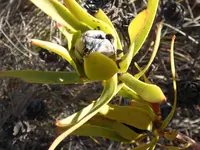
Common sunshine conebush (Leucadendron salignum) is a compact, woody shrub from the protea family, native to the fynbos regions of South Africa. It is grown for its narrow, often reddish-tinted leaves and colorful cone-like flower bracts that add strong structure and seasonal color to gardens.

This species has a naturally bushy, multi-stemmed habit and adapts well to low-water, Mediterranean-style landscapes. It prefers full sun, fast-draining, acidic to neutral soil, and low to moderate moisture. Once established, it is considered relatively low-maintenance, provided drainage is excellent and fertilizer is used sparingly, which makes it easier to care for Common Sunshine Conebush in suitable climates.

Main Plant Requirements

Care Difficulty

Moderate Care

Light Preference

Full Sun

Water Requirements

Low Water

Temperature Preference

Warm Climate

Hardiness Zone

9–11

Soil Texture

Sandy, Loamy, Rocky

Soil pH

Strongly acidic (4.5–5.5), Acidic (5.5–6.5)

Soil Drainage

Well-drained

Fertilization

Minimal (feed rarely)

Get Personalized Care Plan

Scan your plant to receive care tips personalized for your specific plant

Available on iOS and Android

How to Care for the Common Sunshine Conebush

Leucadendron salignum thrives in bright, open conditions that mimic its native South African fynbos habitat.

  • Provide 6–8 hours of direct sun daily; full sun all day is ideal in mild coastal or temperate climates.
  • In hotter inland areas, give strong morning sun with light afternoon shade to reduce leaf scorch and preserve foliage color on Common Sunshine Conebush.
  • Avoid planting in deep or dense shade, which leads to weak, leggy growth and poor bract color, especially during shorter winter days.

This shrub prefers deep, infrequent watering in sharply drained soil to protect its sensitive protea-type roots.

  • Allow the top 5–7 cm of soil to dry before watering; soil should feel dry and crumbly rather than cool and wet to the touch.
  • Water slowly and deeply so it soaks the root zone, then let excess drain completely; yellowing lower leaves or a sour smell indicate overwatering or poor drainage.
  • During the first 1–2 growing seasons, monitor closely in hot, dry weather; once established, Leucadendron salignum becomes drought-tolerant and usually only needs water in extended dry spells.

This species prefers mild, Mediterranean-type temperatures with cool, wet winters and warm, dry summers.

  • Optimal growth occurs around 60–75°F (16–24°C), with stable temperatures and good air movement around the foliage and stems.
  • Mature plants tolerate brief dips to about 25°F (−4°C), but repeated hard frosts can damage young shoots and flower bracts.
  • In hot spells above 90°F (32°C), mulch the root zone and avoid reflected heat from walls or paving to limit stress and leaf scorch.

This shrub tolerates a wide humidity range and usually does not need special humidity management.

  • Best growth occurs in 30–60% humidity, similar to most outdoor conditions in dry, mild climates.
  • Foliage tip-burn and crisping edges in hot, windy sites usually reflect combined heat and drought, not low humidity alone.
  • Improve micro-humidity slightly by using mulch over the root zone and wind protection rather than misting foliage.

Leucadendron salignum needs very free-draining, low-fertility soil to prevent root problems.

  • Use a sandy or gritty mix with minimal organic matter, such as 50–70% coarse sand or fine gravel blended with low-phosphorus native-plant mix.
  • Ensure extremely sharp drainage; raised beds or mounded planting help excess water move away from the root zone quickly.
  • Aim for slightly acidic to neutral pH around 5.5–7.0 and avoid high-phosphorus amendments, manures, or heavy composts.
  • Improve aeration by incorporating coarse bark chips or pumice and avoid compacted, clay-rich, or waterlogged soils.

This species can be grown in containers if the pot strongly favors drainage and root aeration.

  • Choose a tall, heavy container to balance the shrub’s woody, often top-heavy growth and reduce tipping in wind.
  • Select unglazed clay or other porous materials so the root zone dries faster between waterings compared with plastic.
  • Elevate the pot on feet or bricks so drainage holes stay clear and excess water cannot pool under the container.

Leucadendron salignum is adapted to low-nutrient soils and needs very light feeding in cultivation.

  • Use a low-phosphorus, slow-release fertilizer or dilute balanced NPK at 25–50% strength, labeled safe for proteas.
  • Feed sparingly in spring and midsummer only; avoid heavy or frequent applications that can damage roots.
  • Skip fertilizer in fall and winter, as growth slows and nutrient demand drops.
  • If soil is poor, top-dress with a thin layer of low-phosphorus compost, keeping it away from the stem.

Pruning helps maintain shape and flowering performance in Leucadendron salignum without encouraging excessive size.

  • Carry out main pruning after flowering in late winter or early spring, before strong new growth starts.
  • Remove dead, diseased, or crossing stems with clean, sharp bypass pruners to improve air flow and plant health.
  • Shorten flowering shoots by up to one-third, cutting back to leafy nodes to encourage bushier, denser growth.
  • Avoid cutting into old, bare wood with no leaves, as these sections rarely reshoot and can leave gaps.

This shrub is usually grown in the ground, but container or young plants sometimes require careful transplanting.

  • Plan major transplanting for late winter to early spring, when temperatures are mild and active growth is about to begin.
  • Look for signs such as roots circling the pot, water running straight through, or stalled growth as indicators it has outgrown its container.
  • Transplant every 2–3 years at most, moving into a slightly larger pot or bed with very free-draining, low-phosphorus soil.
  • Handle the root ball gently, tease only the outer roots, water thoroughly after planting, and shade lightly for a few days to limit stress.

Leucadendron salignum is commonly propagated from semi-hardwood cuttings to maintain desirable forms.

  • Take semi-hardwood cuttings in late summer to early autumn from healthy, non-flowering shoots.
  • Use 7–10 cm tip cuttings, remove lower leaves, and dip bases in a low-phosphorus rooting hormone if available.
  • Insert cuttings into a coarse, very free-draining mix, then keep warm, bright, and slightly moist with high humidity.
  • Seed propagation is possible but slower; use fresh seed, well-draining soil, and provide gentle bottom warmth for better germination.

In mild coastal or Mediterranean-type climates this species is fairly frost tolerant but benefits from some winter precautions.

  • Established plants tolerate brief light frosts, but young shrubs are more vulnerable to prolonged freezes.
  • Apply a 5–8 cm mulch of coarse bark or gravel around the root zone, keeping it away from the stem base.
  • In colder regions, grow Leucadendron salignum in containers and move them indoors or into a cool, bright, frost-free space over winter.

Care Tips

Pinch For Bushiness

Lightly pinch out soft shoot tips in late winter or early spring to encourage multiple new stems and a denser, more floriferous shrub.

Protect Phosphorus-Sensitive Roots

Use only low-phosphorus products (often labeled for natives or proteas) around the root zone and avoid manures or mushroom compost, which can damage this species’ fine proteoid roots.

Improve Air Flow

When planting a group, space shrubs far enough apart that mature foliage does not touch, which reduces fungal problems and improves bract color and stem strength.

Cut For Regrowth

When harvesting stems for arrangements, cut just above a strong outward-facing bud or side shoot to stimulate healthy new growth rather than leaving long bare stubs.

Plan For Firewise Landscapes

In fire-prone regions, position plants in more open, irrigated parts of the garden and prune out dead interior wood annually so caring for Common Sunshine Conebush aligns with local firewise guidelines.

Common Pests and Diseases

Phytophthora root rot

This disease causes rapid collapse, leaf bronzing, and dieback, especially in warm, wet, poorly drained conditions. Symptoms include dark, water-soaked roots that turn brittle and the plant often dying suddenly after stress such as heavy rain or overwatering.

Solution

Improve drainage immediately, reduce watering, and avoid any standing water around the root zone; raised beds or mounded planting are strongly recommended for Leucadendron salignum care. Remove and destroy severely affected plants and avoid replanting proteas in the same spot; in high-risk areas, use a phosphite (phosphonate) soil drench according to label directions as a preventive measure.

Botrytis blight

This disease produces grey, fuzzy mold on flower cones, leaves, and young shoots, especially during cool, humid weather or when plants are overhead watered. Symptoms include browning of bracts, spotting on leaves, and soft, collapsing tissue.

Solution

Remove and discard all affected cones and foliage, and increase spacing and airflow to help surfaces dry quickly. Avoid overhead watering, especially late in the day, and in persistent cases use a suitable fungicide labeled for ornamentals, rotating products to reduce resistance risk.

Stem canker

This disease causes sunken, dark lesions on stems, leading to girdling, dieback of branches, and sometimes death of entire plants from the affected point upward. Symptoms include sudden browning of foliage on individual stems while the rest of the plant appears healthy.

Solution

Prune out affected stems at least 10–15 cm below visible symptoms into healthy wood, disinfecting tools between cuts with alcohol or a 10% bleach solution. Maintain good air circulation, avoid wounding stems, and keep irrigation directed at the soil, not the shoots, to limit pathogen spread.

Scale insects

These insects appear as small, rounded or oval bumps along stems and leaf undersides, feeding on sap and weakening the plant. Symptoms include sticky honeydew, sooty mold growth on leaves, and general decline or poor flowering.

Solution

Wipe or gently scrub infested areas with a cloth or soft brush dipped in diluted insecticidal soap, then rinse lightly. For larger infestations, apply horticultural oil thoroughly to stems and leaf undersides during mild weather, repeating as needed while monitoring beneficial insects.

Leafhoppers

These insects feed on new growth, causing pale stippling, leaf edge yellowing, and sometimes distortion or curling of young leaves. Symptoms include quick movement of small, wedge-shaped insects that jump or fly off when disturbed.

Solution

Use a strong stream of water to dislodge insects from foliage and remove heavily damaged shoots. If populations remain high, apply insecticidal soap or a light horticultural oil in the early morning, making sure to cover the undersides of leaves, and reduce nearby weedy hosts that shelter leafhoppers.

Interesting Facts

Fire-adapted resprouter

This species can resprout from a woody rootstock called a lignotuber after wildfire, allowing established plants to survive and re-grow in fire-prone fynbos habitats where many related species are killed outright and only regenerate from seed.

Remarkable color shifts

Many cultivated forms show striking seasonal color changes, with foliage and bracts shifting from green to yellow, orange, or red tones, especially in cooler weather and strong light, which contributes greatly to its value in cut-flower production.

Long flowering season

In its native South African range, individual plants often produce colorful cone-like flower heads over an extended period from late winter into spring, providing a long window of nectar and pollen for insects and other pollinators.

FAQs about Common Sunshine Conebush

Brown leaf tips or edges usually come from poor drainage, overwatering, or very dry, hot wind. Check that the soil drains quickly, avoid frequent watering, and protect from harsh, drying conditions to prevent further damage.

Grow Healthy Plants with Botan Care

Keep your plants happy and healthy with plant identification, disease detection, and easy care guidance.


Botan plant care app — identify plants on mobile

Explore More Plants