

Anchor On Substrate
Press small clumps firmly onto rough bark, rock, or unglazed clay using a breathable mesh or cotton thread for 2–4 weeks so the rhizoids can attach securely before the support is removed.

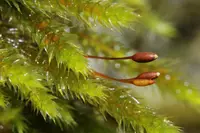
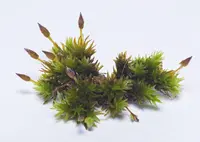
Squirrel-tail moss, Leucodon sciuroides, is a small, creeping moss that forms dense, tail-like tufts on tree bark, rocks, and old walls. Its stems curve outward, giving a soft, bushy look.
This species is common in temperate regions, especially in Europe and parts of North America, where air is relatively clean and humidity is moderate. It often acts as an indicator of stable, mildly moist conditions.
Leucodon sciuroides is generally considered adaptable and low-maintenance under stable moisture and shade, which helps explain how to care for squirrel-tail moss in gardens or terrariums.

Care Difficulty
Moderate Care

Light Preference
Partial Shade

Water Requirements
Keep Soil Moist

Temperature Preference
Cold Hardy

Hardiness Zone
4–9

Soil Texture
Rocky, Organic-rich, Peaty

Soil pH
Strongly acidic (4.5–5.5), Acidic (5.5–6.5)

Soil Drainage
Moist but well-drained

Fertilization
Minimal (feed rarely)
Scan your plant to receive care tips personalized for your specific plant
Available on iOS and Android
This moss thrives in low to moderate light that mimics shaded woodland conditions.
This moss prefers consistently moist conditions but suffers if kept waterlogged.
This species is adapted to cool to mild climates with moderate seasonal shifts.
This moss prefers consistently moist, cool, humid air to stay dense and healthy.
Leucodon sciuroides anchors best on stable, moist, well-aerated substrates rather than typical potting soil.
This moss can be grown in shallow containers when moisture and stability are carefully managed.
Leucodon sciuroides grows on nutrient-poor bark and rock and usually needs no fertilization in culture.
Leucodon sciuroides needs only minimal pruning to keep mats tidy and healthy.
This moss is usually grown attached to bark, stone, or logs, so transplanting is more relevant than true repotting.
Leucodon sciuroides is commonly multiplied by simple vegetative division rather than spores in home culture.
This moss is naturally cold hardy and usually needs no special winter care outdoors in temperate climates.

Plant Health Check
Not sure what's wrong with your plant? Check your plant's health inside the app.
This moss forms dense, arching shoots that resemble a squirrel’s tail, with leaves tightly overlapping and curved to one side, a growth form that helps trap moisture and protect the stem from drying.
It is primarily epiphytic, most often colonizing the bark of mature trees such as oaks and beeches, where it benefits from rough surfaces, stable humidity, and reduced competition on vertical substrates.
In parts of Europe it is considered an indicator of relatively humid, stable microclimates in woodlands, so changes in its presence or vigor can reflect shifts in local air moisture and forest conditions.

This species has a wide but patchy distribution across Europe, western Asia, and parts of North America, and genetic studies suggest that its long-distance spread between regions has been aided by tiny wind-dispersed spores that can travel far beyond the local forest where they were produced.
Growth is generally slow to moderate. In suitable, consistently moist conditions, new carpets may expand a few centimeters per year. Shaded, humid, pollutant-free sites with stable surfaces such as bark or stone support the best long-term expansion.
Keep your plants happy and healthy with plant identification, disease detection, and easy care guidance.

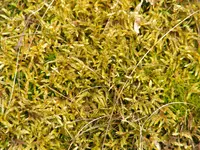
Schreber's big red stem moss
Pleurozium schreberi
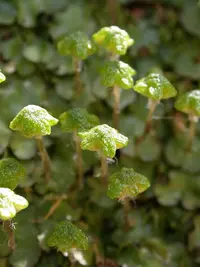
Hemisphaeric Liverwort
Reboulia hemisphaerica
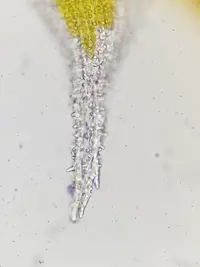
Hoary Fringe-moss
Niphotrichum canescens
Milk moss
Leucobryum javense
Bent Scissor-leaved Liverwort
Herbertus aduncus
Square-leaved Crestwort
Chiloscyphus polyanthos
seductive entodon moss
Entodon seductrix
orthotrichum moss
Orthotrichum anomalum