

Anchoring On Substrate
Press small tufts gently into rough, stable surfaces like lava rock, old bricks, or compacted gritty sand so the shoots can hook into crevices and form a dense, wind‑resistant mat over several months.

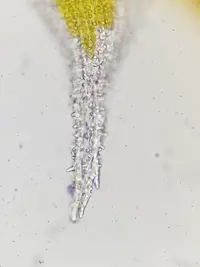
Hoary fringe-moss (Niphotrichum canescens) is a small, tuft-forming moss that creates dense, silvery-green cushions close to the ground. Its hoary look comes from fine, pale leaf tips that catch the light.
This moss occurs widely across cooler regions of the Northern Hemisphere, often on sandy soils, rocky slopes, and disturbed, well-drained sites. It is adapted to harsh conditions and can tolerate periods of dryness once established.
Because of its toughness and slow, compact growth, it suits rock gardens, troughs, and naturalistic plantings where soil stays open and free-draining. Those who want to care for Hoary Fringe-moss should provide good light, moderate moisture, and low competition from taller plants.

Care Difficulty
Moderate Care

Light Preference
Partial Shade

Water Requirements
Moderate Water

Temperature Preference
Cold Hardy

Hardiness Zone
2–7

Soil Texture
Sandy, Rocky, Organic-rich

Soil pH
Acidic (5.5–6.5)

Soil Drainage
Well-drained

Fertilization
Minimal (feed rarely)
Scan your plant to receive care tips personalized for your specific plant
Available on iOS and Android
This moss prefers cool, bright conditions without prolonged harsh sun exposure.
This moss benefits from consistently moist but not waterlogged conditions.
This hardy moss tolerates a wide range of cool to moderately warm temperatures.
This moss tolerates a wide humidity range but performs best in slightly moist air.
Niphotrichum canescens prefers lean, mineral soils that stay aerated and never waterlogged.
This moss is suitable for shallow, well-drained containers or troughs.
This moss thrives in low-nutrient conditions, so Hoary Fringe-moss usually needs no additional fertilizer in garden or naturalistic settings.
Niphotrichum canescens needs almost no pruning, since old shoots naturally break down and new growth fills in.
Transplanting Niphotrichum canescens is uncommon and should be done gently to preserve its mats and fine rhizoids.
This moss is typically spread by division and natural fragmentation rather than formal propagation methods.
Niphotrichum canescens is fully cold hardy in most temperate climates and generally needs no special winter care outdoors.

Plant Health Check
Not sure what's wrong with your plant? Check your plant's health inside the app.
This moss has densely hoary, white to silvery leaf tips caused by abundant hair-like cells, which reflect light and reduce water loss in exposed habitats.
It commonly colonizes disturbed, sandy, or gravelly substrates, where its dense cushions help stabilize loose soil and create microhabitats for other small organisms.
The species occurs across boreal and temperate regions of the Northern Hemisphere, showing strong tolerance to frost, seasonal drought, and high light in open sites.

In some open, wind-exposed habitats, mats of this moss can form distinct pale-gray patches that are visible from a distance and are used by bryologists as indicator vegetation for dry, nutrient-poor conditions.
This species performs more reliably outdoors, where cool, moist air and natural rainfall mimic its native habitat. Hoary Fringe-moss indoor care is possible in terrariums or very humid, cool rooms, but long‑term vigor is usually lower inside.
Keep your plants happy and healthy with plant identification, disease detection, and easy care guidance.

Milk moss
Leucobryum javense
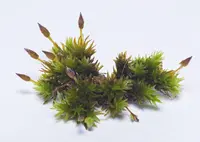
orthotrichum moss
Orthotrichum anomalum
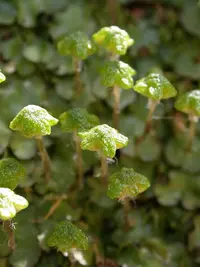
Hemisphaeric Liverwort
Reboulia hemisphaerica
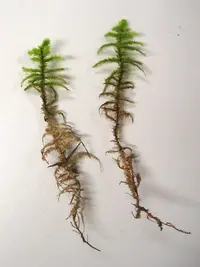
rough goose neck moss
Hylocomiadelphus triquetrus
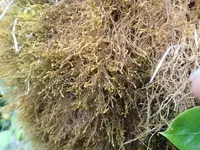
Bent Scissor-leaved Liverwort
Herbertus aduncus
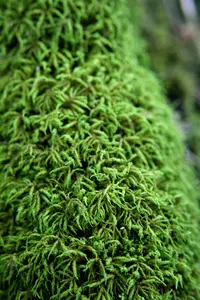
seductive entodon moss
Entodon seductrix
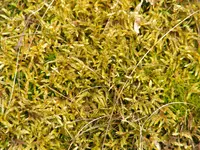
Schreber's big red stem moss
Pleurozium schreberi

tortula moss
Tortula muralis