Label Dormant Spots
Mark bulb locations with discreet tags or stones after flowering so you do not accidentally dig up dormant clumps when the foliage has died back.

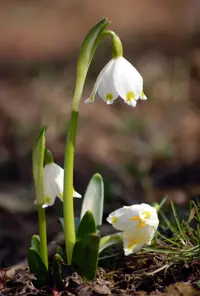
Spring snowflake, Leucojum vernum, is a small, bulb-forming perennial known for its early spring flowers. It produces nodding white, bell-shaped blooms with green-tipped petals above narrow, grass-like leaves. The plant forms clumps over time and stays relatively compact, making it suitable for mixed borders, naturalized lawns, and under deciduous shrubs or trees. In the wild it occurs in damp meadows and light woodlands across parts of central and southern Europe. It prefers cool conditions, consistent soil moisture, and humus-rich, well-drained soil. These traits make it moderately easy to grow if its need for moisture and protection from hot, dry sites is respected, especially when learning how to care for spring snowflake.

Care Difficulty
Easy Care

Light Preference
Partial Shade

Water Requirements
Regular Water

Temperature Preference
Cold Hardy

Hardiness Zone
3–8

Soil Texture
Loamy, Silty, Organic-rich

Soil pH
Acidic (5.5–6.5), Slightly acidic (6.5–7.0)

Soil Drainage
Moist but well-drained

Fertilization
Minimal (feed rarely)
Scan your plant to receive care tips personalized for your specific plant
Available on iOS and Android
Leucojum vernum prefers cool, soft light similar to woodland edges.
This bulb favors consistently moist but not waterlogged soil during active growth.
This species is a hardy spring bulb adapted to cool, temperate climates.
Humidity is rarely a limiting factor for Leucojum vernum in home or garden conditions.
Leucojum vernum prefers moist, fertile, and well-aerated soil that stays evenly damp without becoming waterlogged.
This species can grow successfully in containers when moisture and depth are carefully managed.
Leucojum vernum grows well in reasonably fertile soil and needs only modest feeding for reliable flowering.
Leucojum vernum needs minimal pruning, mainly to keep the clump tidy and support future flowering.
Leucojum vernum is usually grown in the ground and only needs transplanting when clumps become crowded or decline in vigor.
Leucojum vernum is most often propagated by division of mature bulb clumps rather than from seed.
Leucojum vernum is cold hardy in most temperate climates and generally needs little specific winter care.

Plant Health Check
Not sure what's wrong with your plant? Check your plant's health inside the app.
This species flowers very early in the year, often during late winter snowmelt, using stored energy in its bulb to grow and bloom before surrounding trees leaf out and shade the forest floor.
Each bell-shaped flower has six similar-looking segments called tepals, each marked near the tip with a small green spot, which helps distinguish it from the superficially similar spring-flowering Galanthus snowdrops.
In its native Central European range, this plant naturally occupies damp, nutrient-rich floodplain and deciduous forests, where periodic spring flooding and consistently moist soils support dense colonies.

The seeds of this species bear a nutrient-rich appendage called an elaiosome, which attracts ants; the ants carry the seeds back to their nests, eat the elaiosomes, and leave the intact seeds in new locations, helping the plant spread through a process known as myrmecochory.
Lack of flowers often comes from bulbs planted too shallow, too dry a site in spring, or foliage cut back too early the previous year. Crowded clumps may also need lifting and dividing every few years.
Keep your plants happy and healthy with plant identification, disease detection, and easy care guidance.