

Support tall stems
Install a discreet rock ring or low stone barrier around the base to stabilize the root zone and prevent wind rock as the cactus gains height and weight.

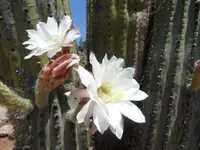
Leucostele terscheckii, often called the Argentine saguaro or cardon grande, is a large, tree-like columnar cactus. It forms thick, upright stems with strong ribs and dense clusters of spines. In time, it can branch and develop a striking, sculptural silhouette.
This species is native to arid regions of Argentina, where it grows in full sun and very dry, rocky soils. Its drought tolerance and slow growth make it relatively low-maintenance, but it needs excellent drainage and bright light to thrive.
Understanding how to care for Leucostele terscheckii mainly involves providing strong light, minimal watering, and a gritty, free-draining soil mix that prevents root rot.

Care Difficulty
Moderate Care

Light Preference
Full Sun

Water Requirements
Low Water

Temperature Preference
Warm Climate

Hardiness Zone
9–11

Soil Texture
Sandy, Loamy, Rocky

Soil pH
Slightly acidic (6.5–7.0), Neutral (7.0)

Soil Drainage
Well-drained

Fertilization
Minimal (feed rarely)
Scan your plant to receive care tips personalized for your specific plant
Available on iOS and Android
This tall columnar cactus needs strong, consistent sun to maintain compact, healthy growth.
This desert species requires infrequent but thorough watering and fast-drying soil.
This cactus thrives in warm, dry conditions and is sensitive to prolonged cold and frost.
This cactus tolerates a wide humidity range and rarely needs special humidity management indoors.
Leucostele terscheckii prefers a very fast-draining, mineral-rich substrate that dries quickly between waterings.
This species is suitable for container growing if the pot is chosen to manage its tall, heavy columnar growth.
This cactus benefits from light feeding during its active season but does not need heavy fertilization.
Pruning needs for this columnar cactus are minimal and mostly corrective.
This species is usually grown in the ground, but container plants need occasional transplanting as they enlarge.
Leucostele terscheckii is most often propagated from seed, with cuttings used less frequently due to size and weight.
Mature plants are moderately cold tolerant when kept dry, but young or potted specimens need more careful winter care.

Plant Health Check
Not sure what's wrong with your plant? Check your plant's health inside the app.
This species is one of the tallest columnar cacti of northwestern Argentina, forming massive, tree-like trunks that can branch repeatedly and dominate the open scrub and Monte desert landscapes where it occurs.
In its native range in Argentina, this cactus is a structural keystone of arid Andean foothills, offering nesting sites, shade, and perches for birds and other desert-dwelling animals in otherwise sparse vegetation.
The large white flowers open mainly at night or in the early morning and are pollinated by nocturnal or crepuscular visitors such as moths and possibly bats, an adaptation to the hot, dry environments it inhabits.

Very old individuals can form impressive multi-armed columns several meters tall that serve as long-lived landmarks in the Argentine desert, so prominent that local communities sometimes use them as reference points for orientation across the landscape.
Growth is slow to moderate, usually 5–15 cm per year in containers or mild outdoor climates. Over many years it can form a tall column, often 2–4 m under garden conditions, smaller indoors.
Keep your plants happy and healthy with plant identification, disease detection, and easy care guidance.

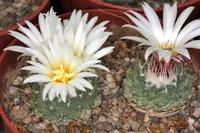
Cactus
Strombocactus disciformis
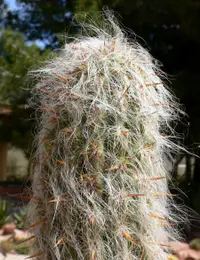
Old Man of the Andes
Oreocereus celsianus
 POPULAR
Rice cactus
Rhipsalis cereuscula
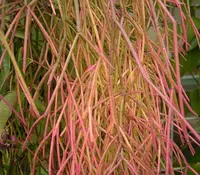
Rhipsalis burchellii
Rhipsalis burchellii

Cereus fernambucensis
Cereus fernambucensis
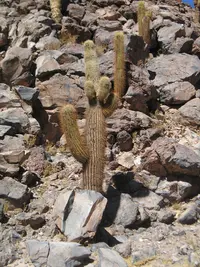
Leucostele atacamensis
Leucostele atacamensis
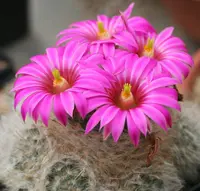
Cochemiea guelzowiana
Cochemiea guelzowiana
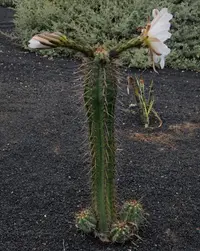
Bolivian Torch Cactus
Echinopsis lageniformis