Timely Division
Lift and divide mature clumps every 3–4 years in early spring, replanting only the healthiest outer sections to maintain vigorous growth and prevent overcrowding.

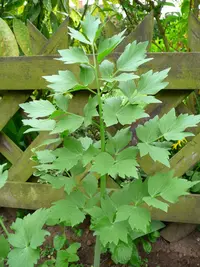
Garden lovage, Levisticum officinale, is a hardy perennial herb grown for its aromatic leaves, stems, and seeds. It belongs to the celery family and has a similar scent and flavor.
The plant forms tall, upright clumps with hollow stems, divided glossy green leaves, and umbels of yellow-green flowers. In suitable conditions it can become a large, long-lived feature in the herb garden.
Lovage is native to mountainous regions of southern Europe and western Asia but is widely cultivated in temperate gardens. It is generally easy to grow if given sun, consistent moisture, and fertile, well-drained soil.
Understanding how to care for garden lovage helps keep it productive for many years and prevents it from becoming weak or leggy.

Care Difficulty
Easy Care

Light Preference
Full Sun

Water Requirements
Moderate Water

Temperature Preference
Cold Hardy

Hardiness Zone
4–8

Soil Texture
Loamy, Silty, Organic-rich

Soil pH
Slightly acidic (6.5–7.0), Neutral (7.0)

Soil Drainage
Moist but well-drained

Fertilization
Minimal (feed rarely)
Scan your plant to receive care tips personalized for your specific plant
Available on iOS and Android
This perennial herb prefers bright conditions with some protection from intense afternoon sun.
This deep-rooted perennial prefers consistently moist but not saturated soil.
This hardy herb tolerates cool climates but grows best in mild temperatures.
Humidity is rarely critical for garden lovage and typical outdoor conditions suit it well.
Levisticum officinale prefers deep, fertile, moisture-retentive but well-drained soil for strong perennial growth.
This species can be grown in containers, but only in large, deep pots that allow extensive root development.
This perennial herb benefits from modest feeding to support leafy growth but does not need heavy fertilization.
Pruning helps keep Levisticum officinale productive, tidy, and within bounds in the herb bed.
This deep-rooted perennial is usually grown in the ground and dislikes frequent disturbance once established.
Levisticum officinale is commonly propagated from both seed and division, depending on the grower’s priorities.
This herb is cold hardy in most temperate climates and usually needs minimal winter care once established.

Plant Health Check
Not sure what's wrong with your plant? Check your plant's health inside the app.
The aromatic profile of garden lovage comes mainly from phthalides such as butylidenephthalide, which also contribute to the characteristic smell of celery and some Apiaceae relatives. These volatile compounds are concentrated in the leaves and seeds and are easily released when the plant is crushed or cooked.
This species is a long-lived herbaceous perennial that survives winter by storing reserves in a thick, fleshy taproot. The above-ground stems die back in cold climates, then re-sprout each spring from the underground crown and root system.
Its yellow-green flowers form compound umbels, a typical inflorescence type in the carrot family Apiaceae. The open, shallow flowers provide accessible nectar and pollen for a wide range of insects, including small native bees, hoverflies, and parasitic wasps.

Medieval European monastery gardens commonly included garden lovage as a key aromatic and culinary herb, and historical records show it was grown in physic gardens alongside plants such as Angelica and fennel, contributing to its long-standing role in traditional European herb culture.
Leaves commonly brown from drought stress, excess fertilizer, or wind scorch. Check soil moisture, flush overly salty soil with water, and provide some shelter from strong wind. Remove badly damaged foliage to reduce stress and encourage new growth.
Keep your plants happy and healthy with plant identification, disease detection, and easy care guidance.