Control Spreading
Install a 20–30 cm deep root barrier or use large bottomless containers sunk into the ground to keep the rhizomes from invading nearby beds and lawns.

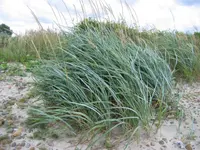
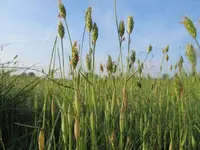
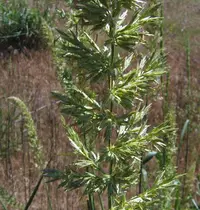
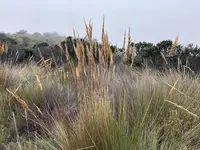
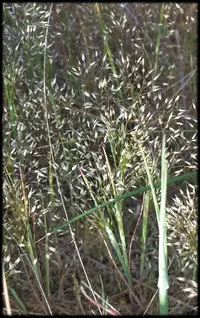
Sand ryegrass (Leymus arenarius) is a hardy, clump-forming grass best known for stabilizing coastal dunes and sandy banks. It forms tall, upright blue-green leaves and dense, spreading rhizomes that anchor loose soils.
This species is native to coastal areas of northern Europe and thrives in windy, salty, and nutrient-poor conditions where many other plants fail. Its strong vigor and spreading habit make it robust but sometimes difficult to control in small gardens.
Leymus arenarius prefers full sun, dry to moderately moist soil, and excellent drainage. Understanding these traits helps gardeners care for sand ryegrass successfully in exposed or problem sites.

Care Difficulty
Easy Care

Light Preference
Full Sun

Water Requirements
Low Water

Temperature Preference
Cold Hardy

Hardiness Zone
4–9

Soil Texture
Sandy, Loamy

Soil pH
Slightly acidic (6.5–7.0), Neutral (7.0)

Soil Drainage
Well-drained

Fertilization
Minimal (feed rarely)
Scan your plant to receive care tips personalized for your specific plant
Available on iOS and Android
Leymus arenarius thrives in open, bright sites that mimic coastal dunes with long hours of direct sun.
This dune grass prefers dry, free-draining conditions and is more tolerant of drought than excess moisture.
This cold-hardy grass is adapted to cool coastal climates and tolerates a wide range of outdoor temperatures.
Humidity is rarely critical for this coastal grass and typical outdoor levels are usually adequate.
Leymus arenarius thrives in very free-draining, sandy mineral soils that mimic coastal dunes.
This species can be grown in containers outdoors if the pot is prepared to suit its strong, spreading root system.
This coastal grass grows in poor soils and usually needs minimal feeding, but light nutrition can support establishment and container-grown clumps.
Pruning for Leymus arenarius is mainly about tidiness and renewing foliage rather than strict shaping.
This vigorous grass is usually grown in the ground, where transplanting is more relevant than container repotting.
New plants of Leymus arenarius are most reliably produced by division, with seeds used mainly for larger restoration projects.
This grass is cold hardy in most temperate climates and usually needs little winter care beyond basic cleanup.

Plant Health Check
Not sure what's wrong with your plant? Check your plant's health inside the app.
This species forms a dense, creeping rhizome system that binds loose coastal sand and helps stabilize shifting dunes, especially along North Atlantic and Baltic shores.
The leaves and roots can function in salty, wind-exposed environments close to the sea, which allows this grass to dominate foredunes where many other plants cannot survive.
Its stiff, blue-grey leaves are coated with a waxy layer that reduces water loss and reflects strong sunlight, giving coastal dunes their characteristic bluish tint in many regions.

In several northern European countries, this species was historically planted intentionally on exposed coasts to protect farmland and settlements from sand drift, making it one of the earliest systematically used dune-engineering grasses in the region.
This species spreads strongly by rhizomes, forming dense clumps that can move outward each year. In gardens, use root barriers or containers and remove unwanted shoots regularly to prevent it from overtaking nearby plantings.
Keep your plants happy and healthy with plant identification, disease detection, and easy care guidance.