Summer ragwort Care (Ligularia dentata)

Also known as: Leopardplant
Summer ragwort

About Summer ragwort

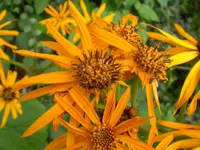
Summer ragwort (Ligularia dentata) is a clump-forming perennial grown mainly for its bold foliage and bright, daisy-like flower clusters. It creates a strong vertical accent in borders and shade gardens.

Leaves are large, often heart-shaped, and may be green, bronze, or purple, depending on the cultivar. Tall stems carry yellow-orange blooms that attract pollinators.

This species is native to moist, cool areas of East Asia, where it grows along stream banks and in damp meadows. It prefers partial shade, consistently moist soil, and protection from strong afternoon sun.

These moisture needs are the main factor that determines how easy it is to care for Summer ragwort, especially in warmer or drier climates.

Main Plant Requirements

Care Difficulty

Moderate Care

Light Preference

Partial Shade

Water Requirements

Keep Soil Moist

Temperature Preference

Cold Hardy

Hardiness Zone

4–8

Soil Texture

Loamy, Clay, Organic-rich

Soil pH

Acidic (5.5–6.5), Slightly acidic (6.5–7.0)

Soil Drainage

Moist but well-drained

Fertilization

Light (every 4–6 weeks)

Get Personalized Care Plan

Scan your plant to receive care tips personalized for your specific plant

Available on iOS and Android

How to Care for the Summer ragwort

Ligularia dentata prefers cool, sheltered sites with consistent moisture and soft light.

  • Provide 2–4 hours of gentle morning sun with bright dappled or filtered light for the rest of the day.
  • Allow partial to full shade in hot climates; protect Summer ragwort from direct midday and afternoon sun to prevent leaf scorch and wilting.
  • In summer, increase shade as light intensifies; in cooler seasons, slightly more direct morning sun helps maintain compact growth and flowering.

Ligularia dentata needs consistently moist soil and reacts quickly to drying out.

  • Water when the top 2–3 cm of soil feels barely damp, aiming to keep the root zone evenly moist but never waterlogged.
  • Use rich, humus-heavy soil with good drainage; standing water or a sour smell signals overwatering and potential root rot.
  • Increase watering during hot, windy weather when leaves droop by midday; reduce slightly in cool seasons while preventing the soil from fully drying.

This plant prefers cool to mild conditions and struggles in hot, exposed sites.

  • Optimal growth occurs around 60–75°F (16–24°C), with consistently moist soil helping the foliage stay turgid and healthy.
  • Mature plants tolerate down to about -20°F (-29°C) when well rooted and mulched, but young crowns need protection from severe frost heave.
  • Heat above 85°F (29°C), especially with full sun, can cause wilting and leaf scorch; provide shade, extra moisture, and mulch during summer heat waves.

This plant prefers consistently moist air but usually copes with typical outdoor humidity in temperate gardens.

  • Aim for 50–70% humidity in sheltered, damp garden spots, such as near ponds or shaded borders.
  • Dry, windy air can cause leaf edges to brown and droop, especially during hot spells.
  • Increase local humidity by mulching heavily, grouping plants, and avoiding strong, drying air currents.

This species grows best in deep, moisture-retentive but aerated ground.

  • Use a rich loam with high organic content, such as garden soil mixed with 40–60% compost or well-rotted leaf mold.
  • Ensure slow, even drainage; soil should stay damp but not waterlogged, so avoid compacted clay and very sandy ground.
  • Aim for slightly acidic to neutral pH, around 6.0–7.0, which supports nutrient uptake for Ligularia dentata.
  • Improve structure and aeration by incorporating coarse compost, fine bark, or leaf mold rather than sand alone.

This plant can be grown in containers if given a large, stable, moisture-retentive setup.

  • Choose a wide, heavy pot to counterbalance tall foliage and prevent the container from tipping in wind or on balconies.
  • Use a deep container so roots can stay cool and evenly moist, shielding the root zone from rapid surface drying.
  • Select thick-walled terracotta or glazed ceramic to moderate temperature swings and slow evaporation from the potting mix.

Ligularia dentata benefits from moderate feeding to support large leaves and summer flowers.

  • Apply a balanced, slow-release granular fertilizer (around 10-10-10) once in early spring as new growth starts.
  • Supplement with a thin layer of compost around the root zone mid-season to maintain soil organic matter.
  • During active growth, use a half-strength balanced liquid feed every 4–6 weeks if soil is poor.
  • Stop feeding Summer ragwort in late summer and avoid fertilizing in winter dormancy.

Pruning Ligularia dentata is simple and mainly focuses on cleanliness and appearance.

  • In late fall or very early spring, cut back all dead or collapsed stems near ground level with clean hand pruners.
  • Throughout the growing season, remove spent flower spikes to keep plants tidy and may slightly extend bloom display.
  • Trim damaged or yellowing leaves at the base to improve air flow and reduce fungal issues.
  • Avoid heavy reshaping; light thinning of crowded stems maintains the plant’s natural clump form.

This plant is usually grown in the ground, so focus on transplanting clumps rather than frequent repotting.

  • Plan transplanting for early spring or early fall when temperatures are mild and soil is moist.
  • Move plants when growth slows, clumps become crowded, or roots circle inside a rare container planting.
  • Dig a wide root ball, replant at the same depth in rich, moist soil, and water thoroughly to settle roots.
  • Shade the plant lightly and keep soil evenly moist for 1–2 weeks after moving to reduce transplant stress.

Ligularia dentata is most commonly propagated by division, with seed used less often for home gardens.

  • Divide mature clumps in early spring or early fall when weather is cool and soil workable.
  • Lift the clump, then use a sharp knife or spade to split into sections, each with several buds and roots.
  • Replant divisions immediately at original depth in moist, humus-rich soil and water well.
  • For seed, sow fresh seed in trays outdoors in fall, allowing natural cold to break dormancy before spring germination.

Ligularia dentata is generally cold hardy in temperate climates and needs only modest winter care.

  • After hard frost, cut back dead foliage to reduce disease carryover and tidy the planting area.
  • Apply a 5–8 cm layer of organic mulch over the root zone to buffer freeze–thaw cycles.
  • In very cold or exposed sites, increase mulch depth and avoid waterlogged soil around crowns.
  • Container-grown plants in colder regions can be overwintered in an unheated garage or sheltered porch.

Care Tips

Shade management

Allow some morning sun in cool climates but use taller perennials or temporary shade cloth to protect foliage from strong afternoon sun and reduce wilting and leaf scorch in midsummer.

Moisture retention

Apply a 5–8 cm layer of composted bark or leaf mold around, but not touching, the crowns to stabilize soil moisture, keep roots cool, and reduce the frequency of supplemental watering.

Slugs and snails

Place slug traps, copper tape barriers, or rough mineral mulches around clumps early in spring, and hand-pick pests on damp evenings to protect the large leaves from severe chewing damage.

Flower stalk management

Stake tall flower stems with discreet single stakes and soft ties before they lean, and cut back spent stems after flowering to keep clumps tidy and direct energy to root and foliage growth.

Clump division timing

Divide overcrowded clumps every 4–6 years in early spring or early fall, replanting vigorous outer sections at the same depth to rejuvenate growth and maintain strong flowering when growing Summer ragwort.

Common Pests and Diseases

Slugs and snails

This pest feeds heavily on the large, soft leaves, often leaving ragged holes and shredded edges, especially in spring and after rain.

Solution

Hand-pick at dusk or early morning, use iron phosphate pellets around clumps, and place physical barriers such as copper tape or rough gravel around plants; reduce dense groundcover and wet debris where they hide, but keep soil evenly moist for the plant itself.

Leaf spot

This disease causes brown to purple spots that may merge into larger dead patches, often starting on older leaves in humid or crowded plantings.

Solution

Remove and discard affected leaves, avoid wetting the foliage when watering, and improve spacing and airflow; in persistent, severe cases, apply a labeled copper or chlorothalonil fungicide according to Summer ragwort care instructions and local regulations.

Powdery mildew

This disease appears as white or gray powdery coating on upper leaf surfaces, leading to yellowing and premature leaf drop in warm, humid, but not overly wet conditions.

Solution

Remove heavily affected leaves, increase air circulation by thinning nearby plants, water the soil instead of the foliage, and use a labeled sulfur or potassium bicarbonate product if infection recurs each year.

Aphids

These insects cluster on tender stems and undersides of leaves, sucking sap and causing curling, distortion, and sticky honeydew that can attract sooty mold.

Solution

Spray colonies off with a firm stream of water, then treat remaining infestations with insecticidal soap or neem oil, repeating every 5–7 days until gone; encourage natural predators such as lady beetles by avoiding broad-spectrum insecticides nearby.

Vine weevil

This pest chews notches from leaf edges at night, while its larvae feed on roots and crowns, sometimes causing wilting or sudden collapse of plants in containers or loose soil.

Solution

Inspect at night and remove adult beetles by hand, use biological controls such as beneficial nematodes targeted at vine weevil larvae in spring and late summer, and keep containers slightly firmer and not overly loose to reduce ideal larval habitat.

Interesting Facts

Shade tolerance strategy

This species naturally grows at woodland edges and stream banks in East Asia, so its large, thin leaves are adapted to capture low, filtered light rather than full sun, which is why strong sun can scorch the foliage in cultivation.

Ornamental leaf diversity

Horticultural selections of this species show unusually varied foliage for a single species, ranging from plain green to purple-bronze with contrasting undersides, and from entire to toothed leaf margins, making it primarily a foliage plant rather than a flower-focused perennial.

Moisture-demanding roots

In its native habitats, this plant occupies consistently moist, humus-rich soils, and its relatively shallow but wide-spreading root system is adapted to take advantage of surface moisture while suffering quickly if the soil dries out deeply.

FAQs about Summer ragwort

The flowers are rich in nectar and pollen, so they reliably attract bees, hoverflies, and butterflies. Planting several clumps together creates a stronger visual target and a longer foraging corridor for beneficial pollinators in shady borders.

Grow Healthy Plants with Botan Care

Keep your plants happy and healthy with plant identification, disease detection, and easy care guidance.

Botan plant care app — identify plants on mobile

Explore More Plants