martagon lily Care (Lilium martagon)

Also known as: Turk's-cap Lily
martagon lily

About martagon lily

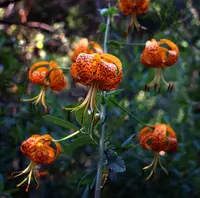
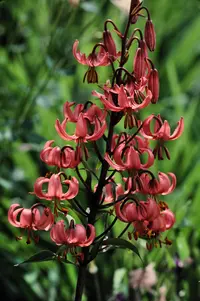
Martagon lily, Lilium martagon, is a hardy bulbous perennial known for its elegant, downward-facing, Turk’s cap flowers carried on tall, slender stems. The nodding blooms often appear in soft pink, purple, or white tones, usually speckled with darker spots.

This species is native to woodlands and mountain meadows across parts of Europe and Asia, where it grows in light shade and cool, humus-rich soils. It forms clumps slowly and prefers stable conditions, which can make it slightly challenging to establish.

Once settled, it is long-lived and requires little disturbance, so gardeners often focus on how to care for martagon lily to keep it thriving over many years.

Main Plant Requirements

Care Difficulty

Moderate Care

Light Preference

Partial Shade

Water Requirements

Moderate Water

Temperature Preference

Cold Hardy

Hardiness Zone

3–8

Soil Texture

Loamy, Silty, Organic-rich

Soil pH

Acidic (5.5–6.5), Slightly acidic (6.5–7.0)

Soil Drainage

Moist but well-drained

Fertilization

Light (every 4–6 weeks)

Get Personalized Care Plan

Scan your plant to receive care tips personalized for your specific plant

Available on iOS and Android

How to Care for the martagon lily

This species prefers bright conditions with protection from intense midday sun.

  • Provide 3–5 hours of morning sun with light or dappled shade in the afternoon, which matches its woodland edge origins.
  • Tolerates partial to full light shade; dense, deep shade reduces flowering and causes weak, stretched stems in martagon lily.
  • In hotter summers, use filtered light or high shade to prevent leaf scorch and faded blooms, especially on south or west exposures.

Watering should keep the soil consistently moist but never saturated around the bulbs.

  • Allow the top 3–5 cm of soil to dry slightly between waterings, then water deeply so moisture reaches the full root zone.
  • Use well-drained, humus-rich soil; standing water or heavy clay encourages bulb rot in Lilium martagon, especially in cool weather.
  • In spring and early summer, monitor more often during active growth; in late summer–fall, reduce watering as stems die back and the bulbs go dormant.

This hardy species is adapted to cool to moderate outdoor climates with cold winters.

  • Active growth and flowering occur best at 60–75°F (16–24°C), with cool nights supporting sturdy stems and long-lasting flowers.
  • Dormant bulbs tolerate winter lows down to about -20°F (-29°C) in the ground when soil is well drained and mulched 5–10 cm.
  • In hot regions, sustained heat above 85°F (29°C) can stress plants, so provide mulch and some afternoon shade to keep roots cooler.

This species grows well in typical outdoor humidity and rarely needs special humidity management.

  • Aim for 40–60% humidity, which is common in most temperate outdoor conditions.
  • Plants tolerate brief dry air, but prolonged hot, very dry winds can scorch leaves and reduce flowering.
  • In unusually arid sites, group plants and use organic mulch to slightly buffer humidity and reduce leaf moisture loss.

Soil for Lilium martagon must stay evenly moist yet drain freely to protect the bulbs from rot.

  • Use a deep, friable loam enriched with leaf mold or compost to mimic woodland conditions and support stable moisture.
  • Ensure rapid drainage by mixing in coarse sand or fine grit, especially in heavier clay-based soils.
  • Keep soil slightly acidic to neutral, around pH 6.0–7.0, avoiding strongly alkaline or chalky ground where growth weakens.
  • Avoid compacted or waterlogged sites; improve aeration by loosening the top 20–30 cm before planting and incorporating organic matter.

This species can be grown in containers if the pot is deep and drainage is carefully managed.

  • Choose a tall, heavy container to provide vertical root space and prevent tall flowering stems from tipping the pot.
  • Fill the pot with a loose, humus-rich mix containing loam and coarse grit to keep bulbs moist but never waterlogged.
  • Raise the container slightly on feet or bricks so drainage holes stay clear and excess water leaves the root zone quickly.

Moderate feeding supports steady growth and flowering in martagon lily without overstimulating soft, weak foliage.

  • Apply a balanced slow-release fertilizer (around 10-10-10) or well-rotted compost once in early spring as shoots emerge.
  • Supplement with a half-strength liquid balanced NPK feed every 4–6 weeks until flowering finishes.
  • Keep fertilizers off the stems and bulbs, watering afterward to move nutrients into the root zone.
  • Stop feeding after flowering, and do not fertilize dormant bulbs in fall and winter.

Lilium martagon needs light, targeted pruning to maintain health and support bulb strength rather than shaping.

  • Deadhead fading flowers in summer by removing spent blooms only, leaving as much green stem and leaf as possible.
  • Cut back yellow or brown stems to ground level in late fall after foliage has fully died back.
  • Remove any damaged, diseased, or storm-bent stems promptly using clean, sharp pruners.
  • Avoid heavy thinning, since the leaves are needed to recharge bulbs for next year’s growth.

This species is best transplanted infrequently, since Lilium martagon bulbs prefer to remain undisturbed for many years.

  • Plan moves for late summer to early fall once foliage has died back and the bulb is dormant.
  • Transplant only when clumps are overcrowded, flowering declines, or bulbs outgrow a container.
  • Lift bulbs gently with a fork, keeping roots and basal plate intact, and replant at the same depth in well-drained soil.
  • Water thoroughly after transplanting, then keep soil evenly moist but not saturated to minimize root stress.

Lilium martagon is usually propagated by division of established clumps or by seed for patient growers.

  • Divide bulbs in late summer to early fall, lifting clumps and gently separating offsets with firm roots attached.
  • Replant divisions immediately at their original depth in well-drained, humus-rich soil, spacing bulbs 20–30 cm apart.
  • Sow fresh seed in pots outdoors in a protected spot; cool–warm–cool temperature cycles help trigger germination.
  • Keep seed pots and new divisions evenly moist, avoiding waterlogging, and allow several years for seedlings to reach flowering size.

This lily is generally cold hardy in much of the US and needs only modest winter attention in the ground.

  • Tolerates freezing conditions when bulbs sit in well-drained soil that does not stay waterlogged.
  • After stems die back, cut them to ground level and remove debris to limit fungal disease carryover.
  • Apply a 5–8 cm mulch layer over the root zone in late fall, especially in colder or exposed sites.
  • Move containers into a sheltered, unheated spot to avoid repeated freeze–thaw cycles around the bulbs.

Care Tips

Mark Dormant Spots

Tag planting locations with sturdy labels or small stakes after foliage dies back, so you do not disturb the deeply set bulbs when digging, dividing, or replanting nearby perennials.

Protect Emerging Shoots

In early spring, place low wire cloches or short mesh barriers over the emerging stems to prevent damage from slugs, snails, rabbits, and deer before the plant gains height.

Underplant for Cool Roots

Plant low, shallow-rooted groundcovers such as hardy geraniums or deadnettle around the base to shade the soil surface, keeping the bulbs cooler and the root zone more evenly moist when growing martagon lily.

Provide Discreet Support

Install thin, green metal stakes or unobtrusive twiggy branches behind the stems before buds form, then loosely tie stems with soft ties to prevent wind damage without spoiling the natural look.

Rotate Planting Sites

Every 5–7 years, lift and divide congested clumps in late summer, replanting divisions into fresh, well-drained sites to reduce disease buildup and maintain long-term vigor.

Common Pests and Diseases

Lily beetle

This pest feeds on leaves, buds, and flowers, often leaving ragged holes and black, sticky larval droppings on foliage. Severe infestations can defoliate martagon lilies and reduce flowering in the following year.

Solution

Hand-pick adults and larvae daily, dropping them into soapy water, and crush egg clusters on leaf undersides. In larger plantings, use a targeted insecticide containing spinosad or pyrethrins, applied according to label directions and timed to early spring emergence to protect growing martagon lily shoots.

Botrytis blight

This disease causes brown, water-soaked leaf spots that expand into larger lesions, often with gray fuzzy mold in damp, cool weather. Symptoms include premature yellowing and collapse of stems and buds, which can ruin the season’s display.

Solution

Remove and discard infected leaves and spent stems promptly and avoid overhead watering to keep foliage as dry as possible. Improve spacing and airflow, mulch to reduce soil splash, and in climates with frequent cool, wet springs consider a preventive fungicide labeled for botrytis on lilies when new growth first emerges.

Basal bulb rot

This disease attacks the basal plate and outer bulb scales, leading to soft, discolored tissue and weak, stunted shoots or failure to emerge. Symptoms include yellowing foliage that collapses early in the season, especially in poorly drained soils.

Solution

Lift and discard badly affected bulbs and do not replant lilies in the same poorly drained spot. Improve drainage with raised beds or coarse amendments, plant bulbs at the recommended depth in loose, well-drained soil, and consider a bulb dip in a fungicidal solution before planting in sites with a history of bulb diseases.

Aphids

These insects cluster on young stems, buds, and the undersides of leaves, sucking sap and causing distortion and sticky honeydew. This pest can also transmit lily viruses between plants.

Solution

Wash colonies off with a strong but controlled stream of water and prune heavily infested soft tips if practical. For persistent problems, use insecticidal soap or neem oil, coating leaf undersides and repeating as needed, and control nearby weed hosts to reduce aphid buildup and virus risk when growing martagon lily.

Lily mosaic virus

This disease causes streaked, mottled, or distorted leaves and flowers, and over time reduces plant vigor and bloom quality. Symptoms include uneven growth and poor flowering even in otherwise good conditions.

Solution

Remove and destroy symptomatic plants to prevent spread, since virus infections cannot be cured. Control aphids and other sap-feeding insects, disinfect cutting tools between plants, and only plant certified virus-free bulbs obtained from reputable suppliers as part of responsible Lilium martagon care.

Interesting Facts

Turk’s cap flower shape

The flowers have strongly reflexed petals that curve back toward the stem, creating a distinctive “turban” or “Turk’s cap” shape that helps expose pollen to visiting insects.

Early summer woodland specialist

This species is naturally found in light to moderately shaded woodlands and forest edges across Europe and parts of Asia, emerging and flowering in early summer before tree canopies become too dense.

Genetic and color variation

Wild populations show notable variation in flower color and spotting patterns, ranging from pale pink to deep purple, and this natural diversity has been used in breeding ornamental hybrids.

Botan icon

Did you know?

In several European regions, especially in parts of Central and Eastern Europe, martagon lily has been considered locally rare or declining due to habitat loss and over-collection, and is now legally protected in the wild in some countries.

FAQs about martagon lily

Lack of blooms often comes from insufficient maturity, deep planting, excessive shade, or nutrient imbalance. Bulbs usually need several years to settle. Avoid cutting foliage early, and use low-nitrogen fertilizer so energy goes to flower bud formation.

Grow Healthy Plants with Botan Care

Keep your plants happy and healthy with plant identification, disease detection, and easy care guidance.

Botan plant care app — identify plants on mobile

Explore More Plants