Rodent bulb protection
When planting bulbs, slide each into a wide-mesh wire cage or line the planting hole with hardware cloth before backfilling to prevent gophers and voles from eating them while still allowing roots to spread freely.

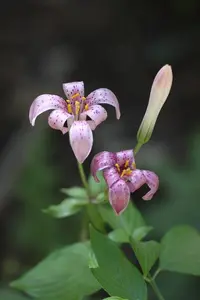
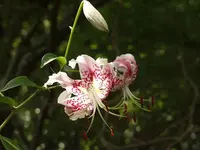
Redwood lily, Lilium rubescens, is a perennial bulb-forming lily native to coastal forests and woodland edges of northern California and southern Oregon. It typically grows with upright stems bearing whorled leaves and elegant, nodding flowers.
Its blossoms are usually pale pink to deep rose with darker spots and a slightly reflexed, trumpet-shaped form, attracting native pollinators. In the wild it prefers dappled light, cool roots, and well-drained but moisture-retentive soils.
This species can be moderately challenging, as it dislikes disturbance and needs protection from heavy heat and prolonged dryness. Understanding how to care for redwood lily starts with providing stable moisture, good drainage, and shelter from harsh conditions.

Care Difficulty
Moderate Care

Light Preference
Partial Shade

Water Requirements
Moderate Water

Temperature Preference
Cool Climate

Hardiness Zone
7–9

Soil Texture
Sandy, Loamy, Organic-rich

Soil pH
Acidic (5.5–6.5)

Soil Drainage
Moist but well-drained

Fertilization
Minimal (feed rarely)
Scan your plant to receive care tips personalized for your specific plant
Available on iOS and Android
This species prefers bright, gentle light that mimics open woodland edges.
This lily prefers consistently moist but never waterlogged soil around its bulbs.
This native lily is adapted to mild, coastal-influenced climates with cool nights.
This species handles a wide humidity range but grows best with moderately moist air.
This species prefers loose, moist, sharply drained soil that mimics light forest conditions.
This species can be grown in containers if the pot is deep and drainage is carefully managed.
Lilium rubescens benefits from light, targeted feeding rather than heavy fertilization.
Pruning for Lilium rubescens focuses on hygiene and energy conservation rather than shaping.
Transplanting Lilium rubescens focuses on minimal disturbance to the bulbs and roots.
Propagation of Lilium rubescens is moderately slow and best done by bulb division or seed.
Winter care for Lilium rubescens is usually minimal where winters are mild and soils drain well.

Plant Health Check
Not sure what's wrong with your plant? Check your plant's health inside the app.
This coastal lily often captures moisture directly from Pacific fog through its leaves and petals, an important water source in its dry summer habitat.
Its pale, strongly fragrant, upward-facing flowers are adapted to attract native swallowtail butterflies, which are among its primary pollinators in coastal forests.
This species is naturally restricted to a relatively small area of coastal northern California and southern Oregon, where it grows in partial shade within redwood and mixed evergreen forests.

In the wild, this lily’s presence is often used by botanists as an indicator of relatively intact coastal forest ecosystems, since it tends to decline quickly when its habitat is heavily disturbed or fragmented.
Poor flowering often comes from bulbs that are too shaded, depleted, or overcrowded. Allow foliage to mature naturally each season, avoid deep planting, and divide congested clumps every few years to restore energy for buds.
Keep your plants happy and healthy with plant identification, disease detection, and easy care guidance.