Staggered Successive Sowing
Sow small batches every 2–3 weeks in early spring so flowering is spread over a longer period and you always have fresh stems for cutting.

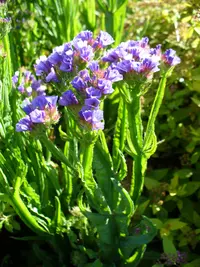
Wavyleaf sea lavender, Limonium sinuatum, is a short-lived perennial often grown as an annual, valued mainly for its papery, long-lasting flower heads. It forms low clumps of wavy-edged leaves at the base, sending up upright, branching stems topped with clusters of tiny funnel-shaped flowers surrounded by colorful bracts.
This species is native to Mediterranean coastal regions, so it is adapted to sun, wind, and relatively poor, well-drained soils. Once established, it shows good drought tolerance and handles heat well, which makes it relatively easy to grow in dry, sunny gardens.
Gardeners who want to learn how to care for wavyleaf sea lavender only need to focus on providing strong light, modest watering, and soil that does not stay wet for long periods.

Care Difficulty
Easy Care

Light Preference
Full Sun

Water Requirements
Low Water

Temperature Preference
Warm Climate

Hardiness Zone
8–11

Soil Texture
Sandy, Loamy, Rocky

Soil pH
Slightly acidic (6.5–7.0), Slightly alkaline (7.0–7.5)

Soil Drainage
Well-drained

Fertilization
Minimal (feed rarely)
Scan your plant to receive care tips personalized for your specific plant
Available on iOS and Android
Limonium sinuatum thrives in strong light that mimics open, coastal or field conditions.
This species prefers dry-leaning conditions and is sensitive to excess moisture around the roots.
This plant performs best in warm, dry conditions with mild nights and low humidity.
This species prefers dry to moderately dry air and rarely needs humidity adjustment.
This plant prefers lean, very well-drained, sandy soil that never stays waterlogged.
This species can grow in containers if drainage and root space are carefully managed.
Limonium sinuatum benefits from modest feeding in poor soils but usually needs no heavy fertilization.
Pruning Limonium sinuatum focuses on deadheading and removing weak growth to sustain flowering.
This species is usually grown as a bedding or cutting-garden annual, so transplanting timing matters more than pot size changes.
Limonium sinuatum is most commonly propagated from seed for consistent, vigorous plants.
Limonium sinuatum is usually treated as an annual and does not need complex winter care in most climates.

Plant Health Check
Not sure what's wrong with your plant? Check your plant's health inside the app.
The colorful calyces of this species are papery and strongly retain their shape and color after drying, which is why it is widely used in everlasting and dried flower arrangements.
Although this species is most often grown in gardens and fields, it belongs to a genus that evolved in coastal and saline habitats, which helps explain its notable tolerance of relatively poor, sandy, or slightly salty soils.
Modern ornamental strains descend from Mediterranean wild populations but have been extensively selected to produce a wide and stable palette of calyx colors, including white, yellow, pink, lavender, and deep violet, often mixed in commercial seed lines.

The intricate, branched inflorescences of this species make it a standard in the global cut-flower trade, where stems are often harvested just as the small white corollas emerge from the colored calyces to maximize vase life and value in both fresh and dried arrangements.
Lack of flowers often comes from nutrient-rich or heavy soil, overcrowding, or too much shade. Lean, well-drained soil, full sun, and avoiding high-nitrogen fertilizer usually restore flowering. Deadheading spent stems also supports continued bloom.
Keep your plants happy and healthy with plant identification, disease detection, and easy care guidance.