Use gritty topdress
Apply a 1–2 cm layer of fine gravel or coarse sand around the crowns to keep the collar dry, reduce soil splash on the foliage, and lower the risk of crown rot in wet spells.

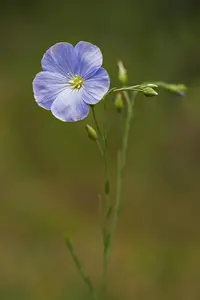
Blue flax, Linum perenne, is a short-lived perennial wildflower known for its fine, grassy foliage and delicate sky-blue flowers. It forms loose clumps and often appears airy and light in mixed plantings.
This species is native to Europe and western Asia but is widely grown in North America in meadows, pollinator gardens, and naturalistic borders. Flowers open in the morning and usually drop by afternoon, but new blooms appear daily through the main season.
Blue flax is generally easy to grow where it has full sun, well-drained soil, and relatively low to moderate moisture. Gardeners who care for blue flax appreciate its resilience, drought tolerance once established, and minimal maintenance needs.

Care Difficulty
Easy Care

Light Preference
Full Sun

Water Requirements
Moderate Water

Temperature Preference
Cold Hardy

Hardiness Zone
4–8

Soil Texture
Sandy, Loamy, Rocky

Soil pH
Acidic (5.5–6.5), Slightly acidic (6.5–7.0)

Soil Drainage
Well-drained

Fertilization
Minimal (feed rarely)
Scan your plant to receive care tips personalized for your specific plant
Available on iOS and Android
This sun-loving perennial produces best flowering in open, bright conditions.
This species prefers moderately dry conditions and dislikes prolonged soil saturation.
This hardy perennial tolerates a wide temperature range but flowers best in mild conditions.
Linum perenne handles a wide humidity range and rarely needs special humidity management outdoors.
Linum perenne prefers lean, well-drained, mineral soils that do not stay wet after rain or irrigation.
This species is suitable for short-lived container displays in sunny, outdoor locations.
Linum perenne is adapted to lean soils and usually needs only light feeding in garden settings.
Pruning Linum perenne is simple and helps maintain a neat clump and steady flowering.
Linum perenne is usually grown in the ground and resents frequent disturbance, so transplant only when necessary.
Propagation of Linum perenne is most reliable from seed, with some potential for careful division in young clumps.
Linum perenne is generally cold hardy in temperate climates and needs minimal winter care in the ground.

Plant Health Check
Not sure what's wrong with your plant? Check your plant's health inside the app.
Linum perenne is a relatively short‑lived perennial that often relies on self‑seeding to maintain stable colonies, so wild stands can persist for many years even though individual plants do not live very long.
Each blue flower usually lasts only one day, often opening in the morning and dropping its petals by afternoon, while the plant continuously produces new buds over several weeks.
This species is naturally adapted to dry, rocky, or low‑fertility soils in open habitats, using a slender but deep root system to access moisture and remain competitive where many other forbs struggle.

The strong but fine fibers of Linum perenne have been locally used as a supplementary source of bast fiber in parts of Europe and western Asia, although it has never rivaled common flax (Linum usitatissimum) in large‑scale textile production.
Poor flowering usually comes from low light, excess nitrogen fertilizer, or overly rich, wet soil. Avoid heavy feeding, ensure full sun exposure, and deadhead spent flowers. Consistent, moderate conditions are key when growing blue flax for reliable blooms.
Keep your plants happy and healthy with plant identification, disease detection, and easy care guidance.