Chinese tuliptree Care (Liriodendron chinense)

Also known as: Chinese Whitewood, Chinese tulip poplar
Chinese tuliptree

About Chinese tuliptree

The Chinese tuliptree, Liriodendron chinense, is a large deciduous tree grown mainly as an ornamental shade tree. It develops a straight trunk, broad crown, and distinctive lobed leaves that turn clear yellow in autumn.

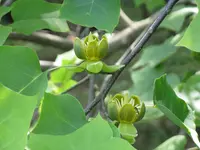
In its natural range, it occurs in forests of central and southern China and parts of northern Vietnam. The tree can flower with upright, tulip-shaped, yellow-green blooms, though flowering often appears only on more mature specimens.

This species grows best in full sun to light shade, with evenly moist, deep, well-drained soil. A gardener who understands how to care for Chinese tuliptree will find it moderate in difficulty due to its eventual size and need for space.

Main Plant Requirements

Care Difficulty

Moderate Care

Light Preference

Full Sun

Water Requirements

Regular Water

Temperature Preference

Cold Hardy

Hardiness Zone

6–9

Soil Texture

Loamy, Silty, Organic-rich

Soil pH

Acidic (5.5–6.5), Slightly acidic (6.5–7.0)

Soil Drainage

Moist but well-drained

Fertilization

Minimal (feed rarely)

Get Personalized Care Plan

Scan your plant to receive care tips personalized for your specific plant

Available on iOS and Android

How to Care for the Chinese tuliptree

This deciduous tree prefers bright exposure with some protection from intense afternoon sun.

  • Provide 6–8 hours of direct sun daily, ideally with morning sun and light afternoon shade, especially in hotter regions.
  • Young Chinese tuliptree specimens benefit from dappled or filtered light during their first 2–3 years to reduce leaf scorch and moisture stress.
  • In cooler climates it tolerates full sun all day; in very hot summers, inadequate shade can cause leaf edges to brown, while deep shade leads to sparse, leggy growth.

This species prefers consistently moist but not waterlogged soil, especially while establishing.

  • Outdoors in the ground, water when the top 3–5 cm of soil feels dry, giving a slow, deep soak that moistens the upper 20–30 cm of soil profile.
  • During the first 2–3 growing seasons, increase watering frequency in hot, dry periods; reduce in cool, rainy weather to avoid standing water.
  • Signs of overwatering include yellowing leaves and soft new growth, while dull, curling, or browning leaf edges usually indicate the tree is staying too dry.

This temperate-climate tree is adapted to distinct seasons with cold winters and warm summers.

  • Active growth is best at 65–80°F (18–27°C), with slightly cooler nights supporting balanced shoot and root development.
  • Established trees tolerate winter lows near -10°F (-23°C), but young plants need protection from hard frost and drying winter winds.
  • In summer, sustained heat above 95°F (35°C) can stress Liriodendron chinense, so mulch the root zone and ensure adequate soil moisture during hot spells.

Humidity plays a minor role for Liriodendron chinense, which is mainly sensitive to soil moisture and wind exposure.

Liriodendron chinense prefers deep, moisture-retentive yet well-drained soil to support its fast growth and large root system.

  • Use a loamy soil rich in organic matter, blending native soil with 25–40% compost where possible.
  • Aim for slightly acidic to neutral pH, roughly 5.5–7.0, avoiding strongly alkaline or saline sites.
  • Ensure drainage is steady, not rapid, so soil stays evenly moist without standing water after rain or irrigation.
  • On compacted or heavy clay sites, improve structure with coarse compost and fine bark to increase aeration and reduce waterlogging.

This tree is only suitable for short-term container growing when young, as its vigorous roots quickly outgrow pots.

  • Choose a tall, heavy container to provide root depth and prevent tipping as the canopy gains height and sail area in wind.
  • Select a potting mix that holds moisture but drains freely, such as a peat- or coir-based mix amended with 20–30% pine bark fines.
  • Position the container where wind exposure is reduced, since a tall, top-heavy tree in a pot is more prone to rocking and root damage.

Mature Liriodendron chinense in the ground usually grows well in decent soil, but young or container trees respond to moderate feeding.

  • Apply a balanced slow-release fertilizer (for example 10-10-10) or well-rotted compost once in early spring.
  • Feed container plants again in midsummer with a diluted balanced liquid fertilizer at 1/2 strength.
  • Avoid fertilizing in late fall and winter to prevent soft, frost-tender growth.
  • Water before and after feeding to reduce root burn and help nutrients move into the soil.

Liriodendron chinense needs only light, well-timed pruning to maintain a strong structure and safe size.

  • Carry out structural pruning in late winter or very early spring before bud break.
  • Remove dead, damaged, rubbing, or crossing branches first, using clean bypass pruners or a sharp pruning saw.
  • Thin crowded inner branches to improve light penetration and airflow while keeping the natural, upright form.
  • Limit cuts on mature trunks, as large wounds close slowly and can invite decay.

This tree is usually grown in the ground, so focus on careful transplanting of young specimens rather than long-term container repotting.

  • Transplant in late fall or early spring while the tree is dormant to reduce stress.
  • Look for circling roots, root-bound containers, or poor, stunted growth as signs a nursery plant needs a larger space.
  • Prepare a wide planting hole with well-drained soil; gently tease apart circling roots and keep the root flare at soil level.
  • Water deeply after planting and keep soil evenly moist for the first growing season to support new root establishment.

Liriodendron chinense is usually propagated professionally, as seeds and cuttings both require controlled conditions for good success.

  • Collect ripe seed in fall; sow in a cold frame or use cold stratification at 34–41°F for 2–3 months.
  • Provide a free-draining, slightly acidic seed mix and keep evenly moist until germination in spring.
  • Take semi-hardwood cuttings in midsummer, apply rooting hormone, and place in high humidity with bottom heat around 70–75°F.
  • Expect slow early growth and cull weak seedlings, keeping only strong, straight young trees.

Established trees are reasonably cold hardy, but young Liriodendron chinense benefits from simple winter protection in colder regions.

  • Tolerates light to moderate frost once established, but young trees may suffer bark or bud damage in severe cold.
  • Apply 5–8 cm of organic mulch around the root zone, keeping it a few cm away from the trunk.
  • Wrap the lower trunk of young trees with a breathable tree guard in late fall to reduce frost cracks and sunscald.
  • Move container-grown specimens into a sheltered, unheated space above freezing, and water sparingly but do not allow roots to dry out completely.

Care Tips

Establish strong leader

In the first 3–5 years, select and lightly stake a single central leader and remove only competing upright shoots so the tree develops a stable, wind-resistant structure.

Protect tender bark

Young trunks sunscald and crack easily, so use a breathable tree wrap or plant temporary nurse shrubs on the southwest side to shade the lower stem for the first 2–3 summers.

Mulch wide, not deep

Apply a 5–8 cm layer of wood chip mulch in as wide a circle as possible, keeping it 5–8 cm away from the trunk, to keep roots cool, conserve moisture, and reduce mower damage.

Plan generous root zone

Keep lawn, heavy foot traffic, and paving away from at least the area under the future canopy spread, since fine roots are shallow and decline when soil is compacted or repeatedly dried.

Monitor for storm damage

After major storms, check for split branch crotches and torn limbs and make clean reduction or removal cuts promptly to prevent decay and maintain long-term structure when growing Chinese tuliptree.

Common Pests and Diseases

Tuliptree scale

This pest is a sap-sucking insect that forms rounded, brown to gray scales along young stems and branches, often causing leaf yellowing and branch dieback. Heavy infestations can weaken trees and produce sticky honeydew that attracts sooty mold.

Solution

Prune out and dispose of heavily infested twigs where practical, then target remaining scales with horticultural oil during the crawler stage in late spring to early summer. Keeping the tree well watered during dry periods and avoiding excess nitrogen fertilizer helps it tolerate damage and supports natural predators such as lady beetles that reduce tuliptree scale populations.

Aphids

These insects cluster on young shoots and leaf undersides, sucking sap and causing leaf curling, distortion, and sticky honeydew deposits. Sooty mold often develops on the honeydew, giving leaves and bark a dark, dirty appearance.

Solution

Dislodge aphids by spraying foliage with a strong stream of water, repeating as needed, and encourage beneficial insects by avoiding broad-spectrum insecticides. For persistent infestations on young trees, apply insecticidal soap or horticultural oil, ensuring thorough coverage of shoot tips and leaf undersides in cool, overcast conditions to avoid leaf burn.

Leaf spot

This disease causes small to medium brown or tan spots on foliage, sometimes with darker margins, leading to early leaf drop in humid or wet seasons. Symptoms include scattered lesions that may merge into larger irregular patches, especially on lower, denser parts of the canopy.

Solution

Rake and remove fallen leaves in autumn to reduce fungal spores, and improve air movement around the tree by avoiding overcrowding and excessive low branching. In landscapes with a history of severe leaf spot, apply a labeled ornamental tree fungicide in early spring as new leaves emerge, following local extension guidance for timing and safety.

Verticillium wilt

This disease is caused by a soil-borne fungus that infects the water-conducting tissues of roots and stems, leading to wilting, yellowing, and dieback of individual branches or whole sections of the canopy. Symptoms include sudden midseason wilt on one side of the tree and brown streaking in the sapwood under the bark.

Solution

There is no direct cure, so management focuses on reducing stress by deep, infrequent watering in dry periods, mulching the root zone with 5–8 cm of organic mulch, and avoiding root injury. Remove and destroy severely affected branches, disinfect pruning tools between cuts, and avoid planting other verticillium-susceptible species in the same area; when establishing new trees, choose well-drained sites and healthy nursery stock as part of Liriodendron chinense care instructions.

Interesting Facts

Distinct leaf silhouette

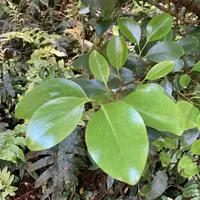
This species has broad, four-lobed leaves with a flat, almost notched tip, giving the canopy a very different outline from the more deeply notched leaves of the North American tuliptree Liriodendron tulipifera.

Restricted native range

It is naturally native to parts of central and southeastern China and northern Vietnam, where it grows in montane and valley forests and is now considered rare or locally endangered in several parts of its range due to habitat loss.

Pale tulip-like flowers

The greenish-yellow flowers are shaped like small tulips and often lack the strong orange band seen in its American relative, which makes the blooms more cryptic against the foliage in the canopy.

Botan icon

Did you know?

This species played an important role in mid-20th-century tree-breeding programs, being crossed with Liriodendron tulipifera to produce hybrid trees that combine better cold hardiness, ornamental form, and potential timber value, illustrating how Liriodendron chinense care influences its use in modern horticulture and forestry.

FAQs about Chinese tuliptree

Lack of flowers usually comes from youth, insufficient light, heavy pruning, or nutrient imbalance. Trees often need several years to mature. Avoid strong nitrogen fertilizers, preserve branch tips, and maintain consistent moisture to support bud formation.

Grow Healthy Plants with Botan Care

Keep your plants happy and healthy with plant identification, disease detection, and easy care guidance.

Botan plant care app — identify plants on mobile

Explore More Plants