Clump division
Divide mature clumps every 4–6 years in late winter or early spring by lifting, cutting the root mass into sections with a sharp spade, and replanting divisions at the same depth to rejuvenate growth and produce uniform plants.

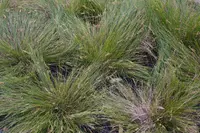
Lomandra confertifolia is a compact, grass-like perennial from Australia, valued for its fine, arching leaves and neat, tufted clumps. It is often used as a low-maintenance edging or mass-planting option in gardens and public landscapes.
This species tolerates wind, light frost, and a range of soils, which makes it adaptable in many climates. It generally prefers well-drained soil, moderate moisture, and sun to light shade.
Its slow, steady growth and resilience to irregular watering make it suitable for both beginners and busy gardeners. Understanding how to care for Lomandra confertifolia mainly involves providing good drainage and avoiding heavy, waterlogged conditions.

Care Difficulty
Easy Care

Light Preference
Partial Sun

Water Requirements
Moderate Water

Temperature Preference
Warm Climate

Hardiness Zone
8–11

Soil Texture
Sandy, Loamy, Clay

Soil pH
Acidic (5.5–6.5), Slightly acidic (6.5–7.0)

Soil Drainage
Moist but well-drained

Fertilization
Minimal (feed rarely)
Scan your plant to receive care tips personalized for your specific plant
Available on iOS and Android
This grass-like perennial prefers bright conditions but adapts to a range of outdoor light exposures.
This plant is drought-tolerant once established but grows best with moderate, well-timed watering.
This hardy grass-like plant tolerates a broad outdoor temperature range in many mild to warm climates.
This species handles a wide humidity range and rarely needs special humidity management.
Lomandra confertifolia prefers free-draining, moderately fertile soil that resists waterlogging.
This species grows reliably in containers when given a stable, well-drained setup.
This tough grass-like species needs only light feeding in most garden soils.
Pruning is minimal and mainly helps keep the clump tidy and long-lived.
This plant is usually grown in the ground, with transplanting needed only when clumps outgrow their space.
Division is the most reliable method for maintaining named forms and clump character.
This species is generally cold hardy in mild to moderate climates and needs only light winter care.

Plant Health Check
Not sure what's wrong with your plant? Check your plant's health inside the app.
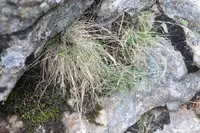
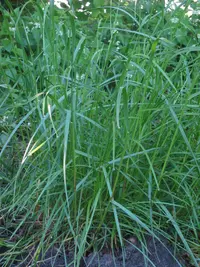
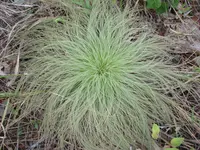
This species forms dense tussocks of very narrow, arching leaves that create a fine-textured, weeping appearance distinct from broader-leaved Lomandra species used in landscaping.
Its fibrous root system and flexible, strap-like leaves allow it to tolerate exposed, windy sites where more rigid ornamental grasses may lodge or break.
In its native range, it is often found on shallow, nutrient-poor sandstone-derived soils, showing a strong adaptation to low fertility and periodic dryness.
This species is evergreen in most mild climates, keeping its strappy foliage year-round. In colder areas, leaf tips may burn or thin in winter, but new growth usually replaces damaged foliage in spring without replanting.
Keep your plants happy and healthy with plant identification, disease detection, and easy care guidance.