floating primrose-willow Care (Ludwigia peploides)

Also known as: water primrose, primrose willow, Floating seedbox
floating primrose-willow

About floating primrose-willow

Floating primrose-willow (Ludwigia peploides) is an aquatic or semi-aquatic perennial that forms dense mats on still or slow-moving water. It is often found along ponds, lakes, rivers, and irrigation channels in warm and temperate regions.

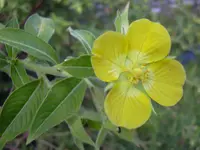
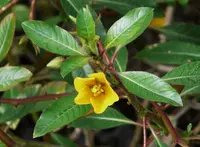
The plant has glossy green, oval leaves and bright yellow, buttercup-like flowers that sit above the water surface. Stems root at the nodes, allowing it to spread rapidly and cover large areas.

Its fast growth and tolerance of varied water conditions make it vigorous but sometimes invasive, so it needs firm control in managed ponds. Those who want to care for floating primrose-willow should provide full sun, consistently wet conditions, and nutrient-rich, muddy or shallow submerged soil.

Main Plant Requirements

Care Difficulty

Moderate Care

Light Preference

Full Sun

Water Requirements

Aquatic

Temperature Preference

Warm Climate

Hardiness Zone

7–11

Soil Texture

Sandy, Loamy, Silty

Soil pH

Slightly acidic (6.5–7.0), Neutral (7.0)

Soil Drainage

Waterlogged tolerant

Fertilization

Minimal (feed rarely)

Get Personalized Care Plan

Scan your plant to receive care tips personalized for your specific plant

Available on iOS and Android

How to Care for the floating primrose-willow

Ludwigia peploides grows best with abundant sun exposure in shallow water or wet soil.

  • Provide 6–10 hours of direct sun daily; in hot inland summers, aim for morning sun with light afternoon shade to reduce leaf scorching.
  • The plant tolerates partial shade, but stems stretch and flowering drops if it receives less than about 4 hours of direct light.
  • In cooler seasons, allow more open southern exposure so floating primrose-willow maximizes lower-angle sunlight for strong growth.

This species is an aquatic to semi-aquatic plant that prefers consistently saturated conditions rather than fluctuating wet–dry cycles.

  • Site Ludwigia peploides where water stands or flows slowly; for bank plantings, keep soil constantly saturated and never let the top 2–5 cm fully dry.
  • Yellowing, limp foliage with soft, rotting stems indicates stagnant, low-oxygen water or excessive organic buildup rather than simple underwatering.
  • In hot periods, monitor water levels more often, topping up ponds or ditches so roots remain submerged and exposed mud does not crack or overheat.

This warm-temperate to subtropical aquatic plant grows fastest in mild to warm conditions and slows markedly in cold.

  • Optimal growth occurs around 68–86°F (20–30°C), where stems spread rapidly and rooting along nodes is most vigorous.
  • The plant survives brief drops to about 32°F (0°C), but repeated frosts damage foliage and can kill exposed stems above the waterline.
  • Growth declines above roughly 95°F (35°C); maintain deeper or moving water in heat waves to buffer temperature and prevent stress.

This aquatic species relies on high ambient humidity close to 70–100% around leaves and stems.

  • Floating primrose-willow tolerates brief dips to 50–60% humidity if roots stay submerged, but aerial growth declines.
  • Low humidity causes curled, dry leaf edges and slower stem extension above the water surface.
  • Increase humidity by maximizing water surface area, grouping aquatic containers, and avoiding strong, drying air movement over the plant.

Ludwigia peploides prefers saturated, organic-rich substrates that stay waterlogged rather than typical garden soils.

  • Use heavy loam or clay mixed with 30–50% decomposed organic matter such as composted leaf mold to anchor roots under water.
  • Aim for pH 6.0–7.5, which supports nutrient availability and stable growth in ponds or bog-style planters.
  • Avoid fast-draining, sandy mixes that let water escape quickly and leave roots exposed or floating loose.
  • In lined beds or containers, cap the soil with a thin layer of washed sand or fine gravel to limit clouding and improve stability.

This species can be grown in containers when those containers are treated as mini-ponds or bogs.

  • Choose a wide, low tub or planter to accommodate horizontal stem spread and reduce tipping in shallow water.
  • Use a solid, non-porous container so water level and saturation remain stable without rapid seepage through walls.
  • Place the container where rising stems can spread across a water surface or support grid rather than spilling onto walkways.

This aquatic species grows vigorously and usually needs only light supplemental feeding in managed ponds or containers.

  • Use a balanced liquid or slow-release aquatic fertilizer with a moderate NPK ratio, applied to the root zone rather than directly into open water.
  • Feed during the warm growing season every 4–6 weeks if growth or leaf color is weak, avoiding heavy applications that encourage invasiveness.
  • Dilute liquid fertilizer to 1/2–1/4 strength to minimize nutrient runoff and algae issues around floating primrose-willow.
  • Skip or greatly reduce fertilization in late fall and winter, when growth slows or the plant becomes partially dormant.

Pruning helps keep Ludwigia peploides contained and maintains healthy, manageable growth in ponds or wetland plantings.

  • Carry out main pruning in late spring to mid-summer, when plants are actively growing and can recover quickly.
  • Remove dead, damaged, or diseased stems first, then thin crowded or excessively long runners to limit spread.
  • Cut stems just above a node with clean, sharp scissors or pruners to reduce tearing and encourage branching.
  • Dispose of all cut material securely to prevent fragments from rooting downstream or colonizing new areas.

This species is more often managed by transplanting in ponds or wetlands than by traditional indoor repotting.

  • Transplant in spring or early summer when water temperatures are warming and new growth is active.
  • Move clumps if growth becomes too dense, water flow is obstructed, or plants outgrow their allotted zone.
  • Lift sections with roots and attached stems, then replant at the same depth in soft, silty or loamy substrate and anchor if needed.
  • Handle roots gently, keep them moist during transfer, and trim only damaged portions to reduce transplant shock.

Ludwigia peploides is commonly propagated vegetatively, so management focuses on controlled, deliberate propagation rather than casual spread.

  • Use stem cuttings taken in late spring or summer, selecting healthy, non-woody shoots with several nodes.
  • Place cuttings in shallow, warm water or saturated soil so 1–2 nodes are submerged, as roots form quickly at nodes.
  • Maintain full sun to light shade and stable moisture around cuttings to support rapid rooting and new shoot growth.
  • Seed propagation is possible but slower; sow fresh seed in trays of wet, fine substrate kept consistently warm and saturated.

In many climates this aquatic perennial is reasonably cold hardy and usually needs minimal winter care in established ponds.

  • In regions with mild to moderate winters, allow top growth to die back naturally while underwater stems and roots overwinter.
  • In colder zones, ensure rooted portions remain below the ice line so crowns are insulated by water.
  • For container-grown plants in exposed sites, move tubs into frost-free or minimally heated spaces to prevent complete freezing of the root mass.

Care Tips

Contain Spreading Mats

Use rigid pond edging, floating booms, or submerged barriers around the planting area to prevent stems from rooting at the margins and spreading into unwanted zones when growing floating primrose-willow.

Regular Biomass Thinning

Skim or hand-pull excess floating stems and leaves every 2–4 weeks during the warm season, removing them from the water so decomposing material does not deplete oxygen or add excess nutrients.

Secure Plant Anchoring

Plant into weighted aquatic baskets or anchor stems with inert weights (such as stone-filled mesh bags) so the colony stays in place and does not drift into pumps, overflows, or natural outlets.

Monitor Water Nutrients

Test water periodically for nitrate and phosphate; if values rise, reduce external nutrient inputs or add competing aquatic plants to limit overly aggressive vegetative growth.

Inspect For Invasiveness

Check local regulations and monitor nearby waterways for escapees, and if any plants spread beyond the intended area, remove them promptly and dispose of all fragments in sealed bags with regular trash rather than composting.

Common Pests and Diseases

Leaf-mining midges

This pest lives and feeds inside the leaves, creating pale, winding tunnels and blotches that can cause yellowing and premature leaf drop on floating mats.

Solution

Remove and destroy heavily mined leaves to reduce larvae, then encourage natural predators such as predatory wasps by avoiding broad-spectrum insecticides; in small ponds or tubs, affected stems can be pruned back and discarded away from the water body to disrupt the life cycle.

Flea beetles

These insects chew many small, round holes in leaves, giving them a shot‑holed or lace-like appearance and weakening dense surface mats.

Solution

Hand-pick adults from emergent stems where possible and reduce nearby weedy hosts; if damage is significant, use a targeted insecticidal soap or pyrethrin spray on emergent foliage only, applied in calm weather to limit drift into open water.

Aphids

These insects cluster on young shoots and undersides of leaves, sucking sap and causing curling, distortion, and sticky honeydew that can attract sooty mold.

Solution

Rinse colonies off emergent stems with a firm stream of water or submerge infested portions briefly where practical; for persistent infestations on ornamental plantings, use insecticidal soap or horticultural oil on above-water tissue, repeating applications as new aphids appear.

Rust fungus

This disease appears as small yellow to orange spots or pustules on leaves and stems, which can merge and cause premature leaf drop in dense stands.

Solution

Remove and dispose of heavily infected emergent shoots to reduce spore load, avoid overhead watering in managed plantings, and improve water circulation; for high-value displays, a labeled fungicide for aquatic or marginal plants may be used carefully according to local regulations as part of broader Ludwigia peploides plant care.

Interesting Facts

Floating mat architecture

This species forms dense floating mats using buoyant, spongy stems and leaf petioles that trap air, allowing the plant to spread horizontally across still or slow-moving water surfaces.

Clonal water spread

It reproduces very effectively by fragmentation; small stem pieces with nodes can root and form new plants, which makes it a highly successful colonizer of ponds, ditches, and slow rivers.

Oxygen-tolerant roots

Roots are adapted to low-oxygen conditions typical of submerged or waterlogged substrates, with internal air spaces that help transport oxygen from leaves to below-water tissues.

Botan icon

Did you know?

In regions where it has been introduced outside its native range in the Americas, this species can alter freshwater ecosystems so strongly that it reduces open water, shades out submerged plants, and even interferes with recreational use and flood-control infrastructure.

FAQs about floating primrose-willow

This species spreads rapidly via creeping stems and fragments that root easily, often forming dense mats. In many regions it is considered invasive, so growth must be monitored, contained, and regularly thinned to prevent ecological and structural problems.

Grow Healthy Plants with Botan Care

Keep your plants happy and healthy with plant identification, disease detection, and easy care guidance.

Botan plant care app — identify plants on mobile

Explore More Plants