Establish Strong Leader
In the first 2–3 years, select one main trunk and remove competing upright stems during late winter so the tree develops a stable central leader that resists wind damage as it matures.

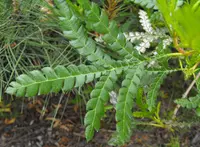
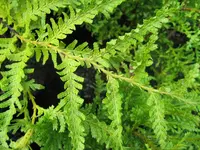
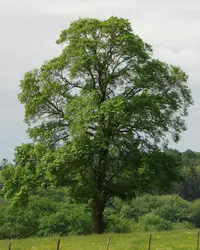
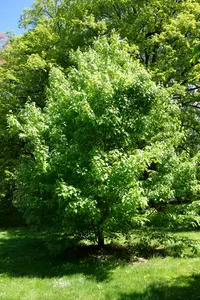
Catalina ironwood (Lyonothamnus floribundus) is an evergreen tree native to the Channel Islands and coastal areas of southern California. It forms a tall, narrow crown with finely divided, fernlike foliage and smooth, peeling bark in shades of reddish brown and gray.
In cultivation it is used mainly as an ornamental or screening tree in mild, frost-free climates. It grows quickly when young but can be sensitive to extreme cold, reflected heat, and poorly drained or compacted soils.
Gardeners who care for Catalina ironwood should provide full sun, moderate but not constant moisture, and well-drained soil to support healthy growth and reduce stress-related problems.

Care Difficulty
Moderate Care

Light Preference
Full Sun

Water Requirements
Low Water

Temperature Preference
Warm Climate

Hardiness Zone
8–10

Soil Texture
Sandy, Loamy, Rocky

Soil pH
Slightly acidic (6.5–7.0), Neutral (7.0)

Soil Drainage
Well-drained

Fertilization
Minimal (feed rarely)
Scan your plant to receive care tips personalized for your specific plant
Available on iOS and Android
This species prefers bright, direct coastal-type light but adapts to a range of full sun conditions.
This drought-tolerant tree prefers deep, infrequent watering once established in well-drained soil.
This coastal evergreen tree thrives in mild, frost-free or low-frost climates.
This species is adapted to dry coastal climates and does not need elevated humidity.
This drought-adapted tree prefers sharply drained, relatively lean mineral soils.
This species can be grown in containers for a limited time, mainly when young.
Lyonothamnus floribundus is adapted to low-nutrient soils, so heavy feeding is unnecessary, but light fertilization can support growth in poor sites.
Lyonothamnus floribundus benefits from modest structural pruning to maintain a stable canopy and display its attractive bark.
This species is usually planted directly in the ground; transplanting young trees correctly is more important than ongoing repotting.
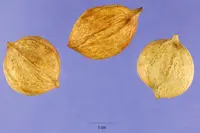
Lyonothamnus floribundus is usually propagated by seed for restoration or landscape use, though success requires suitable conditions.
Lyonothamnus floribundus prefers mild, frost-free climates and can be damaged by hard freezes.

Plant Health Check
Not sure what's wrong with your plant? Check your plant's health inside the app.
This species is naturally restricted to California’s Channel Islands and nearby coastal areas, where it forms small, localized groves on rocky slopes and canyon walls.
Mature trees develop striking reddish-brown bark that peels in thin, papery layers, revealing smooth gray to pinkish new bark beneath and creating a characteristic patterned trunk.
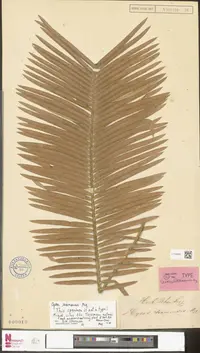
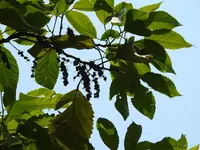
Its evergreen foliage consists of finely divided, fernlike leaflets arranged along a central axis, an unusual leaf form among North American trees that helps reduce water loss in its dry, maritime habitat.

Fossil evidence shows that close relatives of this tree were once widespread along the Pacific coast of North America, but today it survives in nature only as a relict species on the Channel Islands, making it a living reminder of an older coastal flora.
This tree is generally moderate to fast growing, often adding 30–60 cm of height per year once established. Growth slows in poor, compacted, or very dry soils and in locations with intense reflected heat.
Keep your plants happy and healthy with plant identification, disease detection, and easy care guidance.