lanceleaf loosestrife Care (Lysimachia lanceolata)

lanceleaf loosestrife

About lanceleaf loosestrife

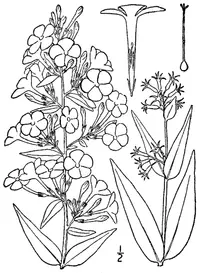
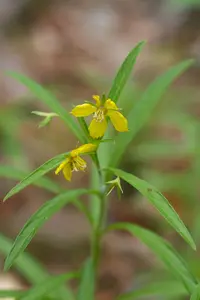
Lanceleaf loosestrife (Lysimachia lanceolata) is a herbaceous perennial wildflower in the primrose family. It forms clumps of upright stems with narrow, lance-shaped leaves. In late spring to summer, it produces small, yellow, star-shaped flowers along the stems, giving a soft, naturalistic look suited to meadows and informal beds. This species is native to central and eastern North America, where it grows in open woods, prairies, and roadsides. It adapts to a range of soils if drainage is reasonable and usually prefers full sun to light shade with consistent moisture. These traits make it relatively straightforward to care for lanceleaf loosestrife in typical garden conditions.

Main Plant Requirements

Care Difficulty

Easy Care

Light Preference

Full Sun

Water Requirements

Regular Water

Temperature Preference

Cold Hardy

Hardiness Zone

4–9

Soil Texture

Sandy, Loamy, Clay

Soil pH

Acidic (5.5–6.5), Slightly acidic (6.5–7.0)

Soil Drainage

Moist but well-drained

Fertilization

Minimal (feed rarely)

Get Personalized Care Plan

Scan your plant to receive care tips personalized for your specific plant

Available on iOS and Android

How to Care for the lanceleaf loosestrife

This sun-loving perennial grows best in open sites where it receives consistent light each day.

  • Provide 6–8 hours of direct sun, ideally with morning sun and light afternoon shade in hotter regions, for compact growth and abundant flowering in lanceleaf loosestrife.
  • Tolerates partial shade (3–4 hours sun), but stems may stretch and flowering can decrease if shade dominates, especially under dense trees or structures.
  • In summer, monitor for leaf scorch in intense afternoon sun; in cooler seasons, slightly increased direct exposure helps maintain vigor.

This species prefers evenly moist soil but suffers if left either waterlogged or bone dry for long periods.

  • Water when the top 2–4 cm of soil feels slightly dry, allowing moisture to penetrate the root zone without creating standing water on the surface.
  • During hot, dry periods, increase frequency, while in cool or rainy seasons, reduce watering so the soil stays moist but not saturated, especially in heavy clay sites.
  • Signs of overwatering include yellowing, limp foliage and soft stems; underwatering shows as wilting, crisp leaf edges, and slow recovery after sun exposure.

This hardy perennial tolerates a wide range of outdoor temperatures when established in the ground.

  • Active growth is strongest around 60–80°F (16–27°C), when soil is warm and night temperatures stay above roughly 50°F (10°C).
  • Lysimachia lanceolata survives winter cold down to about -20°F (-29°C) in many temperate climates, dying back to the roots and resprouting in spring.
  • In summer heat above 90°F (32°C), provide soil mulch and consistent moisture to protect roots, as prolonged extreme heat with drought can stress and stunt growth.

This species handles a wide humidity range but prefers moderate ambient moisture.

  • Target 40–60% humidity, similar to most temperate outdoor conditions.
  • Plants tolerate short dry-air spells but may show leaf edge browning and slower growth if air stays very dry.
  • Increase humidity by grouping pots, placing containers near but not over water trays, or growing in slightly denser plantings outdoors.

Lysimachia lanceolata prefers moist, well-drained, organically enriched soil.

  • Use a loamy mix that retains moisture yet drains freely, such as garden loam blended with compost and coarse sand.
  • Aim for slightly acidic to neutral pH, roughly 6.0–7.0, for best nutrient availability and root health.
  • Improve drainage and aeration by incorporating 20–30% coarse sand or fine gravel into heavy or clay-based ground.
  • Avoid compacted, waterlogged, or extremely sandy soils where roots either suffocate or dry out too quickly.

This species is suitable for container growing in outdoor settings.

  • Choose a broad, medium-deep pot to accommodate its spreading root system and reduce crowding at the edges.
  • Use a heavier container material, such as ceramic or clay, to keep the plant stable as the top growth spreads outward.
  • Ensure drainage holes stay clear so excess irrigation or rainfall exits quickly, preventing persistent saturation in the lower third of the pot.

This native perennial usually needs little feeding in garden soil but responds to light nutrition in poorer sites when caring for lanceleaf loosestrife.

  • Apply a balanced, slow-release fertilizer (e.g., 10-10-10) at 1/2 strength once in early spring as growth starts.
  • On very sandy or low-organic soils, top-dress with a thin layer of compost in spring to support steady growth.
  • During summer, avoid additional high-nitrogen feed that may cause weak, floppy stems.
  • Stop fertilizing in late summer and do not feed in winter dormancy.

Lysimachia lanceolata benefits from simple, seasonal pruning to keep growth dense and flowering well.

  • In late winter or very early spring, cut back old, brown stems to just above ground level with clean hand pruners.
  • During the growing season, trim back leggy or crowded shoots to maintain a compact, controlled clump.
  • Remove dead, damaged, or diseased stems whenever noticed to improve airflow and reduce disease pressure.
  • After peak bloom, lightly shear spent flower stems if a tidier appearance is desired.

This species is more often transplanted in the ground than repotted, since it is usually grown as a hardy perennial in beds or borders.

  • Transplant in early spring or early fall when temperatures are mild and soil is moist but not waterlogged.
  • Look for tight clumps with crowded shoots or bare centers as a sign that division and relocation will improve vigor.
  • Lift the clump carefully with a spade, keep roots shaded and moist, and replant at the same depth in prepared soil.
  • Water thoroughly after transplanting and keep the root zone consistently moist for 1–2 weeks to reduce stress.

Lysimachia lanceolata is commonly propagated by division and also grown from seed under suitable conditions.

  • Divide established clumps in early spring or early fall, ensuring each division has several shoots and a healthy root mass.
  • Replant divisions immediately into moist, well-drained soil and water well to encourage fast re-establishment.
  • For seed, sow in fall or late winter outdoors so natural cold stratification can improve germination.
  • Keep germinating seeds and fresh divisions evenly moist and lightly mulched to protect young roots.

This hardy perennial usually overwinters outdoors in much of the US with minimal attention once established.

  • Plants tolerate typical frosts in USDA zones where they are commonly grown, with top growth dying back in late fall.
  • After the first hard frost, allow stems to brown, then cut them back close to ground level if desired.
  • Apply a 5–7 cm layer of organic mulch around the crown in colder areas to buffer freeze–thaw cycles.
  • In containers, move pots to a sheltered, unheated but frost-sheltered spot and keep soil barely moist.

Care Tips

Edge Containment

Install a shallow root barrier or edging 10–15 cm deep around beds to keep spreading shoots from invading nearby plantings while still allowing the clump to expand moderately inside its boundary.

Spring Division Refresh

Divide mature clumps every 3–4 years in early spring, replanting only the most vigorous outer sections to maintain dense, floriferous growth and reduce self-competition in the center of the patch.

Targeted Deadheading

Shear or hand-remove spent flower spikes before seeds mature if you want to limit self-sowing and keep the planting focused, especially near paths or mixed borders.

Mulch for Crown Protection

Apply a 3–5 cm layer of loose organic mulch around, but not directly on top of, the crowns to stabilize soil moisture, minimize heaving from freeze–thaw cycles, and reduce weed pressure.

Pollinator-Friendly Companions

Combine this species with other sun-loving, shallow-rooted natives rather than aggressive spreaders to support pollinators while avoiding competition that can weaken stems and reduce flowering when growing lanceleaf loosestrife.

Common Pests and Diseases

Leaf spot

This disease causes small brown to dark purple spots on leaves, often with a yellow halo, and can lead to premature leaf drop in moist conditions.

Solution

Remove and discard affected leaves, avoid overhead watering, and water early in the day so foliage dries quickly; improve spacing and airflow, and in persistent or severe cases use a copper-based or chlorothalonil fungicide labeled for ornamental perennials following all label directions.

Powdery mildew

This disease produces a white, powdery coating on upper leaf surfaces, which can cause leaves to curl, yellow, and lose vigor, especially in crowded plantings with shade and high humidity.

Solution

Thin or divide dense clumps to increase air movement, irrigate at the soil level instead of on foliage, remove heavily infected leaves, and apply a sulfur or potassium bicarbonate fungicide if conditions favor ongoing infection.

Rust

This disease shows as small orange to rust-colored pustules on the undersides of leaves, sometimes with pale or yellow spots above, and can weaken plants when infections are repeated year to year.

Solution

Promptly remove and destroy infected leaves, avoid overhead watering, maintain good plant spacing, and if rust recurs, apply a myclobutanil or chlorothalonil fungicide at the first signs of symptoms according to label instructions.

Aphids

These insects cluster on young stems and leaf undersides, sucking sap and causing distorted growth, sticky honeydew, and sometimes sooty mold on lanceleaf loosestrife foliage.

Solution

Spray stems and leaves with a firm jet of water to knock aphids off, encourage natural predators such as lady beetles, and use insecticidal soap or a light horticultural oil, making sure to coat the undersides of leaves and repeat as needed.

Spider mites

This pest becomes more common in hot, dry conditions, causing fine stippling on leaves, a dull or bronzed appearance, and sometimes very fine webbing between stems and leaves.

Solution

Increase humidity around plants, hose down foliage regularly to dislodge mites, remove heavily damaged leaves, and use insecticidal soap or a summer-weight horticultural oil applied thoroughly to both upper and lower leaf surfaces if populations remain high.

Interesting Facts

Native prairie associate

This species is naturally found in open prairies, glades, and dry open woods across central and eastern North America, where it often grows in thin, rocky, or sandy soils that many other perennials cannot tolerate.

Semi-evergreen foliage

In warmer parts of its range, the narrow lance-shaped leaves can persist through mild winters, giving it a semi-evergreen presence instead of a strictly summer-only appearance.

Late-spring nectar source

The yellow star-shaped flowers typically appear from late spring into early summer and provide a useful nectar and pollen source for native bees and other small pollinators during a seasonal gap between early spring ephemerals and peak summer bloomers.

Botan icon

Did you know?

Genetic and morphological studies indicate that what gardeners often consider a single lanceleaf loosestrife includes multiple regional varieties, reflecting local adaptation to different soils, climates, and prairie or woodland edge habitats across its native range.

FAQs about lanceleaf loosestrife

This species spreads by short rhizomes and self-seeding, forming loose clumps to small colonies over time. It is not usually aggressive in managed beds, but can slowly expand if soil is moist and competition is low.

Grow Healthy Plants with Botan Care

Keep your plants happy and healthy with plant identification, disease detection, and easy care guidance.

Botan plant care app — identify plants on mobile

Explore More Plants