Creeping Jenny Care (Lysimachia nummularia 'Aurea')

Also known as: Golden Creeping Jenny, Gold Moneywort
Creeping Jenny

About Creeping Jenny

Creeping Jenny (Lysimachia nummularia 'Aurea') is a low, trailing perennial often used as a groundcover or a spiller in containers and hanging baskets. It forms dense mats of round, coin-like leaves in a bright yellow-green shade. In suitable conditions, it can produce small, yellow cup-shaped flowers in summer, though the foliage is usually the main ornamental feature. This plant is native to Europe and western Asia but is widely grown in North America in gardens and containers. It grows quickly and can spread aggressively in the ground, which makes it easy to establish but sometimes invasive outdoors. Gardeners who care for Creeping Jenny value its vigorous growth, moisture tolerance, and ability to brighten shady or partially shaded spots.

Main Plant Requirements

Care Difficulty

Easy Care

Light Preference

Partial Sun

Water Requirements

Keep Soil Moist

Temperature Preference

Cold Hardy

Hardiness Zone

3–9

Soil Texture

Loamy, Silty, Organic-rich

Soil pH

Acidic (5.5–6.5), Slightly acidic (6.5–7.0)

Soil Drainage

Moist but well-drained

Fertilization

Light (every 4–6 weeks)

Get Personalized Care Plan

Scan your plant to receive care tips personalized for your specific plant

Available on iOS and Android

How to Care for the Creeping Jenny

This plant thrives with bright exposure but needs protection from intense midday sun.

  • Provide 4–6 hours of sun daily, favoring gentle morning sun and light afternoon shade to keep foliage golden.
  • Tolerates partial shade, but Creeping Jenny becomes greener and sparser if light drops below about 3–4 hours of brightness.
  • In hot summers, use filtered light or dappled shade during 12–4 pm to prevent leaf scorch, especially in shallow or dry soils.

This groundcover prefers consistently moist soil without staying waterlogged.

  • Water when the top 2–3 cm of soil feel barely damp, aiming for evenly moist conditions rather than wet or bone dry.
  • Increase watering in hot, windy periods and reduce in cool or rainy seasons, letting natural rainfall provide most moisture when possible.
  • Yellowing, mushy stems indicate saturated soil and poor drainage, while crispy leaves and shrinking mats signal underwatering or excessive drying.

This hardy perennial tolerates a wide temperature range but grows best in mild conditions.

  • Active growth is strongest around 60–75°F (16–24°C), with cooler nights helping maintain compact, dense mats.
  • Plants overwinter in the ground to about -20°F (-29°C); top growth may die back, but roots usually survive and resprout in spring.
  • In summer heat above 86°F (30°C), growth can slow and leaves may scorch, so maintain soil moisture and light shade during the hottest hours.

This plant grows well in typical home humidity but benefits from slightly moist air in heated rooms.

  • Aim for 40–60% humidity; it tolerates brief dips lower but prolonged very dry air slows growth.
  • In dry air, Creeping Jenny may show crisp leaf edges, dull color, and faster wilting between waterings.
  • Increase humidity locally with grouped plants, a wide pebble tray under the pot, or more frequent but light misting.

This species prefers consistently moist, humus-rich soil that still drains freely.

  • Use a loamy, organic-rich mix such as 2 parts peat or coco coir, 1 part compost, and 1 part perlite or coarse sand.
  • Soil should stay evenly damp but never soupy; excess water must drain out within a few minutes after watering.
  • Aim for slightly acidic to neutral pH around 6.0–7.0, avoiding highly alkaline mixes that can limit nutrient uptake.
  • Improve aeration and prevent compaction by adding coarse particles (perlite, fine bark) and avoiding heavy clay-based garden soil.

This species is well suited to container growing, especially for trailing edges and hanging displays.

  • Choose a wide, shallow container to match its spreading root system and encourage full, even coverage of the soil surface.
  • Use a pot material that holds some moisture, such as plastic or glazed ceramic, to slow drying in hot or windy spots.
  • Elevate or slightly tilt edge-hugging containers so water does not collect along the trailing rim and cause stem rot.

This groundcover benefits from light feeding to maintain dense, golden foliage without becoming overly lush.

  • Use a balanced, water-soluble fertilizer (for example 10-10-10) diluted to 1/4–1/2 strength during active growth in spring–summer.
  • Apply every 4–6 weeks for container plants; in-ground Creeping Jenny often needs only a thin layer of compost in spring.
  • Avoid high-nitrogen lawn fertilizers, which can cause weak, leggy growth and reduce leaf color intensity.
  • Stop feeding in late summer; do not fertilize in fall–winter when growth slows or stops.

Thoughtful pruning keeps Lysimachia nummularia 'Aurea' dense, controlled, and visually tidy.

  • Best time is spring through early summer, with light touch-ups anytime growth becomes straggly or invasive.
  • Shear or pinch back long runners to maintain shape, encourage branching, and prevent smothering nearby plants.
  • Remove dead, damaged, or yellowing stems at the base to limit disease and refresh the mat.
  • Use clean scissors or hand pruners; avoid cutting into very woody crown sections to maintain plant vigor.

Transplanting or repotting helps manage spread and maintain vigorous mats in containers or garden beds.

  • Look for crowded roots circling the pot, rapid drying of soil, or declining growth as signs it needs more space.
  • Plan to repot containers every 1–2 years in early spring, or transplant garden clumps when new growth begins.
  • Gently tease apart congested roots, trim any dead sections, and replant at the same depth in moist, well-drained soil.
  • Water thoroughly after moving plants, keep them shaded for a few days, and maintain even moisture to limit transplant stress.

This species is commonly multiplied to fill gaps or create new patches in pots and beds.

  • Best methods are division and stem cuttings taken in spring or early summer when growth is active.
  • For division, lift a section, gently pull apart rooted pieces, and replant immediately into moist soil or containers.
  • For cuttings, use non-flowering stems, remove lower leaves, press nodes into damp potting mix, and keep evenly moist.
  • Maintain bright, indirect light and high humidity around cuttings to encourage rapid rooting and strong establishment.

This hardy perennial usually needs minimal winter attention in most temperate gardens.

  • Tolerates frost and freezing in-ground once established, with top growth often dying back and re-sprouting in spring.
  • In colder regions, apply a 5–7 cm mulch layer over the root zone to moderate soil temperature and moisture swings.
  • Move containers of Lysimachia nummularia 'Aurea' to a sheltered, frost-free or slightly protected spot to prevent root damage.

Care Tips

Edge Containment

Install shallow edging or a buried barrier 5–8 cm deep around beds or ponds to stop runners from invading neighboring plants and lawn areas while still allowing a dense mat to form.

Selective Thinning

Every few months, lift and remove older, woody runners from the center of the patch so younger stems can fill in, which maintains bright foliage color and reduces disease-prone thatch.

Layering Propagation

To expand a planting or refresh bare patches, pin healthy runners to bare soil with U-shaped wire or small stones, then cut and transplant them once they form new roots after 3–6 weeks.

Container Spill Management

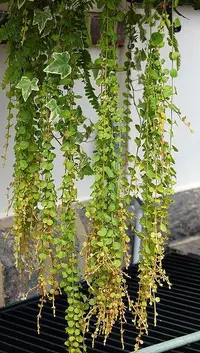
In hanging baskets or pot edges, periodically trim back the longest trailing stems to 15–20 cm and replant cut sections into gaps in the container to keep an even, full cascade when growing Creeping Jenny.

Moisture Zoning

In mixed plantings, place this plant toward the lowest, most moisture-retentive part of the bed or container so its higher water demand does not compromise drier-site companions and reduces edge dieback during hot spells.

Common Pests and Diseases

Aphids

This pest often clusters on tender new stems and undersides of leaves, sucking sap and causing distortion and yellowing. Symptoms include sticky honeydew and sooty mold development on dense groundcover mats.

Solution

Rinse colonies off with a firm stream of water, then spot-treat remaining clusters with insecticidal soap or a ready-to-use neem oil spray, repeating weekly until control is achieved. Reduce excess nitrogen fertilization, which encourages soft, aphid-attracting growth, and trim back heavily infested shoots to maintain healthy, dense coverage when growing Creeping Jenny along borders or in containers.

Slugs and snails

These pests feed on the soft foliage, leaving irregular holes, shredded edges, and slime trails across the low mat of stems. Damage is often worst in damp, shaded spots or around containers on patios and decks.

Solution

Hand-pick slugs and snails in the evening, use iron phosphate slug bait around plantings, and place physical barriers such as copper tape on container rims. Limit moist hiding places by clearing debris and lifting pots slightly for better airflow and drier conditions at soil level.

Leaf spot

This disease causes small brown to black spots that can merge into larger blotches, leading to yellowing and premature leaf drop within the spreading carpet. Symptoms include increased thinning in patches where foliage stays wet for long periods.

Solution

Remove and discard heavily spotted leaves and thin dense areas slightly to improve air movement and faster drying. Water at soil level in the morning, avoid wetting foliage, and if the problem persists, apply a labeled copper or chlorothalonil fungicide according to instructions during prolonged wet weather.

Powdery mildew

This disease produces white to gray powdery patches on leaves and stems, which can dull the golden foliage and reduce vigor. Symptoms include distorted leaves and a general decline in density, especially in partial shade with poor air circulation.

Solution

Increase airflow by lightly thinning overcrowded mats and avoiding overhead watering, then treat affected areas with sulfur or potassium bicarbonate products labeled for ornamental groundcovers. Remove and discard the most affected shoots to slow spread and support healthy regrowth.

Interesting Facts

Golden leaf mutation

This cultivar arose as a golden-leafed mutation of the wild green Lysimachia nummularia and has been maintained in cultivation for its stable yellow foliage, especially in full sun. The bright color results from reduced chlorophyll in the leaves, which allows yellow carotenoid pigments to dominate.

Color shifts with light

Its foliage color shifts noticeably with light intensity, showing saturated chartreuse to golden yellow in high light and deeper yellow‑green in shade. This light‑dependent pigmentation makes it useful as a visual indicator of light levels in mixed plantings.

Cold-hardy ground cascade

Unlike many trailing basket plants, this form is fully herbaceous and cold-hardy in much of the temperate US, dying back to the crown and re-sprouting from creeping stems each spring. It can form low mats in the ground while also cascading attractively when grown in raised containers or walls, which influences how gardeners approach Lysimachia nummularia 'Aurea' plant care.

FAQs about Creeping Jenny

This species spreads quickly by rooting at stem nodes and can form dense carpets. In mild, moist climates it often needs edging or division to prevent it from overrunning nearby plants, paths, and lawn areas.

Grow Healthy Plants with Botan Care

Keep your plants happy and healthy with plant identification, disease detection, and easy care guidance.

Botan plant care app — identify plants on mobile

Explore More Plants