Yellow Loosestrife Care (Lysimachia vulgaris)

Also known as: garden yellow loosestrife, Garden Loosestrife
Yellow Loosestrife

About Yellow Loosestrife

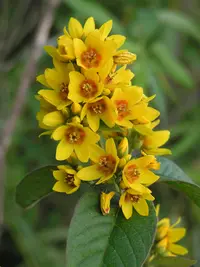
Yellow loosestrife (Lysimachia vulgaris) is a hardy, herbaceous perennial often found along riverbanks, wet meadows, and pond edges. It forms upright clumps with leafy stems topped by loose clusters of star-shaped yellow flowers in summer.

This species spreads by rhizomes, so it can form dense patches in suitable sites. Its vigorous growth makes it easy to establish but sometimes requires control in small gardens.

It prefers full sun to light shade, consistently moist soil, and tolerates heavy or clay soils. Understanding these natural preferences helps gardeners care for Yellow Loosestrife successfully in both wild and managed settings.

Main Plant Requirements

Care Difficulty

Easy Care

Light Preference

Full Sun

Water Requirements

Aquatic

Temperature Preference

Cold Hardy

Hardiness Zone

4–8

Soil Texture

Loamy, Silty, Organic-rich

Soil pH

Acidic (5.5–6.5), Slightly acidic (6.5–7.0)

Soil Drainage

Waterlogged tolerant

Fertilization

Minimal (feed rarely)

Get Personalized Care Plan

Scan your plant to receive care tips personalized for your specific plant

Available on iOS and Android

How to Care for the Yellow Loosestrife

This moisture-loving perennial prefers consistent sun exposure but tolerates some shade, depending on climate.

  • Provide 4–6 hours of direct sun daily in cool to mild climates; in hotter areas, aim for morning sun with light afternoon shade to prevent leaf scorch.
  • Plant Yellow Loosestrife where it receives at least bright open sky for most of the day; dense shade leads to weak, floppy stems and fewer flowers.
  • In summer, monitor for wilting or bleached foliage as a sign of excessive sun, and in shady spots watch for stretched stems leaning toward light.

This species is naturally adapted to damp ground and needs steadily moist soil.

  • Water whenever the top 2–3 cm of soil feel just barely moist, not dry; the root zone should stay evenly damp, especially during active growth and flowering.
  • In hot, windy weather, expect to water more often to prevent wilting; in cool or rainy seasons, rely more on natural rainfall and check soil before adding water.
  • Avoid waterlogged, stagnant conditions that cause yellowing, soft stems, and root rot, but also prevent full drying, which leads to drooping and crisp leaf edges.

This hardy perennial tolerates a wide range of outdoor temperatures but grows best in moderate conditions.

  • Optimal growth occurs around 60–75°F (16–24°C), with strong vegetative growth and flowering during mild spring and early summer weather.
  • The plant survives winter down to about -20°F (-29°C) once established, dying back to the ground and resprouting from the root system in spring.
  • Short heat waves up to 85–90°F (29–32°C) are tolerated if soil stays moist; prolonged extreme heat or freeze–thaw cycles can damage new shoots.

This moisture-loving perennial prefers consistently humid air but usually adapts to typical outdoor conditions.

  • Aim for ambient humidity around 50–70% in sheltered or densely planted sites.
  • Dry, windy air can cause leaf edges to brown and stems to flop, showing humidity stress.
  • Increase local humidity outdoors by mulching heavily and planting near ponds, streams, or other water features, which suits Yellow Loosestrife.

This species thrives in moist, fertile mineral soils that stay damp without becoming stagnant.

  • Use a deep, loamy soil rich in organic matter, such as garden loam blended with compost or well-rotted manure.
  • Ensure the soil stays evenly moist with slow drainage; it tolerates brief waterlogging better than drying out.
  • Aim for slightly acidic to neutral pH, roughly 6.0–7.0, for optimal nutrient uptake in Lysimachia vulgaris.
  • Improve structure in heavy clay by working in coarse sand and compost to increase aeration while still retaining moisture.

This plant can be grown in containers outdoors, mainly to control its spreading habit.

  • Choose a large, deep container to provide ample root space and prevent the plant from becoming quickly root-bound.
  • Use a heavy or wide-based pot to counterbalance tall, spreading stems and reduce the risk of tipping in wind.
  • Select a moisture-retentive mix and a less-porous pot material, such as glazed ceramic, to keep the root zone consistently damp.

This moisture-loving perennial responds well to moderate feeding during the active growing season.

  • Apply a balanced, slow-release fertilizer (around 10-10-10) in early spring for steady growth.
  • Supplement with a light top-dressing of compost once in late spring for soil health.
  • During summer, use a half-strength balanced liquid feed every 4–6 weeks if growth appears weak.
  • Stop feeding Yellow Loosestrife in late summer to allow natural hardening before winter.

Thoughtful pruning keeps Lysimachia vulgaris dense, tidy, and floriferous in garden settings.

  • Cut back spent flower stems in mid to late summer to reduce self-seeding and tidy appearance.
  • Remove dead, damaged, or weak shoots at ground level in early spring with clean hand pruners.
  • Thin congested clumps by taking out entire stems to improve air flow and limit spread.
  • Shear stems to 5–10 cm in late autumn or early spring to refresh growth.

This species is most often grown in the ground, so focus on controlled transplanting rather than frequent repotting.

  • Transplant in early spring or early autumn when soil is moist and temperatures are mild.
  • Divide or move crowded clumps every 3–5 years to manage spread and maintain vigor.
  • Lift the clump with a spade, keep roots shaded and damp, and replant at the same depth.
  • Water thoroughly after transplanting and maintain even moisture for several weeks to limit transplant shock.

Lysimachia vulgaris is commonly propagated by division, rhizome pieces, and seeds in garden conditions.

  • Divide established clumps in early spring or early autumn, replanting healthy sections with several shoots.
  • Cut 5–8 cm rhizome pieces with buds and plant shallowly in moist, rich soil for vegetative spread.
  • Sow fresh seed in autumn outdoors or use cold stratification for 4–6 weeks before spring sowing.
  • Keep propagation beds consistently moist and lightly shaded until new growth is well established.

This hardy perennial tolerates typical winters in much of the US and generally needs minimal winter care.

  • After frost blackens foliage, cut stems down to 5–10 cm to reduce disease carryover.
  • Apply a 3–5 cm mulch layer over the root zone in colder climates, keeping it off the crowns.
  • Container-grown plants in very cold regions benefit from moving to a sheltered, frost-free but cool spot.

Care Tips

Containment barriers

Install a 20–30 cm deep root barrier or use large, bottomless containers sunk into the ground to prevent this species spreading aggressively into neighboring planting areas.

Water-edge placement

Site plants at the edge of ponds or along drainage swales where the soil stays consistently moist and can safely accommodate their spreading habit without crowding less vigorous species.

Division-based renewal

Lift and divide crowded clumps every 3–4 years in early spring, replanting only the strongest outer sections to maintain flowering performance and control patch size.

Targeted thinning

In late spring, selectively thin out weaker stems within dense patches to improve air circulation and reduce the risk of foliar disease when caring for Yellow Loosestrife.

Wildlife-friendly management

When cutting back after flowering, leave a few seed heads and some standing stems over winter near water bodies to support pollinators, birds, and overwintering beneficial insects.

Common Pests and Diseases

Leaf spot

This disease causes irregular brown or black spots on leaves that may merge and lead to premature yellowing and drop. Symptoms include more damage in crowded, damp plantings or during long wet periods.

Solution

Remove and discard heavily spotted leaves and any fallen debris, then thin or divide clumps to improve airflow and reduce leaf wetness duration. Avoid overhead watering where possible and, in persistent cases, use a targeted fungicide labeled for ornamental leaf spots according to label directions.

Powdery mildew

This disease produces a white to gray, powdery coating on upper leaf surfaces, which can lead to distorted growth and reduced vigor. Symptoms include more severe coverage in warm, dry conditions with poor air circulation.

Solution

Cut back and dispose of affected stems at the first sign of infection and ensure the planting is not overly crowded. Improve air movement, avoid high-nitrogen fertilization, and, if needed, apply a sulfur or potassium bicarbonate fungicide labeled for powdery mildew, following all safety and timing guidelines.

Rust

This disease forms small orange, yellow, or brown pustules on the undersides of leaves, sometimes causing yellowing patches on the upper surface. Symptoms include increased defoliation under humid conditions and in dense stands.

Solution

Promptly remove and destroy infected leaves and plant residues to reduce spore levels, and avoid overhead irrigation that keeps foliage wet for long periods. For severe or recurring infections, use a rust-specific fungicide and rotate products if used over multiple seasons to slow resistance development.

Aphids

These insects cluster on young shoots and the undersides of leaves, sucking sap and causing curling, distortion, and sticky honeydew that can attract sooty mold. This pest multiplies rapidly in warm, sheltered sites and can colonize large clumps of Lysimachia vulgaris.

Solution

Wash colonies off stems and leaves with a firm stream of water and pinch back heavily infested shoot tips. Encourage or introduce natural predators such as lady beetles, and, if needed, apply insecticidal soap or a horticultural oil, ensuring thorough coverage of the undersides of leaves.

Leaf-mining larvae

These insects create pale, winding tunnels or blotches inside leaves, which can make foliage look unsightly and slightly reduce vigor in heavy infestations. Symptoms include translucent patches when leaves are held to the light, revealing the mined tissue.

Solution

Hand-remove and dispose of mined leaves early to interrupt the life cycle and reduce future generations. For larger plantings, use yellow sticky traps to monitor adult activity and consider a systemic insecticide only if damage is consistently heavy and cultural control is insufficient.

Interesting Facts

Specialist bee partner

In parts of Europe, the solitary bee Macropis europaea relies almost exclusively on the floral oils and pollen of Lysimachia vulgaris to provision its nests, making this plant a key host for that bee’s life cycle.

Oil, not only nectar

Unlike many flowering plants, it produces oily secretions in specialized floral glands instead of offering much nectar, and certain bees collect this oil to line and waterproof their brood cells.

Moist-soil colonizer

This species naturally forms dense stands along lakeshores, rivers, and marsh edges, where its creeping rhizomes help stabilize wet soils and provide structure for invertebrates and other wildlife.

Botan icon

Did you know?

Lysimachia vulgaris is native across much of Europe and western Asia but has become locally invasive in some regions of North America, where its vigorous rhizome-driven spread can displace native wetland plants and alter habitat composition.

FAQs about Yellow Loosestrife

This species spreads strongly by rhizomes and self-seeding, especially in moist soil. It can form dense colonies and crowd nearby plants. Use root barriers, regular division, or container planting to keep it within bounds when growing Yellow Loosestrife.

Grow Healthy Plants with Botan Care

Keep your plants happy and healthy with plant identification, disease detection, and easy care guidance.

Botan plant care app — identify plants on mobile

Explore More Plants