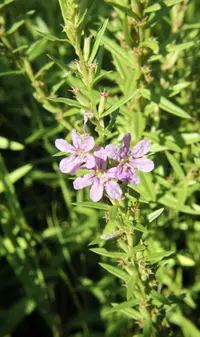
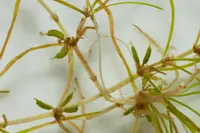
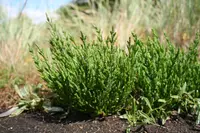
giant arrowhead Care (Sagittaria montevidensis)

giant arrowhead

About giant arrowhead

Giant arrowhead, Sagittaria montevidensis, is a perennial aquatic plant often grown in ponds, water gardens, and paludariums. It forms clumps of bold, arrow-shaped leaves rising above shallow water.

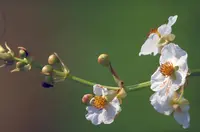
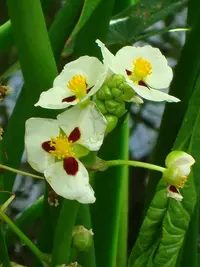
The plant produces showy white flowers with dark red centers on tall stalks, giving strong vertical structure. It spreads by rhizomes, creating a dense, natural-looking stand over time.

Giant arrowhead occurs naturally in wet areas of South America and has been introduced to other warm regions. It prefers consistently wet or shallowly submerged conditions, with rich, mucky or loamy substrates.

Its vigorous growth and need for stable moisture make it easy in suitable water gardens but less practical in small indoor containers. Understanding how to care for giant arrowhead mainly involves managing water depth and preventing overcrowding.

Main Plant Requirements

Care Difficulty

Moderate Care

Light Preference

Full Sun

Water Requirements

Aquatic

Temperature Preference

Warm Climate

Hardiness Zone

8–11

Soil Texture

Loamy, Silty, Organic-rich

Soil pH

Acidic (5.5–6.5), Slightly acidic (6.5–7.0)

Soil Drainage

Waterlogged tolerant

Fertilization

Light (every 4–6 weeks)

Get Personalized Care Plan

Scan your plant to receive care tips personalized for your specific plant

Available on iOS and Android

How to Care for the giant arrowhead

Sagittaria montevidensis prefers strong natural light to fuel fast aquatic growth.

  • Provide 6–8 hours of full sun daily in ponds or water gardens; morning and midday sun support compact, vigorous foliage.
  • Tolerates light partial shade, especially with dappled afternoon light, but stems may stretch and flowering can decrease if sun drops below about 4 hours.
  • In hot climates, protect from intense late-afternoon sun to reduce leaf scorch; ensure surrounding plants or structures give slight shade in midsummer for giant arrowhead.

This aquatic species needs consistently saturated conditions and is not suited to drying out.

  • Grow in shallow water or very wet soil, keeping the crown just at or slightly below the water line; never allow the planting zone to dry completely.
  • Use slow-moving or still water; strong currents expose roots and stress Sagittaria montevidensis, while foul, stagnant water encourages rot and leaf yellowing.
  • In winter, water depth can be increased slightly to buffer roots from cold, but avoid burying leaves too deep, which reduces gas exchange and weakens growth.

This species grows best in mild to warm conditions and dislikes hard frost.

  • Optimal growth occurs around 68–82°F (20–28°C), when leaves expand quickly and flowering is most reliable in shallow water settings.
  • The plant tolerates brief drops to about 41–45°F (5–7°C), but foliage may die back; rhizomes survive better if insulated by slightly deeper water or mulch at the margins.
  • Heat above 90°F (32°C) is tolerated if water remains well-oxygenated and not stagnant; provide some shade in extreme heat to limit stress and leaf scorch.

This semi-aquatic species tolerates a wide humidity range but performs best in consistently moist air and substrate.

  • Aim for 50–80% humidity, keeping the soil or water consistently wet rather than focusing only on air moisture.
  • Giant arrowhead handles short periods of drier air if roots stay submerged or in saturated soil, but leaf tips may brown.
  • Humidity stress appears as crisp leaf edges or slow growth; group plants, use a pebble tray, or place near other water features to boost ambient moisture.

Sagittaria montevidensis prefers permanently wet, heavy, organic-rich soil rather than typical potting mixes.

  • Use a dense loam or clay-loam with high organic matter, such as garden loam mixed with 30–40% compost for nutrient retention.
  • Keep drainage minimal in aquatic containers so soil stays saturated or shallowly submerged, mimicking marsh or pond-margin conditions.
  • A slightly acidic to neutral pH around 6.5–7.2 supports nutrient uptake and stable growth in waterlogged situations.
  • Avoid airy, fast-draining mixes with perlite or coarse bark, which dry too quickly and prevent the roots from staying constantly wet.

This species is suitable for container growing when the pot is treated as a small water garden or bog environment.

  • Choose a wide, heavy container so the water-filled setup stays stable and does not tip as foliage becomes tall and leafy.
  • Select a pot without side drainage holes when used inside a larger water feature, so soil remains submerged without leaking out.
  • If using a pot with a drainage hole, stand it inside a watertight outer cachepot or tub kept filled to above soil level to maintain saturation.

Sagittaria montevidensis benefits from modest, consistent nutrition during the warm growing season.

  • Use a balanced aquatic or general-purpose fertilizer (around 10-10-10 NPK), either liquid or slow-release pellets, suited to pond or bog conditions.
  • Feed every 4–6 weeks in spring and summer, targeting the soil or planting basket rather than the water surface.
  • Dilute liquid fertilizer to 1/2–1/4 strength to avoid burning roots and to limit algae growth in water gardens.
  • Stop feeding giant arrowhead in late fall and winter when growth slows or foliage dies back.

Pruning Sagittaria montevidensis is mainly done to keep the clump tidy and encourage healthy new growth.

  • Cut off yellowing, dead, or damaged leaves at the base throughout the growing season using clean scissors or pruning snips.
  • Remove old flower stalks after blooming to direct energy back into roots and new foliage rather than seed production.
  • Thin crowded shoots in dense clumps to improve water circulation and light penetration, which supports stronger growth.
  • Dispose of pruned material away from ponds to avoid unwanted decay or informal self-seeding in naturalized areas.

This aquatic plant is usually grown in ponds or bog containers, so focus on dividing and transplanting clumps rather than frequent repotting.

  • Transplant or divide every 2–3 years in spring when growth resumes, especially if clumps are crowded or flowering declines.
  • Lift the basket or root mass and check for tightly circling roots, compacted soil, or slow growth as signs it needs more space.
  • Gently tease apart rhizomes, trim damaged roots, and replant divisions into aquatic baskets with fresh, heavy loam or clay soil.
  • Reintroduce containers gradually to their pond depth, keeping crowns just above the soil surface to limit transplant shock.

Sagittaria montevidensis is commonly propagated by division and by seeds in suitable shallow-water conditions.

  • Divide mature clumps in spring, separating healthy rhizomes with several shoots and roots attached to each section.
  • Replant divisions into moist, heavy soil in shallow water, keeping crowns just above the soil to prevent rot.
  • Collect ripe seeds from spent flower heads and sow on the surface of wet, fine aquatic soil, barely covering them.
  • Maintain consistently shallow water, bright light, and stable warmth for several weeks to support rooting or seed germination.

In mild climates this aquatic species overwinters in place, but in colder regions some winter care improves survival and regrowth.

  • In zones with light frost, allow foliage to die back naturally while submerged crowns stay insulated by the water.
  • Where ponds may freeze solid, move container-grown plants to deeper, unfrozen sections or a cool, frost-free indoor tank.
  • In marginal climates, sink containers deeper and add a mulch layer over any exposed crowns in bog plantings.

Care Tips

Control Water Depth

In ponds or containers, keep the crown just below the water surface (2–10 cm) and raise or lower the planting basket as needed so new leaves can reach light without exhausting the plant.

Use Plant Baskets

Plant rhizomes in aquatic mesh baskets filled with heavy loam and then sink the baskets, which makes it easier to divide, move, or thin plants without disturbing the whole pond bottom.

Seasonal Thinning

In late summer or early fall, remove older, damaged leaves and excess offsets so the remaining plants have better water flow, light access, and nutrient availability for the next growth cycle.

Rhizome Division Timing

Divide clumps when new shoots are just emerging in spring, cutting rhizomes into sections with at least 1–2 healthy buds and immediately replanting to reduce transplant shock while growing giant arrowhead.

Monitor Water Quality

Test pond or container water a few times per season for excess nutrients and adjust fish load or feeding, since prolonged high nutrient levels encourage algae that can shade and weaken the plant.

Common Pests and Diseases

Aquatic snails

These pests graze on young leaves and shoot tips, leaving irregular holes and ragged edges on submerged and emergent foliage.

Solution

Hand-pick snails at dusk or after lights out, use baited lettuce leaves as traps, and reduce hiding spots such as excess debris; in ponds or tanks, introduce suitable snail-eating fish where appropriate and avoid overfeeding fish to limit snail population growth.

Leaf-mining midges

These insects create pale, winding tunnels inside the leaves, which can cause translucent patches and premature yellowing on giant arrowhead blades.

Solution

Remove and discard affected leaves to break the life cycle, reduce dense clumps to improve water circulation, and in ornamental ponds use fine-mesh netting or surface skimming to limit adult emergence around the plants.

Spider mites

These pests may appear on emergent leaves in warm, dry air, causing stippled, dull foliage and fine webbing along midribs and undersides.

Solution

Rinse emergent leaves thoroughly with a strong but gentle stream of water, increase ambient humidity around above-water foliage, and if needed apply a horticultural soap or neem oil spray to both sides of leaves while keeping products out of the main water body as much as possible.

Leaf spot

This disease causes brown or dark purple spots with possible yellow halos on emergent leaves, which can merge into larger dead patches under warm, stagnant conditions.

Solution

Prune and remove affected leaves, thin crowded clumps to improve air movement around emergent foliage, avoid overhead splashing when possible, and if the problem is persistent in outdoor plantings, apply an appropriate copper-based fungicide labeled for aquatic or marginal plants following label restrictions.

Crown rot

This disease starts at the crown where leaves emerge, leading to soft, discolored tissue and collapse of entire fans, especially in poorly oxygenated, foul substrates.

Solution

Remove and discard affected plants and any rotting rhizome material, refresh or replace anaerobic or foul-smelling substrate with clean sand or gravel, maintain good water circulation, and avoid deep organic mulches or thick sludge buildup around the base to reduce the need for intensive Sagittaria montevidensis plant care later on.

Interesting Facts

Distinctive tricolor petals

This species produces emergent flowers with three white petals, each marked by a deep maroon to purplish blotch at the base, and a bright yellow center. The contrast of these colors is a key field character that helps distinguish it from many other arrowhead species with plain white flowers.

Amphibious growth habit

The plant forms thick, aerial leaves shaped like arrowheads above the water while also producing submerged or floating leaves in deeper or moving water. This amphibious strategy allows it to tolerate fluctuating water levels in wetlands, ditches, and slow streams.

South American origin

Although now naturalized in parts of North America, Europe, and other regions, this arrowhead is native to wetlands of South America, especially the Rio de la Plata basin. Its spread to other continents is linked to ornamental aquatic plant trade and accidental introduction with aquatic stock.

Botan icon

Did you know?

In some introduced regions, this species is considered an emerging aquatic weed of concern because its dense clumps can slow water flow, trap sediment, and outcompete native wetland plants, leading to changes in local aquatic ecosystems.

FAQs about giant arrowhead

Poor flowering usually comes from insufficient light, shallow water, or low nutrients. Ensure the crown sits in consistently shallow water, provide full to part sun, and use an aquatic fertilizer during the growing season to support bud formation.

Grow Healthy Plants with Botan Care

Keep your plants happy and healthy with plant identification, disease detection, and easy care guidance.

Botan plant care app — identify plants on mobile

Explore More Plants