Magnolia Care (Magnolia 'Jane')

Magnolia

About Magnolia

Magnolia (Magnolia 'Jane') is a compact, deciduous shrub or small tree bred for ornamental spring flowers. It belongs to the magnolia group often called “little girl” hybrids.

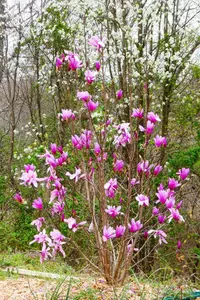
This plant produces large, tulip-shaped blooms in shades of reddish purple outside with paler interiors, followed by simple green foliage and a rounded growth habit.

Magnolia 'Jane' does not occur in the wild; it was developed from Asian magnolia species that are adapted to temperate climates. It is considered relatively easy to grow if sited correctly.

Good soil drainage, consistent moisture, and full sun to light shade are the main factors to understand when learning how to care for Magnolia in a home garden.

Main Plant Requirements

Care Difficulty

Moderate Care

Light Preference

Full Sun

Water Requirements

Regular Water

Temperature Preference

Cold Hardy

Hardiness Zone

4–8

Soil Texture

Loamy, Clay, Organic-rich

Soil pH

Acidic (5.5–6.5), Slightly acidic (6.5–7.0)

Soil Drainage

Moist but well-drained

Fertilization

Minimal (feed rarely)

Get Personalized Care Plan

Scan your plant to receive care tips personalized for your specific plant

Available on iOS and Android

How to Care for the Magnolia

This deciduous shrub thrives with bright exposure and some protection from harsh extremes of sun.

  • Provide 4–6 hours of direct sun daily, ideally morning sun with light afternoon shade to protect spring flowers.
  • Allow partial shade in hotter climates, aiming for dappled or filtered light after 12 p.m. to reduce leaf scorch risk.
  • Watch for sparse flowering and elongated shoots as signs of too little light, and browned leaf edges as an indicator of excessive sun, especially in summer.

This shrub prefers evenly moist, well-drained soil, especially during establishment and dry spells.

  • Water when the top 3–5 cm of soil feels dry, applying a slow, deep soak to wet the root zone rather than frequent shallow splashes.
  • Increase monitoring during hot, windy weather; drooping young leaves and dry, crumbly soil signal that Magnolia 'Jane' needs water soon.
  • Avoid standing water or heavy clay that stays soggy, since yellowing leaves and dieback tips often indicate root stress from overwatering.

This hardy shrub tolerates a wide temperature range but needs protection from extreme cold and sudden swings.

  • Active growth is strongest around 60–75°F (16–24°C), with buds and new leaves forming best in mild spring conditions.
  • Mature plants generally handle winter lows near –10°F (–23°C), but late frosts after bud swell can damage flowers and tender new growth.
  • In summer, sustained heat above 90°F (32°C) can stress the plant; mulch the root zone and avoid reflected heat from walls or pavement.

This shrub handles a fairly wide humidity range but prefers moderately moist air outdoors.

  • Aim for 40–60% humidity, which is typical in many outdoor garden settings in temperate regions.
  • Dry, hot winds can desiccate Magnolia foliage; provide wind protection or a nearby hedge in exposed sites.
  • Leaves curling at edges or browning at tips can signal low humidity stress; deep, regular watering reduces this impact more effectively than misting.

This plant performs best in deep, moisture-retentive yet well-drained soil with a slightly acidic reaction.

  • Use a loamy structure with 30–50% organic matter such as composted bark or leaf mold to support root development and water retention.
  • Ensure free drainage by avoiding heavy, compacted clay; incorporate coarse sand or fine pine bark to open the texture if soil seals or puddles.
  • Target a pH of 5.5–6.5 for Magnolia 'Jane', adding elemental sulfur in alkaline ground or using acid-based planting mixes where needed.
  • Avoid sites with standing water or very shallow, stony soil; raised beds or mounded planting improve aeration and reduce root suffocation risk.

This shrub can be grown in containers for several years if the pot is large and stable.

  • Choose a tall, heavy container to counterbalance the top growth and reduce tipping in strong winds.
  • Select thick-walled, non-porous pots if faster moisture loss in hot climates is a concern, as this moderates root-zone drying.
  • Use a deep container that allows a broad, spreading root system, avoiding narrow, columnar pots that concentrate roots and increase drought stress.

This small magnolia benefits from modest feeding to support flowering and steady growth.

  • Apply a balanced slow-release fertilizer (around 10-10-10) once in early spring as new growth starts.
  • In richer soils, supplement with a thin layer of compost over the root zone instead of frequent granular feeds.
  • Avoid summer overfeeding; use at half the label rate to limit overly lush, weak growth.
  • Do not fertilize in late fall or winter, since the plant is dormant and excess nutrients may damage roots.

Magnolia 'Jane' needs light, careful pruning to maintain structure and flower display.

  • Time pruning for just after flowering in late spring, so next year’s flower buds are not removed.
  • Use clean, sharp bypass pruners or loppers to remove dead, diseased, or storm-damaged branches first.
  • Thin crowded interior shoots to improve light and air flow, preserving the plant’s natural rounded form.
  • Limit cuts to smaller branches; avoid heavy structural pruning that can reduce flowering and stress the shrub.

This magnolia is usually grown in the ground, so focus on thoughtful transplanting rather than frequent repotting.

  • Transplant in early spring or early fall when conditions are cool and soil moisture is stable.
  • Look for signs such as circling roots in a nursery container or very slow growth in a pot before upsizing.
  • Move to a hole 2–3x as wide as the root ball, planting at the same depth and backfilling with the native soil.
  • Water deeply after transplanting, then keep the root zone evenly moist and mulched to reduce stress while new roots establish.

Magnolia 'Jane' is usually propagated by specialists, as home propagation is slow and often unreliable.

  • Semi-ripe cuttings in midsummer root best under high humidity, bottom warmth, and sterile, free-draining media.
  • Air layering in late spring can succeed by wounding a branch, applying rooting hormone, and enclosing it in moist sphagnum moss.
  • Seed propagation is slow and variable; fresh seed needs moist stratification (chilling) before spring sowing.
  • Provide bright, indirect light and stable moisture, avoiding waterlogging, to support gradual root development.

This magnolia is fairly cold hardy but young plants benefit from some added winter protection.

  • In climates colder than about USDA zone 5, site selection and shelter from strong winds become more important.
  • Apply a 5–8 cm mulch layer over the root zone in late fall, keeping it slightly away from the trunk.
  • Wrap young trunks with breathable tree wrap in very cold areas to reduce bark injury from freeze–thaw cycles.
  • Container-grown plants in cold regions should be moved into an unheated garage or against a sheltered wall to limit root freezing.

Care Tips

Root flare check

At planting and every few years, uncover the top of the root ball so the root flare sits just above soil level, which reduces risk of trunk rot and circling roots over time.

Wind protection setup

In exposed sites, install 2–3 short stakes with loose, flexible ties for the first 1–2 years to stabilize the plant against strong winds while still allowing slight movement to build trunk strength.

Frost-bud shielding

During late winter and early spring cold snaps, drape a breathable frost cloth over the shrub in late afternoon and remove it in the morning to protect swelling flower buds from freeze damage.

Mulch management

Maintain a 5–8 cm deep ring of mulch out to the drip line but keep it 5–8 cm away from the trunk to stabilize soil moisture and temperature without inviting bark disease.

Low-branch training

In the first few seasons, selectively keep a framework of evenly spaced low branches and lightly thin crowded shoots so the plant develops a sturdy, multi-stemmed structure that better supports heavy blooms when growing Magnolia.

Everything About Magnolia

Common Pests and Diseases

Scale insects

This pest feeds on sap and appears as small, rounded or oval bumps on stems and leaf undersides, often causing yellowing and reduced vigor. Symptoms include sticky honeydew and sooty black mold on nearby surfaces.

Solution

Prune out heavily infested twigs and wipe remaining scales with a cotton pad dipped in 70% isopropyl alcohol. For larger shrubs, use a targeted horticultural oil spray in late winter or early spring to smother overwintering scales, repeating as needed according to label directions.

Aphids

These insects cluster on tender new growth and buds, sucking sap and causing distorted leaves and sticky honeydew that can lead to sooty mold. Infestations are often worst on soft spring flushes of growth and flower buds.

Solution

Blast colonies off with a strong stream of water from a hose, focusing on shoot tips and leaf undersides. If populations remain high, apply insecticidal soap or a light horticultural oil, making sure to cover all surfaces and repeating at 5–7 day intervals until new growth appears clean.

Leaf spot

This disease causes small to large brown, purple, or tan spots on leaves, sometimes with yellow halos and premature leaf drop, especially after cool, wet springs. Symptoms include scattered spotting that may coalesce into larger dead patches between veins.

Solution

Remove and discard fallen leaves and heavily spotted foliage to reduce spores, and avoid overhead watering to keep leaves as dry as possible. Improve air circulation around the shrub with careful thinning cuts, and in severe, recurring cases consider a labeled fungicide applied in early spring when new leaves emerge as part of Magnolia care instructions.

Canker

This disease produces sunken, discolored areas on branches and stems that may ooze sap, leading to dieback of shoots above the infected section. Symptoms include wilted leaves on affected branches that remain attached and do not recover with watering.

Solution

Cut out affected branches 15–20 cm below the visible canker into healthy wood, disinfecting pruning tools between cuts with 10% bleach or 70% alcohol. Reduce plant stress by watering during drought, mulching the root zone, and avoiding trunk injury, since healthy magnolias resist canker more effectively.

Magnolia scale

This pest is a large soft scale specific to magnolias that appears as pale, dome-shaped bumps on branches, producing heavy honeydew and black sooty mold. Symptoms include thinning foliage, reduced growth, and an overall sticky coating on leaves and nearby surfaces.

Solution

In light infestations, gently scrub or scrape scales from branches and prune out badly infested wood. For larger problems, apply a horticultural oil spray during the crawler stage in late summer or a dormant oil in late winter, monitoring the plant yearly to catch new activity early.

Interesting Facts

Hybrid parentage origin

This cultivar is a deliberate cross between Magnolia liliiflora 'Nigra' and Magnolia stellata 'Rosea', bred in the mid‑20th century as part of the Little Girl hybrid series for later frost‑safer flowering.

Flower color change

The tulip-shaped flowers open a deep reddish purple on the outside with pale interiors, then gradually fade to softer pink and near-white tones as each bloom ages, creating a layered color effect on the shrub.

Extended blooming window

In suitable climates it often produces a main flush of flowers in early to mid spring, then a lighter, sporadic re-bloom in late spring to early summer, giving a longer display than many traditional magnolia varieties.

Botan icon

Did you know?

Magnolia 'Jane' was specifically selected to flower slightly later than classic saucer magnolia types, reducing the risk of complete bloom loss from late spring frosts in temperate regions and making it a practical landscape choice in colder USDA zones where many other magnolias fail to bloom reliably.

FAQs about Magnolia

Poor flowering often relates to immature age, excessive shade, heavy pruning at the wrong time, or frost damage to buds. Protect buds from late frosts, avoid hard pruning after midsummer, and maintain steady moisture and nutrients.

Grow Healthy Plants with Botan Care

Keep your plants happy and healthy with plant identification, disease detection, and easy care guidance.

Botan plant care app — identify plants on mobile

Explore More Plants