Star Magnolia Care (Magnolia stellata 'Royal Star')

Also known as: Magnolia
Star Magnolia

About Star Magnolia

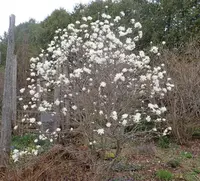
Star magnolia (Magnolia stellata 'Royal Star') is a compact, deciduous flowering shrub or small tree valued for its very early spring display. It forms a rounded shape with many branches and dense, fine twigs.

The plant produces large, star-shaped white flowers with many narrow petals before the leaves appear, giving a bright show on bare wood. Foliage is green in the growing season and turns yellowish in fall.

This species originates from Japan but is now widely grown in temperate gardens as an ornamental feature near entrances, patios, or lawns. It is considered relatively easy to grow when placed in a sunny, sheltered spot with evenly moist, well-drained soil.

Gardeners who learn how to care for Star Magnolia usually find it long-lived and dependable once established.

Main Plant Requirements

Care Difficulty

Moderate Care

Light Preference

Full Sun

Water Requirements

Regular Water

Temperature Preference

Cold Hardy

Hardiness Zone

4–9

Soil Texture

Loamy, Sandy, Organic-rich

Soil pH

Acidic (5.5–6.5), Slightly acidic (6.5–7.0)

Soil Drainage

Moist but well-drained

Fertilization

Minimal (feed rarely)

Get Personalized Care Plan

Scan your plant to receive care tips personalized for your specific plant

Available on iOS and Android

How to Care for the Star Magnolia

This deciduous shrub prefers bright conditions to support abundant spring flowering.

  • Provide 6–8 hours of sun daily, ideally with full morning sun and light afternoon shade, especially in hotter regions.
  • Tolerates light partial shade, but Magnolia stellata 'Royal Star' may flower less densely if it receives under 4–5 hours of direct sun.
  • Protect from intense late-afternoon summer sun to reduce leaf scorch; young plants benefit from nearby taller plants or buildings filtering the strongest rays.

This shrub prefers consistently moist but not saturated soil, especially in the first few years after planting.

  • Water when the top 3–5 cm of soil feels dry, applying a slow, deep soak to reach the root zone rather than frequent shallow splashes.
  • Use well-drained soil and avoid standing water; yellowing leaves, dieback, or a sour soil smell indicate overwatering and poor drainage.
  • Increase watering during hot, dry spells and reduce it in cool, rainy seasons, watching for drooping leaves or dry, crumbly soil as signs the plant needs moisture.

This hardy magnolia handles a wide outdoor temperature range but has specific limits for long-term health.

  • Optimal growth occurs around 55–75°F (13–24°C), with cool springs encouraging strong flowering and steady shoot development.
  • Mature plants tolerate winter lows near -10°F (-23°C), but flower buds can be damaged by late frosts after mild spells, reducing bloom display.
  • In summer, prolonged heat above 90°F (32°C) can stress the plant; mulch the root zone and ensure soil moisture to help it tolerate high temperatures.

This shrub tolerates a wide humidity range and does not need special humidity control outdoors.

Magnolia stellata 'Royal Star' performs best in deep, moisture-retentive but free-draining soil.

  • Use a loamy structure with high organic matter, combining garden loam, compost, and leaf mold for stable moisture and nutrients.
  • Aim for slightly acidic to neutral pH around 5.5–7.0, avoiding strongly alkaline, chalky ground that can cause nutrient lockout and chlorosis.
  • Improve drainage and aeration by incorporating sharp sand or fine grit into heavier clay soils, especially in the planting hole and top layer.
  • Avoid compacted, waterlogged, or very shallow soils, as restricted oxygen around the roots increases risk of root rot and poor growth.

This species can be grown in containers for several years, especially in smaller garden spaces.

  • Choose a large, deep, and heavy container to provide root volume and keep the top-heavy shrub from tipping in wind.
  • Select thick-walled clay or concrete pots where possible, as they moderate root temperature and reduce rapid moisture swings.
  • Raise the container on pot feet or bricks so drainage holes stay clear and excess water can escape quickly after rain or irrigation.

Healthy Magnolia stellata 'Royal Star' trees need modest, focused feeding in nutrient-poor soils.

  • Apply a balanced slow-release fertilizer (around 10-10-10) once in early spring as new growth starts.
  • Use a light rate, at about half the label recommendation, to avoid excessive, weak growth and reduced flowering.
  • Supplement with a 2–5 cm layer of compost over the root zone yearly, keeping it away from the trunk.
  • Do not feed in late summer or winter, since new soft growth may be damaged by frost and the tree is semi-dormant.

Pruning Magnolia stellata 'Royal Star' is mainly corrective, keeping the small tree open, safe, and flowering well.

  • Schedule light pruning right after flowering in spring so flower buds for next year are not removed.
  • Cut out dead, diseased, or storm-damaged wood first, back to healthy tissue or a main branch union.
  • Thin crowded, crossing, or inward-growing branches to improve light penetration and airflow through the canopy.
  • Use clean, sharp bypass pruners or loppers, making smooth cuts just outside the branch collar without leaving stubs.

Magnolia stellata 'Royal Star' is usually grown in the ground, with transplanting needed only when location or space becomes an issue.

  • Plan major transplanting for early spring or early fall when temperatures are mild and soil is workable.
  • Move only young or small trees if possible, lifting a broad, deep root ball to preserve fine feeder roots.
  • Water deeply before and after transplanting, then keep soil evenly moist but not waterlogged for the first growing season.
  • Apply 5–8 cm of mulch over the new root zone, avoiding the trunk, to limit moisture stress and temperature swings.

Propagation of Magnolia stellata 'Royal Star' is possible but somewhat slow, mainly done by cuttings or layering rather than seed for named cultivars.

  • Take semi-ripe cuttings in mid to late summer, using 8–10 cm tip pieces with 2–3 leaf nodes.
  • Dip the base in rooting hormone, then insert into a moist, well-drained, gritty propagation mix under high humidity.
  • Provide bright, indirect light and stable warmth around 70°F, keeping the medium just barely moist.
  • For layering, bend a low branch to the soil in spring, wound lightly, pin it down, and sever once strong roots form.

Magnolia stellata 'Royal Star' is quite cold hardy but benefits from simple winter care, especially in exposed or very cold sites.

  • Expect good hardiness to about USDA zone 4–5, though flower buds can be damaged by late frosts.
  • Apply a 5–8 cm mulch layer over the root zone in late fall to stabilize soil temperature and moisture.
  • Wrap young trunks loosely with breathable tree wrap or burlap in cold, windy locations to reduce bark injury.
  • In containers, move plants into a sheltered, unheated garage or against a protected wall to limit root freezing.

Care Tips

Mulch Root Zone

Apply a 5–8 cm layer of shredded bark or leaf mold over the root zone, keeping it 5 cm away from the trunk, to keep roots cool, conserve moisture, and buffer soil pH for healthier growth.

Protect Flower Buds

In late winter, cover the shrub with breathable frost cloth during hard frosts and cold winds to reduce bud damage and keep the early flowers from browning.

Form A Strong Framework

In the first 3–5 years, selectively remove crossing or inward-growing branches in late summer to build an open, balanced framework that resists storm damage and showcases the blooms.

Reduce Transplant Stress

When moving a plant or planting from a container, prune only damaged roots, keep the original planting depth, and water deeply for the first 2–3 months to help it establish with minimal shock while growing Star Magnolia.

Monitor Scale Early

Inspect branches every spring for small, raised bumps and, if present, treat scale insects early with horticultural oil according to label directions before they weaken the plant.

Common Pests and Diseases

Scale insects

This pest attaches to stems and leaves, sucking sap and causing yellowing, leaf drop, and a general decline in vigor. Symptoms include small, rounded or oval bumps that may exude sticky honeydew, which can lead to sooty mold on Magnolia stellata 'Royal Star'.

Solution

Prune out heavily infested twigs and wipe accessible stems with a cloth dipped in soapy water or horticultural oil. For larger shrubs, apply a labeled horticultural oil spray during the dormant season to target overwintering scale, and repeat light oil sprays in the growing season if needed, ensuring good coverage of stems and leaf undersides.

Magnolia leaf spot

This disease causes irregular brown, purple, or black spots on leaves, sometimes with yellow halos, and can lead to premature leaf drop in wet seasons. Symptoms include lesions that often start on lower, shaded foliage where moisture lingers longest.

Solution

Remove and discard affected leaves from the plant and ground to reduce the source of infection. Improve air circulation by thinning crowded branches, avoid overhead watering, and if leaf spot recurs severely, use a copper or other labeled fungicide early in the season according to product directions.

Magnolia canker

This disease produces sunken, discolored areas on branches, causing dieback of individual shoots or whole limbs over time. Symptoms include cracking bark, oozing sap, and sections of the plant that fail to leaf out in spring.

Solution

Cut out affected branches 15–20 cm below visible symptoms into healthy wood, disinfecting pruning tools between cuts with alcohol or a 10% bleach solution. Maintain plant vigor with proper watering and mulch, avoid trunk and bark injuries, and do not leave pruned or dead wood on site, as it can harbor the fungus.

Aphids

These insects cluster on tender shoot tips and undersides of young leaves, sucking sap and causing curling, distortion, and sticky honeydew deposits. This pest can attract ants and promote sooty mold growth on the foliage.

Solution

Dislodge aphids with a strong stream of water from a hose and pinch back heavily infested soft tips. For persistent problems, apply insecticidal soap or a light horticultural oil to thoroughly coat infested areas, repeating as needed while protecting beneficial insects by treating in early morning or late evening.

Spider mites

This pest is most active in hot, dry conditions and causes fine speckling, dull or bronzed foliage, and sometimes delicate webbing on the undersides of leaves. Symptoms include leaves that look dusty or faded, with especially stressed plants during prolonged dry periods when caring for Star Magnolia.

Solution

Increase humidity around the plant by regular, gentle hosing of the foliage and keep the shrub well watered during dry spells. If mite activity remains high, use a strong spray of water to knock mites off, then apply insecticidal soap or a labeled miticide to leaf undersides, repeating at 5–7 day intervals until new growth appears clean.

Interesting Facts

Early spring bloomer

This cultivar flowers very early in spring, often before many other magnolias, covering bare branches with white, star-shaped blossoms while most deciduous shrubs are still dormant.

Extra petal count

Its flowers typically have 25–30 narrow tepals per bloom, considerably more than the straight species, which gives each flower a fuller, more starburst-like appearance.

Compact garden habit

Royal Star stays relatively small and dense compared with many magnolias, which makes it suitable for small gardens and urban yards where a full-size tree would be impractical.

Botan icon

Did you know?

Royal Star was selected in the United States in the mid-20th century from Japanese Magnolia stellata material and has since become one of the most widely planted star magnolia cultivars in temperate ornamental horticulture.

FAQs about Star Magnolia

Lack of flowers usually comes from frost damage to buds, pruning at the wrong time, or insufficient maturity. Late spring frosts, heavy pruning after midsummer, or planting in too much shade often prevent normal bud formation and flowering.

Grow Healthy Plants with Botan Care

Keep your plants happy and healthy with plant identification, disease detection, and easy care guidance.

Botan plant care app — identify plants on mobile

Explore More Plants