Canada mayflower Care (Maianthemum canadense)

Also known as: wild lily-of-the-valley, wild lily of the valley, Canadian Mayflower, false lily-of-the-valley, false lily of the valley
Canada mayflower

About Canada mayflower

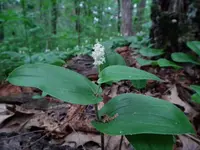
Canada mayflower, Maianthemum canadense, is a small woodland perennial that spreads by rhizomes to form low, dense groundcover. It typically has 1–3 oval leaves and a short stem topped with a cluster of tiny white, star-like flowers in spring. After flowering, it develops small speckled red berries that add subtle interest in shaded areas. This species is native to cool, moist forests of Canada and the northern United States, where it carpets the forest floor under trees. It is generally easy to grow if given consistent moisture, shade, and humus-rich soil, which guides how to care for Canada mayflower in gardens.

Main Plant Requirements

Care Difficulty

Easy Care

Light Preference

Partial Shade

Water Requirements

Moderate Water

Temperature Preference

Cold Hardy

Hardiness Zone

2–7

Soil Texture

Loamy, Sandy, Organic-rich

Soil pH

Acidic (5.5–6.5), Slightly acidic (6.5–7.0)

Soil Drainage

Moist but well-drained

Fertilization

Minimal (feed rarely)

Get Personalized Care Plan

Scan your plant to receive care tips personalized for your specific plant

Available on iOS and Android

How to Care for the Canada mayflower

This woodland perennial prefers cool, shaded conditions similar to its native forest floor habitat.

  • Provide dappled or filtered light with 1–3 hours of gentle morning sun and shade the rest of the day.
  • Canada mayflower grows best in partial to full shade; avoid strong afternoon sun, which can scorch leaves and dry soil quickly.
  • In summer, protect from reflective heat and open western exposure; in early spring, brief brighter light before trees leaf out is acceptable.

This species prefers consistently moist, humus-rich soil without staying waterlogged.

  • Water when the top 2–3 cm of soil feel slightly dry, then moisten the root zone thoroughly so water penetrates 10–15 cm deep.
  • Ensure soil drains freely; standing water, sour smell, or yellowing, limp shoots indicate overwatering and possible root decline in Maianthemum canadense.
  • During cool spring and fall, reduce frequency, but in hot, dry spells watch for drooping foliage or crispy leaf edges as signs the plant needs a deep soak.

This hardy woodland plant tolerates cool climates but still benefits from stable seasonal temperatures.

  • Active growth is strongest in cool conditions around 55–70°F (13–21°C), typical of shaded spring woodland understories.
  • Established rhizomes tolerate winter cold down to about -30°F (-34°C) under insulating leaf litter or snow cover.
  • Summer heat above 80–85°F (27–29°C) is tolerated if soil stays moist and the site is shaded; prolonged hot, dry conditions can cause leaf scorch and early dormancy.

This woodland groundcover prefers moderately moist air but adapts to most outdoor garden humidity levels.

  • Aim for 40–70% humidity, similar to shaded forest conditions, to keep foliage and rhizomes functioning well.
  • It tolerates brief dry air, but prolonged hot, low humidity with dry soil leads to curling, browning leaf edges, and slower spread.
  • In dry, exposed sites, increase local humidity by adding organic mulch, grouping plants, and reducing reflected heat from nearby hard surfaces.

This species thrives in cool, moist, humus-rich woodland soil with steady drainage.

  • Use a loose, loamy mix with high organic matter, such as garden loam blended with leaf mold or compost and fine bark chips.
  • Ensure drainage stays consistent: soil should hold moisture but never become waterlogged or compacted, which suffocates shallow rhizomes and roots.
  • Maintain slightly acidic to neutral pH around 5.5–7.0, which suits Maianthemum canadense and supports nutrient uptake in woodland-style beds.
  • Improve aeration and drainage in heavy clay by incorporating 30–50% compost plus pine bark fines, avoiding large amounts of sand that can create dense, brick-like soil.

This plant can grow in containers outdoors if the pot mimics a cool, moist woodland floor.

  • Choose a wide, shallow container that allows rhizomes to spread horizontally rather than a deep, narrow pot.
  • Select a thick-walled or shaded container material that limits rapid moisture loss and overheating in summer sun.
  • Raise the pot slightly on feet or bricks so drainage holes stay clear and excess water escapes quickly after rain or irrigation.

This woodland groundcover has low nutrient needs, so fertilizer use should be light and conservative for healthy Canada mayflower growth.

  • Use a thin layer of leaf mold or compost in early spring to mimic natural forest litter and support soil life.
  • If desired, apply a balanced, slow-release fertilizer (around 10-10-10) at half strength once in spring.
  • Avoid high-nitrogen products, which promote weak, lush foliage instead of steady rhizome development.
  • Do not feed during dormancy in fall and winter, as the plant has minimal nutrient demand then.

Pruning needs for Maianthemum canadense are minimal and mainly focused on cleanliness rather than shaping.

  • Cut back dead or winter-burned foliage in late fall or very early spring using clean, sharp scissors or hand pruners.
  • Remove damaged or diseased leaves as soon as noticed to limit spread and maintain airflow in dense patches.
  • Thin out small crowded clumps by removing entire shoots at the base if they encroach on paths or other plants.
  • Avoid cutting healthy green foliage in the growing season, since it is needed for rhizome energy storage.

This species is usually grown in the ground as a woodland groundcover, so transplanting clumps is more common than container repotting.

  • Plan transplanting for early spring or early fall, when temperatures are cool and the plant is not in active bloom.
  • Lift clumps gently and keep rhizomes with attached roots and soil intact to limit disturbance and stress.
  • Transplant into humus-rich, moist, well-drained soil at the same depth, spacing pieces 15–20 cm apart.
  • Water thoroughly after planting, then keep soil evenly moist and shaded until new growth or recovery is visible.

Maianthemum canadense is most reliably propagated by division of its creeping rhizomes, with seed used mainly for long-term naturalizing.

  • Divide established clumps in early spring or early fall, when soil is workable and growth is slow.
  • Lift a section, then gently separate rhizomes so each piece has several buds and healthy roots attached.
  • Replant divisions at the same depth in moist, humus-rich, well-drained soil under partial shade.
  • For seed, sow fresh outdoors in a shaded bed and expect slow, multi-year germination and establishment.

This woodland perennial is naturally cold hardy in much of its range and usually needs little intentional winter care.

  • Tolerates freezing temperatures once dormant, with underground rhizomes safely insulated by soil.
  • Allow foliage to yellow and die back naturally in fall, then remove collapsed leaves to reduce disease carryover.
  • Apply a light mulch of leaves or pine needles in colder areas to stabilize soil temperature and moisture.
  • Container-grown plants in very cold climates benefit from moving into an unheated garage or cold frame.

Care Tips

Rhizome Division Timing

Divide clumps in early fall after foliage yellows, lifting sections of rhizomes with at least 2–3 buds and replanting them immediately at the same depth to expand a colony without stressing the plants.

Leaf Litter Mulch

Allow native leaf litter to accumulate around the plants or add a 2–5 cm layer of shredded leaves in fall to mimic forest duff, protect rhizomes from freeze–thaw cycles, and support soil fungi that benefit this woodland species.

Gentle Colony Management

Edge around beds once a year with a hand tool and remove unwanted rhizomes at the margin to keep the colony defined without disturbing the interior of the planting.

Understory Companion Planting

Combine with other low woodland species such as ferns, foamflower, or wild ginger to stabilize soil moisture, shade the ground, and create a more resilient microclimate for growing Canada mayflower.

Minimal Disturbance Policy

Avoid frequent raking, hoeing, or deep weeding in established patches, instead hand-pulling only larger intruding weeds so the shallow rhizomes and emerging shoots are not damaged.

Common Pests and Diseases

Leaf spot fungi

This disease causes small tan to brown spots that may merge into irregular patches, often appearing after long periods of cool, wet weather in shade. Symptoms include thinning patches in a colony where leaves yellow and die back early.

Solution

Remove and discard affected leaves to reduce spore spread, and avoid overhead watering so foliage dries quickly. In dense groundcover, thin crowded patches slightly to improve air movement; in severe, recurrent cases, a homeowner fungicide labeled for foliar leaf spots on ornamentals can be applied in early spring before wet weather sets in.

Rust

This disease produces orange to rust-brown pustules or powdery spots on the undersides of leaves, sometimes with pale or yellow areas above. Symptoms include premature leaf yellowing and early dieback in moist, shaded woodland beds.

Solution

Cut and dispose of infected leaves as soon as symptoms appear and clean up fallen foliage at season’s end to remove overwintering spores. Improve airflow by spacing plants, and avoid prolonged leaf wetness; if rust returns each year, a preventive fungicide labeled for rust on ornamentals can be used early in the season following product directions carefully.

Slugs and snails

These pests chew irregular holes and notches in the soft leaves, often leaving a shredded look along with silvery slime trails. Damage appears most often in cool, wet periods and in heavily mulched or debris-filled sites.

Solution

Hand-pick slugs and snails in the evening, reduce hiding places by trimming back dense ground litter, and maintain mulch in a thin, even layer. Where damage is persistent, place beer traps or use iron phosphate slug bait around but not touching the plant, following label directions to protect pets and wildlife.

Root-knot nematodes

These microscopic roundworms feed on roots and can cause stunted shoots, poor colony spread, and general decline in otherwise favorable woodland conditions. Symptoms include sparse growth and reduced vigor compared with nearby unaffected patches.

Solution

Remove and destroy severely affected clumps and replant healthy divisions into a different bed with rich organic soil where nematode problems have not been observed. Incorporating well-composted organic matter and maintaining diverse planting around the colony can support beneficial soil organisms that suppress nematode populations over time.

Interesting Facts

Boreal forest specialist

This species is strongly associated with cool, acidic, coniferous or mixed forests across northern North America and often forms dense carpets on the forest floor under spruce, fir, and pine canopies.

Clonal forest carpets

It spreads mainly through shallow rhizomes, so what looks like many separate plants in a patch is often a single genetic clone extending over a large area.

Seasonal leaf dimorphism

Populations commonly include both single-leaf sterile shoots and two-leaf flowering shoots, an example of dimorphism where the plant balances energy between growth and reproduction depending on light and resource conditions.

Botan icon

Did you know?

Genetic studies have shown that this species hybridizes naturally with the closely related Maianthemum bifolium where their ranges overlap, creating intermediate plants that helped confirm its evolutionary relationship within the genus.

FAQs about Canada mayflower

This woodland species spreads gradually by shallow rhizomes, forming low colonies over time. It is not usually considered aggressive in typical garden shade beds but can slowly carpet moist, humus-rich soils if undisturbed.

Grow Healthy Plants with Botan Care

Keep your plants happy and healthy with plant identification, disease detection, and easy care guidance.

Botan plant care app — identify plants on mobile

Explore More Plants