Notched Rustwort Care (Marsupella emarginata)

Notched Rustwort

About Notched Rustwort

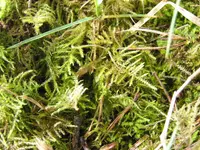
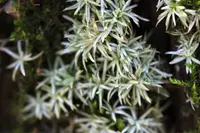
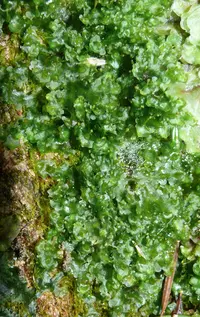
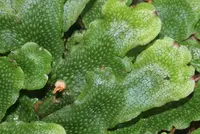
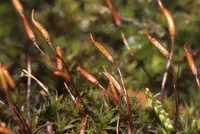
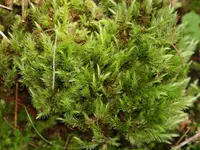
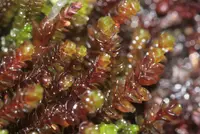
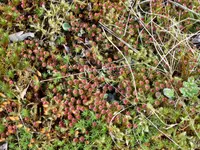
Notched rustwort (Marsupella emarginata) is a small, creeping liverwort that forms thin, dark green to brown mats on rock, soil, or rotting wood. It has tiny, closely packed shoots with shallowly notched leaf tips that give the plant its common name.

This species is native to cool, moist regions across Europe, North America, and other temperate zones, often near streams, waterfalls, and wet cliffs. It favors consistently damp, shaded habitats with clean, slightly acidic substrates.

In cultivation, it can be delicate, as it reacts quickly to drying out, stagnant air, or strong light. Those who care for Notched Rustwort need to replicate its cool, humid, low-light environment for long-term success.

Main Plant Requirements

Care Difficulty

Hard Care

Light Preference

Shade

Water Requirements

Aquatic

Temperature Preference

Cool Climate

Hardiness Zone

5–9

Soil Texture

Rocky, Peaty, Organic-rich

Soil pH

Strongly acidic (4.5–5.5)

Soil Drainage

Waterlogged tolerant

Fertilization

Minimal (feed rarely)

Get Personalized Care Plan

Scan your plant to receive care tips personalized for your specific plant

Available on iOS and Android

How to Care for the Notched Rustwort

This small liverwort thrives in low, cool light that mimics shaded stream banks and wet rock faces.

  • Provide bright shade or dappled light, such as under shrubs or beside north- or east-facing walls, with no more than 1–2 hours of weak morning sun.
  • Notched Rustwort tolerates deep shade but grows denser with 2–4 hours of filtered light through foliage or shade cloth (40–60%).
  • Protect from strong midday and afternoon sun, which can desiccate fronds and substrate; in summer, increase shade or move slightly deeper into woodland or rock crevices.

This species requires consistently moist conditions and does poorly if allowed to dry.

  • Keep the substrate constantly damp, aiming for a surface that feels moist and cool but not soupy; never let exposed patches dry and crack.
  • In flowing or seepage habitats, look for slightly glistening but not flooded surfaces; pale, crisping shoots suggest underwatering, while slimy, foul-smelling patches indicate prolonged saturation and stagnation.
  • Marsupella emarginata prefers fine, moisture-retentive but aerated substrates; avoid compacted mud by allowing gentle water movement or slight slope for slow drainage.

This cool-adapted liverwort is most comfortable in mild, moist climates and struggles with heat and severe frost.

  • Optimal growth occurs around 45–60°F (7–16°C), typical of shaded stream edges, seeps, and cool woodland ravines.
  • It tolerates short dips to about 25°F (-4°C) if kept moist and protected, but prolonged hard freezes or frozen, exposed substrate can kill surface shoots.
  • Heat above 75°F (24°C), especially over 85°F (29°C), can cause rapid drying and dieback; increase shade, humidity, and water movement during hot spells.

This liverwort needs consistently high humidity to remain healthy in cultivation.

  • Aim for 70–90% humidity to mimic its natural streamside and seepage habitats.
  • It declines quickly in dry air; fronds curl, dull, and turn brown at the tips when humidity is too low.
  • Raise humidity by using a closed terrarium, covered tray with wet sand or pebbles, or regular fine misting around Notched Rustwort.

Marsupella emarginata grows best on cool, constantly moist, mineral-rich substrates rather than typical potting soil.

  • Use a very fine, dense mix such as 60% damp sand or fine grit with 40% milled peat or leaf mold to mimic rock crevice conditions.
  • Ensure slow but steady drainage; the surface should stay moist, but free water must not pool for more than a few hours.
  • Keep pH slightly acidic to neutral, around pH 5.5–7.0, avoiding strongly alkaline materials like crushed limestone.
  • Improve aeration by mixing in a small amount of fine pumice or grit while still keeping the overall texture compact and moisture retentive.

This species can be grown in shallow containers or terraria when moisture and stability are tightly controlled.

  • Choose a shallow, wide container so the thin substrate layer stays evenly moist and the mat can spread without drying edges.
  • Use a rigid, non-porous pot or tray (plastic or glazed ceramic) to reduce evaporation and maintain constant surface moisture.
  • Elevate the container slightly above any reservoir water so only the base is damp, preventing stagnant water from flooding the plant surface.

Marsupella emarginata is adapted to nutrient-poor, rocky or mossy habitats and usually needs no fertilizer in culture.

Marsupella emarginata requires only minimal grooming rather than structured pruning.

  • Inspect mats in late winter or early spring and remove loose, dead, or decaying fragments by hand.
  • Use blunt tweezers or small scissors to lift away detached pieces without disturbing healthy shoots.
  • Limit trimming to small patches so the cushion keeps its natural low, spreading form.

This liverwort is usually grown on rocks, bark, or shallow trays, and transplanting should be infrequent and gentle.

  • Transplant when growth lifts away from its substrate, dries quickly, or shows patchy dieback despite suitable moisture.
  • Carry out moves in cool, moist weather or in early spring to limit stress and desiccation.
  • Slide thin mats off the old surface with a spatula, keeping the underside intact and attached fragments together.
  • Set onto a new, clean, rough surface and mist thoroughly, keeping humidity high until growth re-anchors.

Marsupella emarginata is most often propagated by division of existing mats rather than by spores in home culture.

  • Divide cushions in cool, moist spring conditions when growth is active but not heat-stressed.
  • Lift the mat gently and tear or cut into small sections, each with healthy green tips and attached substrate.
  • Press sections firmly onto a similar moist, acidic surface such as porous rock, bark, or a fine-grit mix.
  • Maintain high humidity, low to medium light, and constant, soft water moisture until new spreading growth is visible.

Notched Rustwort is quite cold tolerant in its natural range and usually needs little special winter care outdoors.

  • In cold regions, ensure the substrate drains well so wet mats do not freeze in standing water.
  • Container cultures can be overwintered in a cold frame or unheated garage to reduce freeze–thaw stress.
  • Avoid covering tightly with plastic; light, breathable covers are better if wind desiccation is a concern.

Care Tips

Mimic Stream Splash

Place the plant in a shallow tray with angled stones and periodically pour cool, soft water over them so the brief splash and runoff mimic the intermittent wetting it receives on rock faces near streams.

Use Inert Substrate

Grow the plant on inert materials like lava rock, slate chips, or baked clay granules rather than organic potting mixes to reduce rot risk and better simulate its natural saxicolous, or rock-dwelling, habitat.

Create Cool Boundary Layer

Position a small fan on the lowest setting to move air gently across, not directly at, the colony so a thin, cool boundary layer of air forms and helps prevent fungal issues without drying it out completely.

Seasonal Water Table Shift

In a dish garden, slightly raise the water level in late fall–spring and lower it in summer to imitate natural seasonal moisture patterns that keep this liverwort compact and resilient.

Minimal Handling Practice

Avoid touching or rearranging the tiny shoots, and instead move the entire substrate piece with tweezers or a flat tool when needed, since excessive handling easily crushes growth tips and slows Marsupella emarginata plant care efforts.

Common Pests and Diseases

Algal overgrowth

This condition appears when green films or patches of algae colonize the moist surfaces and surrounding substrate of the liverwort. Symptoms include a slimy, bright green layer that can shade and smother the small shoots.

Solution

Reduce nutrient enrichment and organic debris in the water source, slightly increase water movement, and if grown in culture gently rinse affected mats under cool, clean water to remove surface algae. Lower light intensity or duration and avoid fertilizer splash on the colony to prevent recurrence when focusing on Marsupella emarginata care instructions.

Filamentous fungi

This disease shows as fine white, gray, or translucent fungal threads growing across the thallus surface, especially in stagnant, overly humid culture containers. Symptoms include localized dieback and softening of affected tissue.

Solution

Improve air exchange, reduce standing water, and promptly remove visibly colonized fragments with sterile tweezers or scissors. For sensitive ex-situ cultures, briefly rinse in clean, cool water and sterilize or replace contaminated hardscape and containers to lower spore load.

Freshwater snails

These animals can graze on delicate liverwort tissues in streamside or aquarium culture, leaving irregular bite marks and thinning mats. This pest often proliferates when organic debris accumulates around the colony.

Solution

Manually remove snails and egg clusters by hand or with tweezers and reduce excess leaf litter or uneaten food in aquatic setups. If needed, create a physical barrier such as fine mesh around key patches or relocate small culture pieces to a snail‑free container until they re-establish.

Midge larvae

These insects may develop in saturated, organic-rich microhabitats and feed on the soft shoots, causing patchy thinning and discoloration. Symptoms include small tunnels or grazed areas in the liverwort mat and the presence of slender, wriggling larvae in the water film.

Solution

Lower organic buildup by flushing the substrate with clean, low‑nutrient water and gently siphoning debris, and slightly increase flow so surfaces do not stay stagnant. In culture systems, physically remove larvae with a pipette or fine net and avoid overfeeding any co-cultured aquatic animals.

Desiccation damage

This physiological problem occurs when the habitat dries out, causing shoots to brown, shrink, and lose their translucent appearance. Symptoms include crisp edges and reduced recovery even after rewetting if drying has been prolonged.

Solution

Maintain constant cool moisture with frequent misting or a stable high-humidity environment while still allowing good air movement. Use a shaded, cool location, avoid direct sun or strong indoor heat sources, and provide a water-retentive but free-draining substrate that never dries completely.

Interesting Facts

Specialist of wet rock

This liverwort typically grows tightly attached to constantly wet, often shaded rocks along streams, waterfalls, and seepages, forming low, dark mats that tolerate continuous splashing and cold water.

Indicator of clean water

Populations often occur in cool, unpolluted headwater habitats, so its presence can indicate relatively low nutrient and contamination levels in mountain and upland stream systems.

Distinctive notched tips

The small, flattened shoots have leaves with a shallow notch at the tip, a feature reflected in the common name notched rustwort and used by bryologists to distinguish it from related Marsupella species.

FAQs about Notched Rustwort

This species performs best outdoors in cool, humid, shaded environments such as stream banks, wet rocks, and damp woodland. Indoors, it usually struggles due to low humidity, warmer air, and difficulty keeping the substrate consistently moist without stagnation.

Grow Healthy Plants with Botan Care

Keep your plants happy and healthy with plant identification, disease detection, and easy care guidance.

Botan plant care app — identify plants on mobile

Explore More Plants