yellow moosedung moss Care (Splachnum luteum)

yellow moosedung moss

About yellow moosedung moss

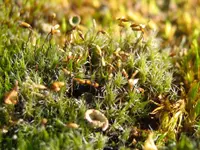
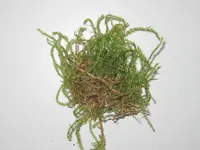
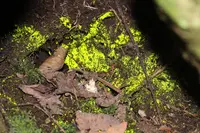
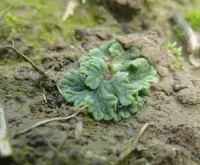
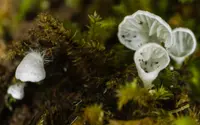
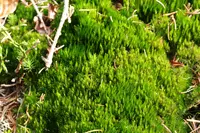
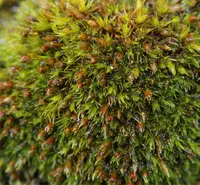
Yellow moosedung moss, Splachnum luteum, is a small, specialized moss best known for its bright yellow, club-shaped spore capsules. It typically grows in dense, low cushions. This species is naturally found in nutrient-rich, often dung-associated habitats in cooler northern regions, especially in boggy or wet open landscapes. It relies on insects to spread its spores, which makes its appearance and life cycle quite unusual compared with common mosses. In cultivation it can be challenging, as it prefers consistently moist, cool conditions and very specific substrates. Enthusiasts who care for yellow moosedung moss usually aim to mimic its natural, open, damp habitat under controlled conditions.


Main Plant Requirements

Care Difficulty

Hard Care

Light Preference

Partial Shade

Water Requirements

Aquatic

Temperature Preference

Cool Climate

Hardiness Zone

Unknown

Soil Texture

Peaty, Organic-rich

Soil pH

Acidic (5.5–6.5)

Soil Drainage

Waterlogged tolerant

Fertilization

Minimal (feed rarely)

Get Personalized Care Plan

Scan your plant to receive care tips personalized for your specific plant

Available on iOS and Android

How to Care for the yellow moosedung moss

This moss evolved in open, moist habitats and benefits from bright, soft light rather than strong, drying sun.

  • Provide 3–5 hours of gentle morning sun with bright, indirect or dappled light for the rest of the day, similar to open bog or wet meadow edges.
  • Allow light partial shade, especially in midsummer; dense, deep shade for most of the day leads to thin, elongated growth and dull capsule color in yellow moosedung moss.
  • Protect from harsh midday and afternoon sun; intense exposure can overheat the substrate, causing desiccation and bleaching, particularly during dry or hot periods.

This moss relies on consistently moist conditions and reacts quickly to drying or stagnant water.

  • Keep the substrate evenly moist but not submerged; in the wild, Splachnum luteum often grows on constantly damp organic material rather than in standing water.
  • Use touch as a guide: if the top surface feels just moist, it is ideal; if it feels soggy or smells sour, reduce water and improve drainage to prevent rot.
  • During hot, windy, or very sunny weather, expect faster evaporation and moisten more often; in cool, overcast periods, allow a slight surface sheen to fade before adding more water.

This species prefers cool to mild conditions and tolerates moderate seasonal shifts if extremes are limited.

  • Aim for an active growth range around 50–68°F (10–20°C), which supports steady hydration without rapid evaporation or heat stress.
  • Tolerate brief dips to about 32°F (0°C), but repeated hard frosts below this can damage tissue, especially if plants are exposed and not insulated by surrounding vegetation.
  • Limit exposure above 77–82°F (25–28°C); in hotter spells, provide shade and higher ambient humidity to reduce drying and thermal stress on the moss cushions.

This moss requires consistently high humidity to stay hydrated and photosynthesize effectively.

  • Aim for 70–90% humidity, as yellow moosedung moss naturally occupies persistently damp, boggy microhabitats.
  • It tolerates only brief dips into drier air; extended humidity below 60% leads to browning and shrinking cushions.
  • Curling, dulling color, and crispy leaf tips indicate humidity stress; use covered terraria, misting, or nearby trays of water to raise humidity.

This species prefers saturated, organic, low-nutrient substrates rather than conventional potting soil.

  • In nature Splachnum luteum grows on very decomposed, nutrient-poor dung or peat, so use a fine, fibrous peat or sphagnum-based substrate with minimal added fertilizer.
  • Keep the substrate constantly wet but not scoured by flowing water; it should stay spongy and saturated, never allowed to dry or form hard crusts.
  • A mix of milled sphagnum, fine peat, and a small portion of well-rinsed sand maintains moisture while allowing some aeration around the rhizoids (anchoring filaments).
  • Avoid limed or high-pH mixes and coarse, chunky materials; aim for mildly acidic, uniform, soft substrate that mimics bog or fen conditions.

This species can be grown in shallow containers or trays when moisture and stability are controlled carefully.

  • Use a broad, shallow tray to spread a thin, even substrate layer that stays uniformly wet without deep standing water that can cause anaerobic conditions.
  • Select a rigid container that limits lateral water loss, such as glazed ceramic or plastic, to slow evaporation and keep the substrate consistently saturated.
  • Raise one side slightly and drain off only surface excess water so the base remains soaked while preventing sudden water level drops at the moss surface.

Splachnum luteum is adapted to low-nutrient habitats and needs only very light feeding in cultivation.

  • Use a highly diluted balanced liquid fertilizer (around 1/8–1/4 strength) formulated for mosses or soft, acid-loving plants.
  • Apply during the active growing season only, about every 4–6 weeks, and skip feeding in winter dormancy.
  • Prefer rainwater and avoid heavy compost or slow-release pellets, which can burn delicate tissues and encourage algae.
  • For caring for yellow moosedung moss in containers, stop feeding at the first sign of yellowing or excess algae growth.

Splachnum luteum requires almost no structural pruning; management focuses on hygiene and appearance.

  • Best timing is during active growth, when the cushion is dry enough to handle without compaction.
  • Gently remove dead, decayed, or contaminated patches with fine tweezers or small scissors to limit fungal issues.
  • Thin out overcrowded, smothering clumps to maintain airflow and an even, compact carpet.
  • Avoid cutting deeply into healthy green tissue, which slows regrowth and weakens the colony.

This moss is usually grown on shallow substrates or host materials, so transplanting small mats is more common than traditional repotting.

  • Transplant when growth becomes patchy, substrate breaks down, or water no longer drains evenly through the moss bed.
  • Best timing is in cool, moist weather or in a humid indoor setup to keep stress low and prevent desiccation.
  • Plan on refreshing or shifting the colony every 1–2 years rather than waiting for roots to circle a container.
  • Lift thin mats gently with a spatula, press onto fresh moist substrate, then keep evenly humid and shaded until firmly reattached.

Propagation of Splachnum luteum focuses on spreading existing colonies rather than complex techniques.

  • Division of small mats or cushions is the most practical method; separate into thin sections by hand or with fine scissors.
  • Carry out division in cool, humid conditions, providing bright but indirect light and constant moisture.
  • Press divided pieces onto fresh, clean, moist substrate so rhizoids can anchor; avoid burying them.
  • Spore-based propagation is possible but slow, requiring sterile, consistently moist conditions and stable, cool temperatures.

Splachnum luteum is generally cold tolerant in its native range and needs minimal winter care in the ground.

  • In climates with severe freeze–thaw cycles, maintain consistent surface moisture to prevent excessive drying between freezes.
  • Container-grown colonies benefit from moving to a sheltered, frost-free but cool spot with bright, indirect light.
  • Avoid warm, dry indoor heating zones that cause desiccation; use a humidity tray or dome if air drops below 40–50%.

Care Tips

Use dung substrate

For reliable spore production, press a thin layer of well-aged herbivore dung (from horses, cattle, or elk, never carnivores) onto a stable inorganic base like gravel or sand so the moss can attach while still accessing the nutrient pulse from the dung.

Segmented culture trays

Set up several small microhabitats in one shallow tray using separate dung pats and moisture zones, so if one patch collapses from mold or desiccation you can maintain the population from the healthier segments.

Careful contamination control

Before placing spores or fragments, briefly pre-soak dung in clean water and let it drain to leach excess soluble nutrients, which reduces aggressive mold and algae that can quickly overrun this slow colonizer.

Targeted spore placement

To grow Splachnum luteum efficiently, apply spores with a fine brush or pipette directly onto the upper surface of the dung rather than broadcasting, which concentrates establishment in the most favorable microsites.

Monitor dung aging

Rotate out dung pieces that become overly decomposed, compacted, or dominated by other mosses or fungi, and replace them with freshly weathered dung so the colony always has access to early-stage substrates it prefers.

Common Pests and Diseases

Oribatid mites

These insects are actually tiny soil-dwelling arachnids that graze on decaying material and can scar moss gametophytes when populations are high. Symptoms include uneven thinning of cushions and small grazed patches on moist, nutrient-rich substrates such as dung.

Solution

Reduce excess organic debris and avoid over-enriching the substrate so the colony does not boom, and keep the moss in cooler, consistently moist but not waterlogged conditions. In a controlled culture, gently flush the colony with clean, soft water and, if needed, use fine mesh covers or physical barriers to limit reinfestation from surrounding soil fauna.

Sciarid fly larvae

This pest lives in wet, nutrient-rich substrates and the larvae can tunnel through the moss layer while feeding on microbial films, disturbing young shoots and protonemata. Symptoms include surface lifting, fine burrows in the substrate, and loss of very young green growth.

Solution

Allow the surface to drain between waterings while keeping the moss layer just moist, and avoid deep, stagnant water in culture trays. Use yellow sticky traps for adult flies, and if larvae are abundant, top-dress with a thin layer of inert sand or fine grit to create a drier surface zone that they cannot easily cross.

Algal overgrowth

This disease-like condition occurs when filamentous or slimy green algae dominate very wet, nutrient-enriched dung surfaces, shading and smothering the moss. Symptoms include bright green slick patches or films that cover and displace moss cushions, especially in containers with strong light and standing water.

Solution

Reduce nutrient input, improve drainage, and increase gentle air movement so surfaces dry slightly between waterings. Physically remove algal mats with tweezers or a soft brush, then re-establish thinner, well-spaced moss patches under slightly lower light intensity until stable growth returns.

Fungal damping-off

This disease is caused by opportunistic fungi that attack very young moss protonemata and juvenile shoots on soaked, stagnant substrates. Symptoms include sudden collapse and browning of new green filaments, often starting in the wettest, least ventilated pockets of the colony.

Solution

Improve air circulation, avoid constant flooding, and maintain a thin, even moisture film instead of pooled water on the substrate. Remove obviously collapsed patches, then rinse gently with clean, soft water; in culture, sterilize or pasteurize new dung-based substrates before use to lower fungal spore loads.

Desiccation injury

This problem is physiological rather than infectious and occurs when exposed cushions dry out rapidly on sun-exposed dung, causing bleaching and structural damage. Symptoms include pale yellow to whitish patches, brittle texture, and poor recovery after rewetting.

Solution

Provide light but avoid intense direct midday sun, and maintain a stable humidity regime with regular misting rather than infrequent heavy soaking. In culture, use microhabitats such as shallow trays with side shelter or partial shade cloth to slow evaporation and prevent rapid dry-down events, which is central to effective Splachnum luteum care.

Interesting Facts

Specialist dung colonizer

This moss naturally grows on the dung of large herbivores, especially moose and other ungulates, and its life cycle is closely tied to the availability and decay stage of this nutrient-rich but short-lived substrate.

Insect-mediated spore dispersal

Its swollen, often brightly colored spore capsules release a strong odor that attracts flies, which then pick up the sticky spores and transport them to fresh dung, a rare strategy among mosses.

Nutrient-rich microhabitat use

The species is adapted to exploit the high nitrogen and phosphorus levels in dung, allowing rapid growth and sporophyte development before the substrate breaks down or is overgrown by competing plants.

Botan icon

Did you know?

This species is considered a dung moss specialist within the family Splachnaceae, a small moss group remarkable for evolving repeated, independent adaptations for fly-based spore dispersal, making it an important model for studying the evolution of animal-mediated dispersal in non-vascular plants.

FAQs about yellow moosedung moss

Growth is slow and patchy. New clumps usually expand only a few millimeters per year, depending on moisture, temperature, and nutrient availability. It often appears faster when several small colonies establish close together on the same substrate.

Grow Healthy Plants with Botan Care

Keep your plants happy and healthy with plant identification, disease detection, and easy care guidance.

Botan plant care app — identify plants on mobile

Explore More Plants