

Substrate depth control
Keep the moss layer shallow (5–10 mm) so the fine mycelial network gets enough air, and periodically thin or replace compacted moss to prevent anaerobic conditions that can rot the fungal tissue.

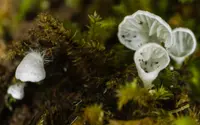
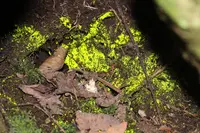
Veined mossear, Rimbachia bryophila, is a small, delicate epiphytic fungus that often grows on living mosses and damp forest surfaces. It forms tiny, pale fruiting bodies that blend closely with surrounding moss, so it is easy to overlook in the wild. This species occurs mainly in humid, shaded forests, where stable moisture and cool, clean air support its growth. It is of interest to collectors of unusual terrarium fungi and bryophyte companions, but it is not as straightforward as common houseplants. Consistent humidity, gentle air movement, and very low light are usually needed to care for veined mossear successfully.

Care Difficulty
Hard Care

Light Preference
Shade

Water Requirements
Keep Soil Moist

Temperature Preference
Tropical / Frost Sensitive

Hardiness Zone
Unknown

Soil Texture
Peaty, Organic-rich

Soil pH
Acidic (5.5–6.5)

Soil Drainage
Moist but well-drained

Fertilization
Minimal (feed rarely)
Scan your plant to receive care tips personalized for your specific plant
Available on iOS and Android
This small epiphytic fungus prefers low, gentle light similar to a shaded forest floor.
Rimbachia bryophila needs consistently moist but not waterlogged conditions to mimic its natural mossy habitat.
This species prefers cool to mild, stable temperatures similar to a shaded woodland microclimate.
This species benefits from consistently high humidity to keep its delicate foliage hydrated.
Rimbachia bryophila grows best on a loose, moisture-retentive but airy substrate rather than dense potting soil.
This species is suitable for tightly controlled container culture, especially in closed or semi-closed terrariums.
This small epiphytic fungus-like plant grows in low-nutrient habitats and usually does not need additional fertilizer.
Rimbachia bryophila is not managed like a typical houseplant and does not require structured pruning.
This species is rarely cultivated and is not suited to routine repotting in standard containers.
Propagation of this specialist fungus-like organism is technically complex and not a standard home practice.
In its natural range, this organism experiences cool, moist conditions and usually needs no specific winter care.

Plant Health Check
Not sure what's wrong with your plant? Check your plant's health inside the app.
This tiny agaric fungus is typically found fruiting directly on living mosses, especially on shaded, humid forest floors, making it a specialist of bryophyte-dominated microhabitats.
Its fruiting bodies are so small that they can be easily overlooked without close inspection, yet they still form distinct caps, gills, and stems typical of agaric mushrooms.
Although often overlooked, this species has been documented from multiple Neotropical regions, including parts of Central and South America, indicating an ability to occupy suitable mossy habitats across a broad geographic area.
This species performs best in enclosed, very humid environments that mimic a terrarium, paludarium, or shaded greenhouse bench. Outdoors it usually dries out or overheats unless humidity, shade, and constant moisture are very carefully controlled.
Keep your plants happy and healthy with plant identification, disease detection, and easy care guidance.

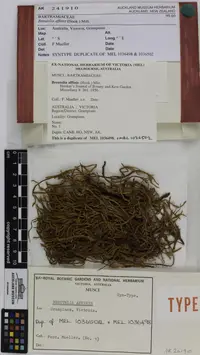
Breutelia affinis
Breutelia affinis
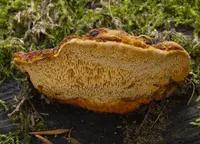
Anise Mazegill
Gloeophyllum odoratum
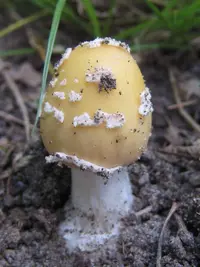
Great Funnel-Veil Amanita
Amanita velatipes
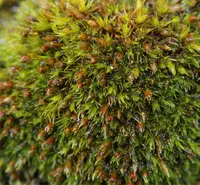
seaside schistidium moss
Schistidium maritimum
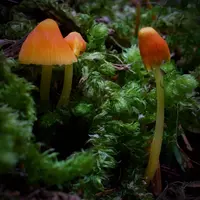
tangerine bonnet
Atheniella aurantiidisca
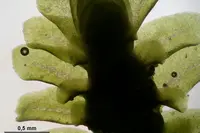
White Earwort
Diplophyllum albicans
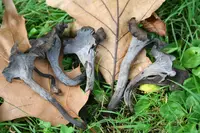
Horn-of-plenty
Craterellus cornucopioides
Goblin Gold
Schistostega pennata