Turkish washcloth Care (Mastocarpus papillatus)

Also known as: grapestone, black tar spot
Turkish washcloth

About Turkish washcloth

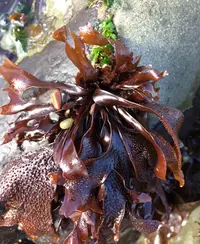
Turkish washcloth, Mastocarpus papillatus, is a red marine alga rather than a traditional land plant. It forms thick, leathery fronds that often appear wrinkled or textured, which explains its common name.

This species typically grows attached to rocky shores in the intertidal zone along the Pacific coast of North America. It tolerates strong waves, periodic drying, and high light, which makes it a resilient organism in its natural habitat.

Because it is a seaweed, care for Turkish washcloth focuses on stable access to clean, cool saltwater and strong water movement, rather than soil-based growing conditions.

Main Plant Requirements

Care Difficulty

Hard Care

Light Preference

Partial Shade

Water Requirements

Aquatic

Temperature Preference

Cool Climate

Hardiness Zone

8–10

Soil Texture

Sandy, Rocky, Organic-rich

Soil pH

Strongly acidic (4.5–5.5)

Soil Drainage

Waterlogged tolerant

Fertilization

Minimal (feed rarely)

Get Personalized Care Plan

Scan your plant to receive care tips personalized for your specific plant

Available on iOS and Android

How to Care for the Turkish washcloth

This intertidal red alga prefers strong natural light but is adapted to shifting coastal conditions.

  • Aim for 4–6 hours of direct sun at low tide, with bright reflected or filtered light the rest of the day for Turkish washcloth on exposed rocks.
  • It tolerates partial shade, especially in higher shore zones, but growth becomes thinner and darker when light drops below about 3–4 hours of direct sun.
  • In very exposed, hot sites, excess afternoon summer sun can desiccate fronds, so rely on tidal cover, splash, or light shade from rocks to reduce stress.

This marine alga depends on constant seawater access and high moisture around its holdfast.

  • Allow wave or tidal action to rewet Mastocarpus papillatus frequently; fronds should never stay completely dry for more than a few hours at low tide.
  • On artificial or managed shorelines, ensure surfaces drain freely yet remain periodically flushed with seawater rather than standing in stagnant pools.
  • Signs of underwatering include brittle, crisp fronds and color fading, while over-immersion in still water promotes slimy biofilm and decomposition at the base.

This cool-temperate shore alga is adapted to moderate water temperatures and brief air exposure.

  • Optimal growth occurs in coastal water around 45–60°F (7–16°C), with healthy tolerance during brief low-tide air exposure within similar ranges.
  • The thallus can survive short cold spells near 32°F (0°C) if submerged frequently, but prolonged hard frost on exposed rocks damages tissue.
  • It endures short heat spikes up to about 77–82°F (25–28°C) in tide pools, yet sustained warmer water and hot air exposure increase stress and shorten lifespan.

This intertidal red alga tolerates a broad humidity range but stays healthiest in consistently moist, marine-influenced air.

  • Aim for ambient humidity around 60–80% when simulating shore conditions in enclosed systems.
  • It tolerates brief exposure to drier air, but repeated low humidity causes desiccation, stiff, brittle fronds, and fading color.
  • To reduce humidity stress when caring for Turkish washcloth, use shallow, aerated seawater trays, mist lightly with seawater, and reduce warm, drying airflow.

Mastocarpus papillatus anchors to hard substrates and does not require or prefer terrestrial soil.

  • Grow on inert, non-reactive rock, shells, or marine-grade structures submerged or periodically splashed with clean seawater instead of any soil mix.
  • If a support matrix is needed in research or display tanks, use coarse aragonite gravel or rubble that allows water to move freely around the holdfasts.
  • Maintain flowing, well-oxygenated seawater and avoid fine sediments or mud that can smother tissue and block light penetration.
  • Keep pH within a stable marine range (roughly 8.0–8.3) and avoid any calcareous additives that could push alkalinity beyond normal ocean conditions.

This species can be maintained in containers such as marine aquaria or mesocosms when water movement and chemistry mimic its rocky shore habitat.

  • Use low, wide tanks or trays so fronds experience both submersion and brief emersion without collapsing or drying out unevenly.
  • Position rock substrates to remain stable under wave makers or surge devices, preventing abrasion or detachment of the holdfasts.
  • Select container materials that resist salt corrosion and do not leach metals, which can accumulate and stress delicate algal tissues over time.

Mastocarpus papillatus (Turkish washcloth) needs very little added nutrition when grown in a marine or tide-pool style setup.

  • In naturalistic marine systems, rely mainly on nutrients dissolved in seawater rather than direct fertilization.
  • If growth is weak in an indoor culture tank, use a highly diluted balanced NPK marine-safe fertilizer at 1⁄4 strength.
  • Apply light feeding only during active growth phases, then stop during winter or low-light periods.
  • Avoid heavy dosing, which encourages nuisance algae; monitor water quality and adjust feeding based on visible growth.

Pruning Mastocarpus papillatus is minimal and mainly serves to maintain healthy fronds in culture systems.

  • Trim away dead, bleached, or damaged blades at any time using clean scissors for better water flow and light penetration.
  • Thin crowded clumps by removing entire holdfast sections to prevent self-shading and decay in dense culture tanks.
  • Shaping is limited; gentle thinning can maintain an even mat and reduce detritus buildup around the thallus base.
  • Disinfect cutting tools before and after use to reduce transfer of unwanted microbes between culture containers.

Transplanting Mastocarpus papillatus focuses on resetting or expanding marine culture areas rather than classic pot repotting.

  • Shift or divide clumps when growth slows, fronds stay small, or rock surfaces are fully covered.
  • Time major moves for mild conditions, avoiding periods of extreme heat or strong storm exposure in outdoor systems.
  • Expect to reset or expand culture substrates every 1–2 years as rocks or grids become overgrown or fouled.
  • Handle holdfasts gently, keep fronds moist with seawater during moves, and re-anchor to clean rock or mesh to reduce stress.

Propagation of Mastocarpus papillatus is specialized and usually handled by experienced marine growers rather than casual hobbyists.

  • Use small frond sections with intact holdfasts attached to clean rocks or mesh as a practical vegetative method.
  • Carry out attachment and division during stable, cool seasons when water temperature is moderate and light is steady.
  • Provide strong water movement, full-strength seawater, and moderate light to encourage secure re-attachment and new blade growth.
  • Minimize handling time in air, keep tissues moist with seawater, and avoid physical damage that can lead to decay.

Outdoor Mastocarpus papillatus in its natural coastal range is cold hardy and usually needs no special winter care.

  • If cultured in containers, maintain water above freezing, ideally 40–55°F, to prevent tissue damage.
  • Move small tanks or culture trays indoors or into a sheltered, unheated space during hard frost events.
  • Avoid rapid temperature swings; adjust water temperature gradually and maintain steady salinity through winter.

Care Tips

Tidal Zonation Placement

When using in an outdoor marine setup, position fronds at slightly different heights on rockwork so some parts experience more frequent emersion and others stay wetter, which mimics its natural mid- to low-intertidal distribution and improves long-term survival.

Rock Attachment Method

To secure new fronds, press the holdfast or lower blade firmly onto clean, rough rock and use a small elastic band or soft mesh to keep contact for 7–14 days until natural adhesion develops, then remove the support to avoid constriction.

Flow Pattern Management

Provide steady, laminar water movement across the blades rather than strong, turbulent jets, and redirect pump outlets if edges show tearing or fronds collect detritus in slack zones.

Seasonal Light Adjustment

In outdoor or open-system culture, slightly reduce light intensity or exposure duration at the warmest time of year to limit heat stress and bleaching, then gradually increase light as water temperatures drop again.

Regular Biofilm Cleaning

Gently brush rocks and tank surfaces with a soft brush every 1–2 weeks to remove excessive biofilm and filamentous algae that can smother blades, which is especially helpful when caring for Turkish washcloth in closed marine systems.

Common Pests and Diseases

Epiphytic filamentous algae

This disease involves fine filamentous green or brown algae growing over Mastocarpus blades and fronds, reducing light penetration and gas exchange. Symptoms include a fuzzy coating that can trap sediments and attract grazing invertebrates.

Solution

Gently rinse thalli in clean, flowing seawater and carefully remove filamentous mats by hand while avoiding damage to the holdfast. Reduce nutrient enrichment in the system by improving filtration and water changes, and increase water movement so loose filaments cannot settle on the algal surface.

Encrusting coralline overgrowth

This condition occurs when pink to purplish crustose coralline algae overgrow Mastocarpus tissue, especially on older or shaded parts, limiting its ability to photosynthesize. Symptoms include stiff, calcified patches that progressively cover and smother fronds.

Solution

Manually chip or gently scrape off localized coralline patches from hard substrates near the plants without injuring the Mastocarpus holdfasts. Maintain moderate water flow, balanced calcium and alkalinity, and stable light levels so Mastocarpus can maintain healthy growth and better compete with encrusting forms, an important principle in Mastocarpus papillatus care.

Herbivory by littorinid snails

These insects do not occur; instead, small marine snails (Littorina spp.) graze directly on Mastocarpus tissue, creating rasped patches and perforations. Symptoms include irregular holes, scraped surfaces, and stunted blades in heavily grazed zones.

Solution

Physically remove grazing snails from cultivation tanks or harvest areas on a regular schedule and reduce nearby hard refuges where snails cluster. If possible, introduce or support natural predators in open systems and avoid overfeeding other stock, which can support unnaturally high snail numbers.

Amphipod grazing damage

This pest consists of small crustaceans that shelter within tufted Mastocarpus and feed on softer tissues, especially young blades. Symptoms include shredded margins, small bite-like notches, and tissue thinning in dense clumps.

Solution

Swirl and rinse fronds in clean seawater to dislodge amphipods and siphon them from culture tanks or collection containers. Reduce excess detritus and algal debris that provide hiding places, and use fine-mesh barriers or traps to limit recolonization in intensive growing systems.

Bacterial surface biofilm

This disease involves dense bacterial films and associated microalgae forming on the thallus, which can lead to localized discoloration and tissue softening. Symptoms include slimy surfaces, dull color, and occasional small necrotic spots where tissue starts to break down.

Solution

Improve water circulation and maintain good water quality with regular partial water replacement to limit organic buildup that feeds biofilms. Rinse thalli periodically in clean seawater, gently wiping with gloved fingers if needed, and promptly remove decaying pieces so bacterial populations do not escalate on stressed tissue.

Interesting Facts

Distinctive dual life-cycle

This red alga has a heteromorphic life cycle, meaning its sexual upright fronds and its asexual crust-like phase look completely different and were once thought to be separate species.

Intertidal stress specialist

It commonly grows high in the rocky intertidal zone along the Pacific coast of North America, tolerating intense wave action, strong sunlight, and repeated air exposure during low tides.

Historical "Turkish washcloth",

The thick, textured blades inspired its common name Turkish washcloth, and coastal communities have historically used its flexible, tough fronds as a natural scrubbing material.

Botan icon

Did you know?

The upright fronds of this species can host the parasitic red alga Microcladia coulteri, creating a visually distinctive association in the intertidal zone where the parasite grows directly on the Turkish washcloth blades.

FAQs about Turkish washcloth

This red seaweed is edible and traditionally used along the Pacific coast as food and medicinal material. It is usually boiled, dried, or processed before eating. Always collect from clean waters, free of pollution or harmful algal blooms.

Grow Healthy Plants with Botan Care

Keep your plants happy and healthy with plant identification, disease detection, and easy care guidance.

Botan plant care app — identify plants on mobile

Explore More Plants