mayten Care (Maytenus boaria)

Also known as: Maiten tree, Chilean mayten
mayten

About mayten

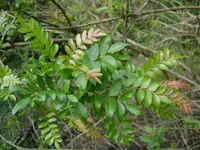
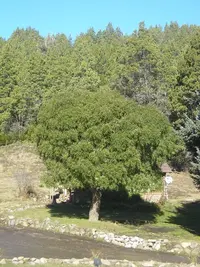
Mayten, Maytenus boaria, is an evergreen tree known for its fine, weeping foliage and elegant, fountain-like form. It is often grown as an ornamental feature tree in mild climates.

In its native range of Chile and Argentina, it develops a dense canopy of small, glossy leaves and a smooth trunk that becomes more textured with age. The tree is moderately fast-growing under suitable conditions.

This species prefers mild temperatures, good light, and evenly moist but well-drained soil. Once established, it tolerates some drought, which can make it easier to care for mayten in suitable regions.

Main Plant Requirements

Care Difficulty

Moderate Care

Light Preference

Full Sun

Water Requirements

Moderate Water

Temperature Preference

Warm Climate

Hardiness Zone

8–10

Soil Texture

Sandy, Loamy, Clay

Soil pH

Slightly acidic (6.5–7.0), Neutral (7.0)

Soil Drainage

Well-drained

Fertilization

Minimal (feed rarely)

Get Personalized Care Plan

Scan your plant to receive care tips personalized for your specific plant

Available on iOS and Android

How to Care for the mayten

This small evergreen tree prefers bright, moderate sun exposure to develop dense, healthy foliage.

  • Aim for 4–6 hours of direct morning sun with light afternoon shade, especially in hotter inland climates.
  • Tolerates light, dappled shade but becomes sparse and thin in deep shade, with longer, weaker shoots.
  • In hot summers, protect from harsh west-facing sun to reduce leaf scorch, and ensure young trees are not planted against reflective walls.

This species prefers evenly moist but not saturated soil, especially during establishment.

  • Allow the top 3–5 cm of soil to dry before deep watering, encouraging roots to grow down rather than stay near the surface.
  • Reduce frequency in cool or rainy seasons and on heavy soils, watching for yellowing leaves or soft stems as signs of overwatering.
  • Increase watering during hot, dry periods if leaves start to dull, curl slightly, or new growth droops by late afternoon.

This tree performs best in mild, temperate climates without extreme winter cold or intense desert heat.

  • Ideal growth occurs around 60–75°F (16–24°C), with steady conditions supporting dense branching and foliage.
  • Mature trees tolerate brief drops to about 20–25°F (-6 to -4°C), but young plants are more easily damaged near freezing.
  • Avoid planting in frost pockets or sites with reflected heat; prolonged >95°F (35°C) combined with dry winds can cause leaf scorch without extra water and mulch.

This species handles a wide humidity range and usually does not need special humidity management outdoors.

  • Target 40–60% humidity for mayten grown indoors or in sheltered spaces, similar to average home conditions.
  • Leaves that crisp at the tips or curl while soil is evenly moist can indicate air that is too dry or hot drafts.
  • If indoor air is very dry, group plants together or place the container on a pebble tray with water below (not touching) the pot.

Maytenus boaria prefers freely draining, moderately fertile soil that does not stay waterlogged.

  • Use a loamy or sandy mix with noticeable structure, not fine or compacted, so water moves through and roots stay aerated.
  • Aim for slightly acidic to neutral pH, roughly 6.0–7.5, avoiding strongly acidic or chalky conditions that can limit nutrient availability.
  • For container or planting mix, combine roughly 50% compost or garden loam with 25% coarse sand and 25% perlite or fine bark for drainage.
  • Avoid heavy clay or peat-heavy mixes that hold water for long periods; amend them with coarse sand and grit to improve aeration.

This tree can be grown in containers when managed for size and stability.

  • Choose a deep, heavy container to counteract the fine, drooping canopy that can catch wind and tip lighter pots.
  • Select a pot slightly wider than the root mass to limit excessive top growth while still allowing steady root development.
  • Use a container material that does not dry too fast, such as thick-walled clay or composite, to moderate moisture swings in free-draining soil.

This species grows in modest soils but responds well to light feeding in cultivation.

  • Use a balanced slow-release fertilizer (for example 10-10-10) or a thin layer of compost in spring.
  • Feed outdoor Maytenus boaria every 6–8 weeks during the active growing season only.
  • Apply at 1/2–3/4 the label rate to avoid salt buildup and soft, weak growth.
  • Stop feeding in late summer and do not fertilize in winter dormancy.

Pruning helps maintain a graceful, stable canopy and good health in Maytenus boaria.

  • Carry out structural pruning in late winter or very early spring before vigorous growth starts.
  • Remove dead, damaged, crossing, or inward-growing branches to improve light and airflow.
  • Shorten or thin congested outer shoots to refine shape while keeping the natural weeping habit.
  • Use clean, sharp bypass pruners or a fine-tooth saw, making smooth cuts just outside branch collars.

This tree is usually grown in the ground, so focus on careful transplanting rather than frequent repotting.

  • Transplant in late winter or early spring when soil is workable and growth is still slow.
  • Look for signs such as roots circling the planting hole, severe pot binding, or stalled growth in containers.
  • Move the rootball with as much intact soil as possible and keep roots shaded and moist during the process.
  • Replant at the same depth, firm soil gently, water thoroughly, then keep the root zone evenly moist for several weeks to limit stress.

Propagation of Maytenus boaria is possible but slower than many common ornamentals.

  • Use semi-ripe cuttings in late summer, 8–12 cm long, with lower leaves removed.
  • Insert cuttings into a free-draining medium, use rooting hormone, and maintain 65–75°F with high humidity.
  • Sow fresh seed in autumn or early spring; germination can be slow and uneven.
  • Provide bright, indirect light and avoid waterlogging to reduce rot during the rooting or germination phase.

Established trees show moderate cold tolerance but young plants benefit from simple winter precautions.

  • In regions below about 20°F, favor sheltered sites such as courtyards or south-facing walls.
  • Apply 5–8 cm of organic mulch around the root zone, keeping it slightly away from the trunk.
  • Wrap young trunks with breathable tree wrap in the first winters to limit bark damage from freezing.
  • Move container-grown plants into a bright, cool, frost-free space before hard freezes.

Care Tips

Early leader training

In the first 3–5 years, select a single strong central leader and lightly remove competing upright shoots each late winter to build a stable tree structure and reduce storm breakage later.

Wind and stake management

In windy sites, use 2–3 low, flexible stakes and soft ties for only the first 1–2 years, allowing some trunk movement so the tree develops strong taper and does not remain dependent on support.

Root zone protection

Keep a 30–60 cm grass‑free, mulched ring around the base to protect fine feeder roots from lawn equipment, compaction, and temperature swings, but always keep mulch pulled back 5–8 cm from the trunk.

Canopy thinning for health

Every 2–3 years, selectively thin crowded inner twigs rather than shearing the outer foliage, which maintains the species’ natural weeping form and improves air movement to limit fungal issues.

Drought hardening strategy

Once established, use deep, infrequent irrigation during extended dry periods instead of frequent shallow watering to encourage deeper rooting and greater resilience when growing mayten in low‑rainfall climates.

Common Pests and Diseases

Woolly scale

This pest forms white, cottony clusters along young stems and branches, feeding on sap and causing gradual yellowing and decline. Symptoms include sticky honeydew and sooty mold growing on the sugary exudate.

Solution

Prune out heavily infested twigs, then gently scrub remaining colonies from bark with a soft brush and soapy water. For larger trees, apply a horticultural oil spray during mild weather to smother scale, and repeat as needed while monitoring new growth closely as part of Maytenus boaria care.

Armillaria root disease

This disease is caused by soil-borne Armillaria fungi that attack roots and the base of the trunk, leading to thinning foliage, branch dieback, and eventual tree decline. Symptoms include white fungal mycelium under the bark at the root collar and possible honey-colored mushrooms near the base in wet seasons.

Solution

Remove severely affected trees including as much root material as possible, and avoid replanting susceptible trees in the same spot. Improve drainage, avoid overwatering, and keep the root crown exposed and dry to reduce conditions that favor this fungus.

Sooty mold

This disease is a secondary fungal growth that develops on honeydew produced by sap-sucking insects such as scales or aphids, coating leaves and twigs in black, powdery layers. Symptoms include reduced photosynthesis, dull foliage, and an overall unhealthy appearance despite leaves not being directly infected internally.

Solution

Control the honeydew-producing insects first with targeted measures such as horticultural oil or insecticidal soap, then gently wash affected foliage with water to remove the mold. Improve airflow around the canopy by selective pruning to help leaves dry faster and reduce mold buildup.

Canker and dieback

This disease affects twigs and branches, causing sunken, discolored lesions, cracked bark, and progressive dieback from the tips inward. Symptoms include sudden wilting of individual branches and failure of new shoots on affected wood.

Solution

Cut out infected twigs and branches well below visible cankers, sterilizing pruning tools between cuts with alcohol or a bleach solution. Improve general tree vigor through proper watering and mulching, and avoid trunk injuries that can serve as entry points for canker-causing fungi.

Interesting Facts

Patagonian dryland specialist

This tree is native to central Chile and parts of Argentina, where it naturally grows in dry Mediterranean and Patagonian climates, showing strong adaptation to seasonal drought once established.

Graceful weeping canopy

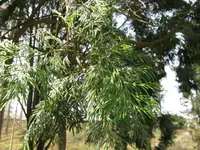
The species forms a fine-textured, pendulous crown with slender branches and small evergreen leaves, creating a willow-like appearance that casts light, dappled shade rather than deep darkness.

Important fodder resource

In its native range, the foliage has been used traditionally as emergency fodder for livestock during dry periods, reflecting the tree’s resilience and year-round leaf retention.

Botan icon

Did you know?

Historical records from Chile describe dense stands of this tree being so heavily cut for fuel and charcoal that local authorities introduced early protective measures in some regions to slow its decline near settlements.

FAQs about mayten

This species is an evergreen tree, keeping foliage year-round in suitable climates. Older leaves shed gradually and are replaced by new ones, so the canopy generally stays green if light, moisture, and nutrients remain adequate.

Grow Healthy Plants with Botan Care

Keep your plants happy and healthy with plant identification, disease detection, and easy care guidance.

Botan plant care app — identify plants on mobile

Explore More Plants