black medick Care (Medicago lupulina)

Also known as: nonesuch, hop clover, Yellow Trefoil, Shamrock
black medick

About black medick

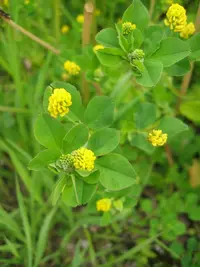
Black medick (Medicago lupulina) is a low-growing, clover-like legume often found in lawns, field margins, and along roadsides. It forms small mats or loose patches with trifoliate leaves and tiny yellow flower clusters that mature into black seed pods.

This species is native to Europe and Asia but is now common across much of North America, especially in dry, disturbed, or compacted soils. It fixes nitrogen in the soil, which supports its vigor and makes it relatively easy to establish.

Those who want to care for black medick should know it prefers full sun, moderately dry to slightly moist soil, and tolerates poor ground better than many lawn or garden plants.

Main Plant Requirements

Care Difficulty

Easy Care

Light Preference

Full Sun

Water Requirements

Low Water

Temperature Preference

Cold Hardy

Hardiness Zone

3–9

Soil Texture

Sandy, Loamy, Clay

Soil pH

Slightly acidic (6.5–7.0), Slightly alkaline (7.0–7.5)

Soil Drainage

Well-drained

Fertilization

Minimal (feed rarely)

Get Personalized Care Plan

Scan your plant to receive care tips personalized for your specific plant

Available on iOS and Android

How to Care for the black medick

This plant thrives in open, bright sites and evolves best with consistent sun exposure.

  • Provide 6–8 hours of direct sun daily; morning and midday sun support compact, leafy growth in black medick.
  • Tolerates light partial shade, especially with 3–4 hours of direct morning sun and bright conditions for the rest of the day.
  • In hot summers, avoid intense reflected afternoon heat that can scorch foliage; in shorter winter days, select the sunniest available position.

This species prefers moderately moist, well-drained soil and resents prolonged saturation.

  • Allow the top 3–5 cm of soil to dry before watering; soil should feel dry on top but still slightly cool and faintly moist below.
  • Adjust through the year: water more often during active warm-season growth and reduce frequency once temperatures drop and growth slows.
  • Watch for pale, wilting foliage and dry, crumbly soil as underwatering signs; yellowing, soft stems and a sour odor suggest excess moisture for Medicago lupulina.

This plant is cool-tolerant and suited to temperate outdoor conditions across much of the US.

  • Optimal growth occurs around 60–75°F (16–24°C), with the strongest vegetative development in mild spring and early summer weather.
  • Plants tolerate cold down to about 20–25°F (-6 to -4°C); foliage may be damaged by harder frosts, but roots often survive and resprout.
  • During hot spells above 90°F (32°C), growth can slow; provide soil moisture and avoid heat-reflecting surfaces that can raise root-zone temperatures.

Humidity is rarely critical for this species, which tolerates a wide range of outdoor conditions.

This plant prefers light, well‑drained mineral soils and adapts to relatively poor sites.

  • Use sandy or sandy‑loam soil with moderate organic matter to support root nodulation and prevent compaction.
  • Aim for slightly acidic to neutral pH, roughly 6.0–7.2, where Medicago lupulina typically fixes nitrogen most efficiently.
  • Improve drainage and aeration by blending native soil with coarse sand or fine gravel at 20–40% of the mix.
  • Avoid heavy, waterlogged clay and low‑lying spots where standing water persists after rain, as roots are prone to rot in these conditions.

This species can be grown in containers, mainly for temporary cover, seed production, or observation.

  • Choose a wide, shallow pot at least 20–25 cm across to allow surface‑spreading growth and lateral root development.
  • Use a gritty, fast‑draining mix so water moves through quickly, preventing crown rot at the base of the stems.
  • Place containers where rain or irrigation can flush through freely, and elevate the pot so the drainage holes never sit in collected water.

This wild legume usually grows well in average soil and needs only light feeding in managed settings.

  • Use a balanced, dilute liquid fertilizer (for example 10-10-10 at 1/4–1/2 strength) or a thin layer of mature compost in spring.
  • Feed every 4–6 weeks during active growth if soil is poor, then stop feeding in late summer.
  • Avoid high-nitrogen lawn products, since black medick already fixes atmospheric nitrogen in its roots.
  • Always water before and after applying fertilizer to reduce root burn risk.

Pruning Medicago lupulina is mainly useful for tidiness, seed control, and keeping growth low.

  • Cut back straggly or overgrown stems in late spring or mid-summer with clean hand shears.
  • Remove dead, damaged, or diseased growth whenever noticed to reduce pest and disease pressure.
  • Shear or mow lightly to encourage dense, low mats and to limit unwanted self-seeding.
  • Avoid cutting too close to the crown; leave 3–5 cm of leafy growth for quick recovery.

This species is more often transplanted outdoors than grown long term in containers.

  • Transplant Medicago lupulina in early spring or early fall when temperatures are mild and soil is moist.
  • Move plants when growth slows, roots circle a small plug, or clumps spread beyond the intended area.
  • Lift with a trowel, keeping a firm soil ball around the roots to limit disturbance.
  • Replant at the same depth, water thoroughly, and shade lightly for a few days to reduce transplant shock.

Propagation is most practical from seed, which this plant produces in quantity.

  • Collect ripe pods from Medicago lupulina, dry them, then separate out the small seeds.
  • Sow in spring or early fall on the soil surface or just 0.5 cm deep in well-drained, neutral to slightly alkaline soil.
  • Keep the seedbed evenly moist and in full sun to light shade until seedlings establish.
  • For controlled sowing, start seeds in trays, then transplant young plants once roots hold the plug together.

In most temperate climates this species is cold hardy and needs little specific winter care.

  • Established plants tolerate normal frosts and often overwinter as low rosettes or self-sown seed.
  • In very exposed sites, a light 2–3 cm mulch helps moderate soil temperature and moisture loss.
  • Container-grown plants in cold regions can be moved to a sheltered, unheated area to avoid root freeze-thaw cycling.

Care Tips

Encourage Ground Cover

Mow or trim lightly once plants are established to keep growth low, dense, and competitive against weeds when growing black medick as a living mulch or ground cover.

Use As Green Manure

Cut plants back before or at early flowering and leave the clippings on the soil surface or lightly incorporate them to recycle nitrogen and organic matter into the bed.

Support Beneficial Insects

Allow a portion of the patch to flower and avoid broad-spectrum insecticides so the blooms can feed pollinators and predatory insects that help manage pests in nearby crops.

Manage Self-Seeding

If self-seeding is a concern, cut or mow stands before seed pods mature, and remove the clippings from the site to limit unwanted spread into paths or adjacent beds.

Integrate With Grasses

Sow into sparse turf or alongside low-growing grasses to form a mixed sward that improves soil fertility, increases drought tolerance, and reduces the need for nitrogen fertilizer over time.

Common Pests and Diseases

Pea aphids

This pest feeds on young shoots and undersides of leaflets, sucking sap and causing curling, yellowing, and sticky honeydew that can lead to sooty mold. Heavy infestations can weaken plants and reduce flowering and seed set.

Solution

Check stems and new growth regularly and crush or rinse off colonies with a firm water spray. For larger populations, introduce or encourage natural enemies like lady beetles, or treat foliage with insecticidal soap or a light horticultural oil, making sure to cover the undersides of leaves and repeating as needed according to Medicago lupulina care instructions.

Sitona weevils

These insects include several Sitona species whose adults notch the leaf margins, while larvae feed on root nodules, reducing nitrogen fixation and overall vigor. Symptoms include slow growth, pale foliage, and characteristic scalloped edges on leaves.

Solution

Monitor leaves for fresh notches and dig a few plants to check for larval feeding on nodules if growth is poor. Reduce damage by rotating legumes with non-legume crops, encouraging ground beetle predators, and, where needed, using targeted soil-applied biological controls such as entomopathogenic nematodes in early spring before larval feeding peaks.

Anthracnose

This disease causes tan to dark-brown, often elongated lesions on stems and petioles, which may girdle shoots and lead to wilting or lodging. Symptoms include thinning stands and plants that break or collapse easily at the affected areas.

Solution

Remove and destroy infected plant material and avoid mowing or working in stands when foliage is wet to limit spread. Improve air circulation with wider spacing or mixed plantings, rotate out of legumes for several years on heavily affected sites, and use clean seed or certified material when establishing new patches to grow Medicago lupulina more reliably.

Downy mildew

This disease leads to pale, yellowish spots on upper leaf surfaces with a grayish to purplish downy growth on the undersides, especially in cool, humid weather. Symptoms include premature leaf drop and a generally stunted, off-color stand.

Solution

Reduce leaf wetness by avoiding overhead irrigation, irrigating early in the day, and maintaining good spacing and airflow. Remove heavily infected plants to reduce spore levels, rotate with non-legume species, and, in production settings, use resistant or more tolerant companion species in mixtures to lower disease pressure.

Powdery mildew

This disease presents as white, powdery fungal growth on leaves, petioles, and sometimes stems, starting on lower leaves and moving upward. Symptoms include dull, distorted foliage and, under severe pressure, reduced flowering and seed production.

Solution

Improve light and airflow by avoiding dense, shaded stands and mowing or trimming around the area to open the canopy. Remove and discard the most affected foliage, provide balanced nutrition to support new growth, and, in persistent cases, apply a labeled low-toxicity fungicide such as sulfur or potassium bicarbonate, following local regulations and label directions.

Interesting Facts

Nitrogen-fixing pioneer

This species hosts rhizobia bacteria in its root nodules, allowing it to convert atmospheric nitrogen into forms usable by plants and gradually enrich poor or compacted soils.

Distinctive coiled pods

Unlike many clovers, it forms small, one-seeded pods that turn black and spiral slightly as they mature, which is the origin of the common name black medick.

High-value bee forage

Its small yellow flower heads produce nectar and pollen over a long season, making it a reliable forage source for honey bees and many wild bee species in both urban and agricultural settings.

Botan icon

Did you know?

Black medick is believed to be native to Eurasia but now occurs on every continent except Antarctica, where it behaves as a flexible colonizer of disturbed habitats such as roadsides, lawns, and field margins, often arriving early in plant succession.

FAQs about black medick

Yellowing leaves usually point to nutrient-poor soil, waterlogging, or natural aging of older foliage. Check for compacted or soggy ground, improve drainage, and consider a light, balanced fertilizer if growth appears weak overall.

Grow Healthy Plants with Botan Care

Keep your plants happy and healthy with plant identification, disease detection, and easy care guidance.

Botan plant care app — identify plants on mobile

Explore More Plants