Substrate hygiene
Remove and discard any decomposing organic matter around the colony and replace with fresh, clean sand or substrate to limit competing fungi and bacteria when growing dune cavalier.

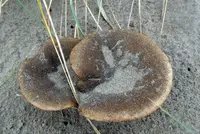
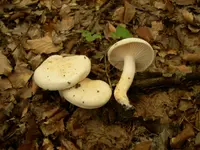
Dune cavalier, Melanoleuca cinereifolia, is a small to medium agaric fungus found mainly in coastal dune systems and sandy grasslands. It typically forms pale gray to brown caps with crowded gills and slender stems, often appearing in scattered groups.
This species prefers nutrient-poor, well-drained sandy soils and is usually associated with low, open vegetation rather than dense woodland. It is considered moderately demanding to cultivate because it relies on specific soil conditions and natural dune ecosystems, so most people observe it in the wild rather than in gardens. Enthusiasts who want to learn how to care for dune cavalier should focus on replicating its cool, open, and sparsely vegetated coastal habitat as closely as possible.

Care Difficulty
Moderate Care

Light Preference
Partial Shade

Water Requirements
Moderate Water

Temperature Preference
Warm Climate

Hardiness Zone
Unknown

Soil Texture
Loamy

Soil pH
Slightly acidic (6.5–7.0)

Soil Drainage
Well-drained

Fertilization
Minimal (feed rarely)
Scan your plant to receive care tips personalized for your specific plant
Available on iOS and Android
This coastal species prefers bright, open conditions with some protection from harsh midday sun.
This species grows best in free-draining sandy or loamy soil that never stays saturated for long periods.
This species is adapted to mild coastal climates with moderate seasonal shifts.
This species tolerates a wide humidity range but benefits from moderately moist air in cultivation.
Melanoleuca cinereifolia favors loose, well-aerated, evenly moist but free-draining substrates.
This species can be managed in containers for controlled cultivation, though it is less common than in-ground culture.
This species, sometimes called dune cavalier, generally needs only light feeding in moderately fertile soil.
Pruning Melanoleuca cinereifolia is usually limited to maintaining health and a clean outline.
This species is more often grown in the ground, so transplanting is more relevant than container repotting.
Propagation of Melanoleuca cinereifolia is possible but usually done on a small scale by experienced growers.
This species is generally cold hardy in temperate regions and needs only modest winter attention in the ground.

Plant Health Check
Not sure what's wrong with your plant? Check your plant's health inside the app.
This species is recognized by its pale grey to grey-brown cap with a finely fibrillose, often slightly silky surface, which tends to fade toward the margin as it ages.
Its spores are finely warty to verrucose and amyloid (they stain bluish-black in iodine-based reagents), a microscopic feature used by mycologists to distinguish it from similar grey Melanoleuca species.
It is typically reported from nutrient-poor, sandy or dune-like soils, where it functions as a saprotroph, decomposing organic debris and contributing to nutrient cycling in fragile coastal or sandy ecosystems.
Yes, this species is typically propagated from spores rather than seeds, as it is a fungus. Collect mature caps, allow spores to drop onto suitable sterile substrate, and maintain consistent moisture and cool temperatures for colonization.
Keep your plants happy and healthy with plant identification, disease detection, and easy care guidance.