Green Russula Care (Russula virescens)

Also known as: Greencracked Brittlegill
Green Russula

About Green Russula

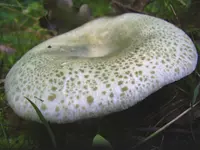
Green russula, Russula virescens, is a wild ectomycorrhizal mushroom, not a typical houseplant. It forms symbiotic relationships with tree roots, especially oaks and other hardwoods. The cap is usually pale green with a cracked, mosaic-like pattern, and the gills are white to cream, giving it a distinctive, easily recognized look in the forest. It naturally occurs in temperate woodlands across parts of Europe, Asia, and North America, emerging from soil and leaf litter in warm, wet seasons. This species cannot be reliably cultivated indoors or in pots, so attempts to care for Green Russula mainly focus on protecting suitable woodland habitat and host trees.

Main Plant Requirements

Care Difficulty

Hard Care

Light Preference

Partial Shade

Water Requirements

Regular Water

Temperature Preference

Cool Climate

Hardiness Zone

Unknown

Soil Texture

Loamy, Silty, Organic-rich

Soil pH

Strongly acidic (4.5–5.5), Acidic (5.5–6.5)

Soil Drainage

Moist but well-drained

Fertilization

Minimal (feed rarely)

Get Personalized Care Plan

Scan your plant to receive care tips personalized for your specific plant

Available on iOS and Android

How to Care for the Green Russula

This ectomycorrhizal mushroom grows best in dappled woodland light rather than direct, open sun.

  • Provide 2–5 hours of weak, filtered sunlight under deciduous trees, with bright shade for the rest of the day to mimic summer woodland conditions.
  • Tolerates light morning sun but avoid harsh midday and afternoon sun, which can overheat and dry the leaf litter, reducing fruiting of Green Russula.
  • In summer, increased canopy cover naturally lowers light levels; fruiting often improves as scattered beams reach the forest floor after rain.

This woodland fungus depends on consistently moist, not saturated, soil around its host tree roots.

  • Aim for evenly moist mineral soil with a loose leaf litter layer; the top 2–3 cm should feel slightly damp but not soggy when checked by hand.
  • After dry spells or 5–7 rain‑free days, gentle irrigation or watering the surrounding forest floor can help Russula virescens, but allow surface water to drain within a few hours.
  • Watch for waterlogging signs such as standing puddles or sour smell, which suppress mycelium, versus deep cracks and very crumbly soil, which indicate drought stress.

This species fruits best in mild to warm conditions typical of late spring to early autumn woodlands.

  • Optimal fruiting temperatures are around 65–77°F (18–25°C), with stable soil warmth and moderate humidity around the tree root zone.
  • The underground mycelium tolerates cooler conditions down to about 40°F (4°C), but visible mushrooms are unlikely to develop below 50°F (10°C).
  • Prolonged heat above 86°F (30°C) combined with dry soil reduces fruiting, while hard frost can damage or halt existing mushrooms, though the mycelium often survives below the surface.

Humidity management is not relevant for Russula virescens, which is a wild ectomycorrhizal mushroom rather than a houseplant.

Russula virescens grows in natural forest soil and cannot be maintained like a typical potted plant.

  • This fungus forms ectomycorrhizal associations with tree roots, so it requires undisturbed, living soil rich in leaf litter and fine roots, not a manufactured potting mix.
  • It typically occurs in well-drained, aerated forest loam with abundant organic matter and a loose, crumbly structure that does not stay waterlogged.
  • Fruiting bodies are usually found in slightly acidic to neutral soils, roughly pH 5.0–7.0, where long-term leaf decomposition maintains both nutrients and structure.
  • Artificial mixes with peat, perlite, sand, or bark do not replace the complex biology of forest soil, so attempts at standard Russula virescens plant care in pots are generally unsuccessful.

This species is not suitable for container growing, as it depends on complex root partnerships in living forest soil.

Russula virescens is a wild mycorrhizal fungus that does not benefit from direct fertilization in gardens or containers.

Pruning is not applicable to Russula virescens, as it is a mushroom-forming fungus rather than a woody or leafy plant.

This fungus forms symbiotic associations with tree roots, so repotting or transplanting is generally not practical or successful.

  • Russula virescens relies on undisturbed soil and established host trees, so moving it usually disrupts the mycorrhizal network.
  • Transplant attempts often fail because fine fungal threads (mycelium) cannot be lifted intact from the forest floor.
  • If found in pots with tree seedlings, avoid disturbing roots and soil structure to reduce stress on both partners.
  • For those wishing to grow Russula virescens, focus on maintaining healthy host trees and stable, undisturbed soil conditions.

Intentional propagation of Russula virescens is difficult and not reliably achieved in home or garden settings.

This forest mushroom is naturally cold hardy in its native range and requires no intentional winter care or protection.

Care Tips

Host tree matching

Inoculate soil near compatible deciduous trees such as oak, beech, or hornbeam, since this ectomycorrhizal fungus needs a living host root system rather than isolated woodland soil to establish.

Minimal ground disturbance

Avoid raking, deep hoeing, or compacting the soil where mycelium is expected, because undisturbed leaf litter and fine roots support stable networks that improve long-term Russula virescens care.

Leaf litter management

Maintain a loose layer of mixed hardwood leaf litter 2–5 cm deep over the colonized area, refreshing it annually to supply organic matter while still allowing gas exchange and fruiting body emergence.

Targeted irrigation zone

When supplemental watering is needed, apply water in a wide ring at and just beyond the drip line of the host tree rather than directly at the trunk, since fine feeder roots there are most important for growing Green Russula.

Fruiting site marking

Mark spots where mushrooms appear with discreet tags or a map so future traffic, mowing, or digging can be redirected away from productive mycelium zones across multiple seasons.

Common Pests and Diseases

Mycetophilid larvae

This pest targets the fruiting bodies and sometimes the mycelium, tunneling through caps and stems and leaving brown, water-soaked galleries. Symptoms include soft, collapsing tissue, distorted caps, and visible white to translucent maggots inside the mushroom flesh.

Solution

Harvest Green Russula promptly at the button to mid-expansion stage and avoid leaving damaged or overripe mushrooms in place, since these attract egg-laying adults. In managed patches, keep the area free of decaying mushroom debris, use fine mesh or netting over cultivation beds where practical, and rotate harvest areas to reduce local fungus gnat buildup.

Slug and snail feeding

These animals chew irregular holes in caps and stems, often consuming large parts of the fruiting body overnight. Symptoms include slime trails on or near mushrooms and ragged edges on caps.

Solution

Hand-pick slugs and snails in the evening or early morning and remove nearby cover such as dense leaf piles or boards that provide daytime shelter. In garden or managed forest settings, use copper bands, rough barriers, or iron phosphate slug baits placed away from the main fruiting spots to reduce pressure while limiting impact on non-target organisms.

Hypomyces parasiticus

This disease is a parasitic fungus that overgrows russula mushrooms, forming a granular to crust-like layer on caps and gills. Symptoms include deformed, hardening fruiting bodies with discolored surfaces that may become yellowish or whitish and lose normal spore production.

Solution

Remove and discard parasitized mushrooms as soon as they are noticed to limit local spore load and prevent spread to nearby fruiting bodies. Avoid disturbing and spreading infected tissue through handling, and do not place infected specimens in areas where healthy Russula virescens commonly fruits.

Insect larval cap rot

This condition results from various beetle or fly larvae burrowing within the cap and gill tissue, leading to rapid browning, internal decay, and a foul smell. Symptoms include small entry holes, crumbly or cottony internal tissue, and premature collapse of the mushroom.

Solution

Inspect mushrooms before collecting and remove any with visible holes or soft spots to avoid carrying larvae into storage or other sites. In areas where growing Green Russula is intentional, harvest younger fruiting bodies, maintain good forest floor hygiene by removing heavily damaged mushrooms, and use breathable containers during collection to discourage further decay.

Interesting Facts

Distinctive cracked cap

The cap surface of this species naturally develops a characteristic cracked or areolate pattern, with pale green patches separated by whitish fissures, which helps distinguish it from other greenish russulas and from toxic look-alikes such as some Amanita species.

High culinary value

In parts of Europe, especially in Spain, France, and Italy, this mushroom is considered a choice edible and is often collected for food due to its firm, brittle flesh and mild taste, unlike many russulas that are either acrid or of low culinary interest.

Mycorrhizal with hardwoods

This fungus forms ectomycorrhizal associations with broadleaf trees, especially oaks and chestnuts, meaning its fine root-like structures wrap around tree roots and help the host absorb water and nutrients while receiving sugars in return.

Botan icon

Did you know?

Molecular studies have shown that populations long identified in North America as Russula virescens are genetically distinct from the European species, so true R. virescens appears to be native to Europe and parts of Asia, with similar but separate taxa occurring on other continents.

FAQs about Green Russula

This species is considered a choice edible mushroom in many regions when correctly identified. It must be cooked before eating. Confusion with toxic look-alike russulas is possible, so only consume specimens identified by an experienced mycologist.

Grow Healthy Plants with Botan Care

Keep your plants happy and healthy with plant identification, disease detection, and easy care guidance.

Botan plant care app — identify plants on mobile

Explore More Plants