Wind-resistant staking
In windy sites, install 2–3 sturdy stakes outside the root zone and use soft, wide ties in a loose figure-eight to support tall stems without cutting into the tissue.

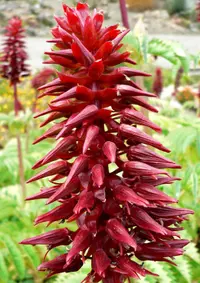
Honeybush, Melianthus major, is a fast-growing ornamental shrub known for its bold, serrated, bluish-green leaves and a strong, honey-like scent. It often forms a large, bushy clump that gives gardens a lush, architectural look.
This plant is native to South Africa, where it grows on sunny slopes and rocky hillsides. In mild climates it can be evergreen, while in colder areas it may die back and resprout from the base.
It is generally robust and vigorous but can be damaged by hard frost, so some winter protection may be needed in cooler regions. To care for Honeybush, provide full sun, free-draining soil, and moderate moisture to support healthy growth.

Care Difficulty
Moderate Care

Light Preference
Full Sun

Water Requirements
Moderate Water

Temperature Preference
Warm Climate

Hardiness Zone
8–10

Soil Texture
Sandy, Loamy, Organic-rich

Soil pH
Slightly acidic (6.5–7.0), Neutral (7.0)

Soil Drainage
Well-drained

Fertilization
Light (every 4–6 weeks)
Scan your plant to receive care tips personalized for your specific plant
Available on iOS and Android
This sun-loving shrub forms its best foliage where it receives strong light most of the day.
This plant prefers steady moisture in fast-draining soil rather than constant wetness.
This species performs best in mild, frost-light climates with warm summers and cool winters.
Melianthus major tolerates a wide humidity range and rarely needs special humidity management in typical home or garden conditions.
Melianthus major prefers sharply drained, light soil that prevents waterlogging around the roots.
This species can be grown in containers if the pot is large, very stable, and drains quickly.
Melianthus major responds well to moderate feeding during its active growing season.
Melianthus major benefits from periodic pruning to maintain size, vigor, and attractive foliage.
This species is typically grown in the ground but young or container-grown plants may need occasional transplanting.
Melianthus major is commonly propagated by semi-ripe cuttings, division of clumps, or fresh seed.
In mild climates this plant can be semi-hardy, but winter protection is important in colder regions.

Plant Health Check
Not sure what's wrong with your plant? Check your plant's health inside the app.
Crushed leaves of this species release a strong, oily peanut or cashew-like smell, produced by volatile compounds stored in the leaf tissues.
Its dark red, tubular flowers produce abundant nectar that attracts sunbirds in its native South Africa and hummingbirds in suitable climates, making it an important nectar source where it grows.
All parts of the plant are considered poisonous if ingested and the sap can irritate skin, yet it is widely grown as an ornamental for its large, blue-green, serrated foliage and architectural habit.

In its native South African range, this species often resprouts vigorously from the woody base after fire or cutting, an adaptation that allows it to persist in fire-prone shrubland ecosystems.
Lack of flowering often comes from insufficient plant maturity, too much shade, or heavy pruning at the wrong time. Poor nutrition or stress from drought, root disturbance, or cold damage can also reduce bud formation and flower display.
Keep your plants happy and healthy with plant identification, disease detection, and easy care guidance.