Babies' toes Care (Mesembryanthemum cryptanthum)

Also known as: Bloodfinger Icefig, Bloodfinger
Babies' toes

About Babies' toes

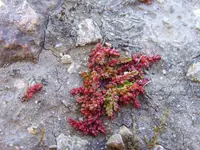
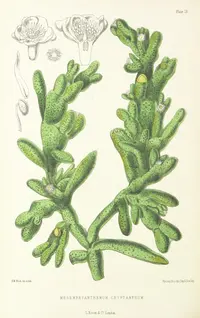
Babies' toes, Mesembryanthemum cryptanthum, is a compact succulent known for its small, chubby, toe-like leaves that grow in tight clumps. The leaves often have translucent tips that help the plant use light efficiently while staying mostly buried in its native habitat.

This species comes from arid regions of South Africa, where it copes with strong sun, poor soils, and irregular rainfall. Its slow growth, drought tolerance, and small size make it well suited to containers and windowsills.

For anyone learning how to care for Babies' toes, its main needs are bright light, very well-draining soil, and careful watering that avoids prolonged wetness around the roots.

Main Plant Requirements

Care Difficulty

Moderate Care

Light Preference

Full Sun

Water Requirements

Low Water

Temperature Preference

Tropical / Frost Sensitive

Hardiness Zone

Unknown

Soil Texture

Sandy, Rocky

Soil pH

Slightly acidic (6.5–7.0), Neutral (7.0)

Soil Drainage

Well-drained

Fertilization

Minimal (feed rarely)

Get Personalized Care Plan

Scan your plant to receive care tips personalized for your specific plant

Available on iOS and Android

How to Care for the Babies' toes

This compact succulent prefers strong light that mimics its bright native habitat.

  • Provide 6–8 hours of direct sun daily outdoors; morning sun plus light afternoon shade helps prevent leaf scorch in hot summers.
  • Indoors, place Babies' toes at a south- or west-facing window with only light sheer-curtain filtering if sun is very intense.
  • In winter, move the plant to the brightest available spot and rotate the pot weekly to limit stretching and pale, elongated leaves from low light.

Watering should be sparse and guided by soil dryness rather than a fixed schedule.

  • Let the top 3–5 cm of soil dry completely before watering, then soak thoroughly so excess drains away from the roots.
  • In spring and summer, expect to water more often if leaves start to wrinkle slightly; in fall and winter, water only once the mix is fully dry for several days.
  • For Mesembryanthemum cryptanthum, soft, splitting, or translucent leaves indicate overwatering, while very shriveled, thin leaves point to prolonged drought.

Stable, dry warmth supports compact growth and healthy leaves.

  • Aim for 65–80°F (18–27°C) during active growth, with good air movement to prevent overheating around the fleshy leaves.
  • Protect the plant from temperatures below 40°F (4°C); frost can damage or kill tissue, so move containers under cover before cold nights.
  • In hot spells above 90°F (32°C), give light afternoon shade and avoid watering during the hottest part of the day to reduce heat stress risk.

This species thrives in dry indoor air and does not require elevated humidity.

  • Target 30–40% humidity, similar to a heated home, to match its native arid conditions.
  • Babies' toes tolerate very dry air but may wrinkle slightly if combined with prolonged underwatering.
  • If leaves turn mushy or translucent, reduce nearby humidifiers and improve air movement around the plant.

This succulent needs very fast-draining, mineral-based soil to prevent root rot.

  • Use a gritty mix such as 50–60% coarse sand or horticultural grit with 40–50% cactus potting mix for Mesembryanthemum cryptanthum.
  • Aim for slightly acidic to neutral pH, roughly 6.0–7.0, which most commercial cactus mixes already provide.
  • Increase aeration by adding pumice or perlite instead of peat-heavy products, which hold excessive moisture around the roots.
  • Avoid dense, clay-rich, or water-retentive soils that stay wet longer than 1–2 days after watering.

This compact succulent is well suited to container growing.

  • Choose a shallow, wide pot that allows its fibrous roots to spread laterally without trapping deep moisture.
  • Select unglazed terracotta to let moisture evaporate from the sides and slightly cool the root zone in strong sun.
  • Place the container where excess water can drain away freely so runoff never collects under the pot.

This compact succulent needs only light feeding to stay healthy, as Babies' toes evolved for nutrient-poor, sandy habitats.

  • Use a low-strength balanced liquid fertilizer (around 10-10-10) diluted to 1/4 strength during active growth in spring–summer.
  • Feed every 4–6 weeks only if growth is pale or weak and soil mix is very inert and fast-draining.
  • Avoid fertilizing in late fall and winter, when growth slows and roots are prone to salt buildup.
  • Flush the pot with plain water a few times per season to reduce accumulated fertilizer salts.

Pruning needs for Mesembryanthemum cryptanthum are minimal and mainly cosmetic.

  • In late winter or early spring, remove shriveled, dead, or mushy leaves by gently twisting them off by hand.
  • Trim any stretched, etiolated stems at the base to maintain a compact clump and encourage dense new growth.
  • Use clean, sharp scissors or small snips when cutting thicker stems to reduce tissue damage and infection risk.
  • Discard diseased material and avoid composting it indoors to limit pests or fungal issues.

This species prefers a snug pot and infrequent repotting, provided drainage stays excellent.

  • Repot only every 2–3 years, or when roots circle the drainage holes, growth stalls, or the gritty mix breaks down.
  • Plan repotting for late winter or early spring, just before stronger growth starts.
  • Use a shallow container with large drainage holes and a very gritty succulent mix to limit excess moisture around roots.
  • Gently loosen the root ball, remove old soggy soil, and keep roots as intact as possible; avoid watering heavily for 3–5 days afterward.

This plant is commonly propagated from leaf or stem cuttings and sometimes from seed.

  • Take short, firm leaf or stem cuttings in late spring–summer, choosing healthy, non-shriveled tissue.
  • Allow cut surfaces to callus for 2–5 days in bright, dry air to reduce rot risk.
  • Set cuttings upright in a barely moist, very gritty mix and keep at 70–80°F with bright, indirect light.
  • Sow seeds on the surface of a fine, sandy mix, keep slightly moist but never wet, and provide strong light for germination.

This succulent is frost-sensitive and needs protection in regions with cold winters.

  • Move container plants indoors before temperatures drop below 40°F, placing them in the brightest possible spot.
  • Keep soil almost dry in winter, watering lightly only when leaves start to wrinkle noticeably.
  • Avoid cold drafts and windowsills that dip below 45°F to prevent leaf and root damage.

Care Tips

Seasonal light shift

Rotate the pot slightly every 2–3 weeks and move it closer to the brightest window in winter to keep the clumps compact and prevent one-sided, stretched growth.

Targeted top-dressing

Once a year at the start of the growing season, gently scrape off 0.5–1 cm of the surface mix and replace it with fresh gritty substrate to restore drainage and reduce salt buildup around the necks of the leaves.

Split clumps carefully

When the plant forms congested mounds, divide it only during active growth, keeping each division with intact taproot and minimal disturbance, then let the roots dry for 1–2 days before repotting into dry mix.

Dry rest enforcement

In late fall, gradually extend the interval between waterings and stop completely once outer leaves begin to shrivel, which helps synchronize dormancy and supports healthy replacement leaves.

Root-zone monitoring

Use a narrow wooden skewer pushed to the bottom of the pot and left for a few minutes; only water when it comes out completely dry, a method that gives much better control for caring for Babies' toes in deep or opaque containers.

Common Pests and Diseases

Mealybugs

This pest feeds on succulent leaves and leaf bases, often hiding in the tight crevices between the short, fused leaves. Symptoms include white, cottony clusters, honeydew, and gradual yellowing or shriveling of the plant bodies.

Solution

Isolate the plant, then dab visible insects with cotton swabs soaked in 70% isopropyl alcohol and repeat weekly until no new clusters appear; for larger infestations, use a ready-to-use insecticidal soap or neem oil spray, applied in the evening and kept off the soil surface to avoid root stress. Reduce excess fertilizer and check neighboring succulents regularly, as part of broader Mesembryanthemum cryptanthum care.

Aphids

These insects cluster on tender new growth and flower stalks, sucking sap and deforming the small, windowed leaves. Symptoms include sticky honeydew, distorted growth, and sometimes sooty mold developing on the sugary residue.

Solution

Rinse the plant gently with a strong but controlled stream of water to dislodge colonies, then apply insecticidal soap to the affected areas, repeating every 5–7 days until clear. Avoid overhead fertilizing or overwatering that promotes soft, lush growth, and maintain brighter, airy conditions to discourage reinfestation.

Spider mites

This pest thrives in hot, very dry indoor air and can cause the leaf tips and transparent windows to look dull, stippled, or bronzed. Symptoms include very fine webbing between leaves and slow decline of the clump.

Solution

Increase local humidity slightly around the plant without wetting the soil, then rinse the foliage gently and apply a miticidal soap or neem oil, covering leaf bases and crevices; repeat applications are needed because eggs are not always killed. Improve air movement and avoid placing the plant right next to heat sources or in extremely stagnant, dusty spots as part of Babies' toes indoor care.

Fungal leaf spots

This disease appears when foliage stays damp and air circulation is poor, especially in crowded trays or greenhouses. Symptoms include small, water-soaked or brown spots on the leaf tips or sides, sometimes coalescing and causing tissue collapse.

Solution

Remove and discard affected leaves, then improve spacing, airflow, and watering practices so the leaves stay dry while the soil dries fully between waterings. If spotting continues, apply a low-toxicity fungicide labeled for succulents as a preventive spray, avoiding application in full sun to reduce the risk of phytotoxicity.

Damping-off and seedling rot

This disease affects seedlings in overly moist, poorly ventilated conditions, causing them to collapse at the soil line or fail to emerge. Symptoms include soft, water-soaked stems, sudden seedling death, and fungal growth on overly wet substrate.

Solution

Discard severely affected seed trays and start fresh with a clean, well-draining succulent mix and sterile containers, watering lightly and only when the surface is dry. Provide strong light, good airflow, and bottom-watering where possible, and consider a preventive fungicidal drench at sowing time if past problems were severe.

Interesting Facts

Dwarf cliff specialist

This species is naturally restricted to a very small area of quartzite cliffs near Springbok in South Africa, where it grows in narrow rock crevices with extremely shallow, fast‑draining soils.

Stone‑like camouflage

The paired, fused leaves are compact, grey‑green, and often partly buried, which helps the plant mimic surrounding stones and reduce visibility to herbivores in its arid habitat.

Night‑scented flowers

Its small white flowers typically open in the late afternoon or evening and release a noticeable fragrance at night, which is thought to attract nocturnal pollinators in its native environment.

Botan icon

Did you know?

Mesembryanthemum cryptanthum is considered highly localized and vulnerable in the wild, and illegal collection for the succulent trade has been documented as a direct threat to its remaining cliff populations.

FAQs about Babies' toes

Brown leaf tips or shriveling usually result from underwatering, intense direct sun magnified through glass, or fertilizer burn. Check roots, adjust watering slightly, move it a bit back from windows, and use dilute, infrequent feeding.

Grow Healthy Plants with Botan Care

Keep your plants happy and healthy with plant identification, disease detection, and easy care guidance.

Botan plant care app — identify plants on mobile

Explore More Plants