Controlled spreading
Use a narrow hand trowel to slice and lift outer clumps every 1–2 years, then replant only the healthiest pieces to keep the mat dense and prevent it from overrunning neighboring plants.

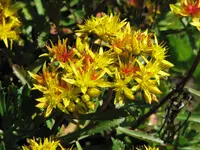
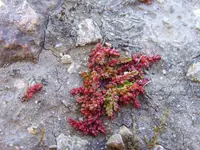
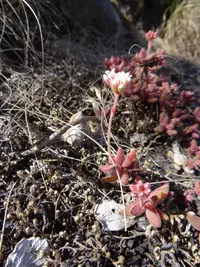
Phedimus middendorffianus is a low, mat-forming perennial succulent, often grown as a groundcover for rock gardens, green roofs, and troughs. It has fleshy leaves that can take on bronze or reddish tones and small star-shaped yellow flowers in summer.
This species is native to cooler regions of East Asia, where it grows on rocky slopes and open, well-drained sites. Its naturally compact habit and drought tolerance make it relatively easy to manage in most temperate gardens.
Gardeners who want to care for Phedimus middendorffianus should provide plenty of light, good drainage, and only modest watering to avoid root problems in overly wet conditions.

Care Difficulty
Easy Care

Light Preference
Full Sun

Water Requirements
Low Water

Temperature Preference
Cold Hardy

Hardiness Zone
3–8

Soil Texture
Sandy, Loamy, Rocky

Soil pH
Acidic (5.5–6.5), Slightly acidic (6.5–7.0)

Soil Drainage
Well-drained

Fertilization
Minimal (feed rarely)
Scan your plant to receive care tips personalized for your specific plant
Available on iOS and Android
This alpine sedum prefers bright outdoor conditions with several hours of direct sun each day.
This drought-tolerant perennial prefers infrequent, deep watering in sharply draining soil.
This hardy groundcover tolerates a wide temperature range but grows best in cool to mild conditions.
This hardy sedum handles a wide humidity range and rarely needs special humidity management indoors or outdoors.
This species prefers very well-drained, mineral, slightly lean soil that prevents waterlogging around its shallow roots.
This low, spreading perennial is well suited to container growing on patios, rock gardens, and balconies.
This hardy sedum needs only light feeding, as Phedimus middendorffianus is adapted to lean, rocky soils.
Pruning is straightforward and helps this mat-forming perennial stay compact and tidy.
This groundcover sedum is usually transplanted outdoors rather than repotted frequently in containers.
Propagation is common and efficient, making it simple to expand plantings of this sedum.
This species is quite cold hardy and usually needs minimal winter attention in the ground.

Plant Health Check
Not sure what's wrong with your plant? Check your plant's health inside the app.
This species is native to cool, rocky mountain slopes in East Asia, where it grows in thin, fast-draining soils exposed to strong sun and wind. Its natural range includes subalpine zones, which has shaped its tolerance for cold and poor substrates.
The foliage often shifts from green in the growing season to bronze or reddish tones as temperatures drop, especially in full sun. This color change is due to increased production of protective pigments called anthocyanins, which help shield leaf tissues from stress.
It spreads by short, creeping rhizomes that produce tight rosettes of leaves, allowing it to slowly form low mats. This growth habit helps anchor the plant in shallow, stony ground and resist soil erosion on slopes.

In some alpine and rock garden collections, this species is valued for its ability to flower reliably even in relatively short, cool summers, producing bright yellow star-shaped flowers that attract a range of small pollinating insects such as bees and hoverflies.
This species is semi-evergreen to deciduous, depending on climate. In colder regions it usually dies back to the roots in winter, then re-sprouts in spring. In mild climates, some foliage may persist but often looks tired by late winter.
Keep your plants happy and healthy with plant identification, disease detection, and easy care guidance.