
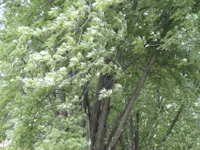
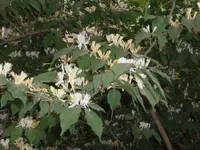


poisonwood Identification (Metopium toxiferum)

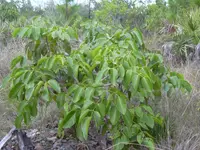
Recognize poisonwood by its trifoliate leaves, with three smooth-edged leaflets on one stalk, and by its pale gray bark marked with dark, oily-looking blotches or streaks.

It typically grows as a small to medium tree, often 15 to 40 feet (4.6 to 12 m) tall, with upright branching and clusters of small greenish-white flowers.

Metopium toxiferum Identification

Scan to Confirm poisonwood

Take a photo and use Botan to confirm your plant identification.

Clear images work best. Avoid photos taken too close or too far away

Check the leaf structure and the trunk first on Metopium toxiferum.

  • Leaves are alternate and compound, usually with 3 to 7 thick, oval leaflets.
  • Leaflets are about 2 to 4 inches (5 to 10 cm) long, with smooth edges and a blunt or slightly pointed tip.
  • The trunk often shows dark, glossy bark streaked with black resin marks.
  • Fruits are small, rounded, and orange to yellow-orange when visible.

The black resin on the bark is a useful visual clue from a short distance.

Poisonwood shows useful visual shifts from early leafy growth to flowering and fruiting branches.

  • Young plant: Young plants are usually shrubby, with slender green to gray stems and compound leaves that appear oversized relative to the thin branches.
  • Mature plant: Mature plants become a small to medium tree, often 15-40 feet (4.6-12 m) tall, with a thicker trunk, broader crown, and more distinctly furrowed bark.
  • Flowering stage: Flowering branches carry many small pale flowers in branched clusters, adding a fine, airy look unlike the heavier outline of purely leafy shoots.
  • Fruiting stage: Fruiting stage shows dangling clusters of yellow-orange drupes, fleshy stone fruits, which stand out clearly against the compound leaves and woody branch tips.

Poisonwood is often evergreen, but drought or cool weather can thin the canopy and expose more of the pale gray bark and branch structure. That change can make the plant look noticeably sparser for a time. Flowers are usually most noticeable in spring, followed by small yellow-orange fruits that become visible afterward and can persist into summer, adding a useful seasonal clue.

A few coastal shrubs and trees are regularly mistaken for poisonwood.

poison sumac(Toxicodendron vernix)

Both can have pinnate leaves with smooth-edged leaflets. Poison sumac usually has 7-13 leaflets, not 3-7, and it grows in wet swamps rather than dry coastal sites. Its fruits hang in loose clusters and turn pale gray to white.

blackbead(Pithecellobium keyense)

This South Florida shrub can resemble Metopium toxiferum from a distance because both form dense coastal thickets with glossy leaflets. Blackbead has paired spines at the nodes and twisted pods, while poisonwood lacks spines and bears small round drupes.

Metopium toxiferum is native to southern Florida, the Florida Keys, the Bahamas, the Greater Antilles, and parts of coastal Central America. In the US, seeing it in south Florida is a strong location clue, since it is not a widespread native tree elsewhere. It typically grows in coastal hammocks, pinelands, and other dry to seasonally dry tropical woodland, often on limestone. Finding it in these south Florida and Caribbean habitats can help separate it from similar-looking trees outside that range.

  • Skin contact: Metopium toxiferum, commonly called poisonwood, has an irritating sap in the leaves, stems, and bark. Skin contact can cause severe allergic dermatitis in humans, similar to poison ivy.
  • Smoke exposure: Burning wood or plant material can carry the same irritant compounds in smoke. Contact with the smoke can irritate skin and mucous membranes in humans.

Does Your Plant Match?

Use Botan to compare a photo and help confirm the plant, which can save time before making care or landscape decisions.

FAQ

A quick poisonwood identification check is the glossy trifoliate leaf. Each leaf has three leaflets, often with a rounded to oval outline, and the trunk commonly shows orange-brown resinous blotches on gray bark.

More Plant Identification Guides

Know What Plant You Have

Identify a plant from a photo with Botan, then review species details, care information, and safety notes that match the result.

Botan app identifying a plant from a photo
12 Best Cold-Hardy Vegetables for Cold Weather

7 min read · 13 Oct 2026

12 Best Cold-Hardy Vegetables for Cold Weather

Cold-hardy vegetables can keep a garden productive through chilly fall, winter, and early spring weather. This guide covers 12 reliable crops, their frost tolerance, and practical growing tips for better cold-season harvests.

Plant Recommendations
12 Best Cold-Hardy Vegetables for Cold Weather
How to Use a Moisture Meter for Plants

5 min read · 4 Sept 2026

How to Use a Moisture Meter for Plants

Watering by feel kills plenty of houseplants. A moisture meter checks the soil for you, and takes the guesswork out of it. This guide will show you how to use it correctly, from the first touch to the final reading.

Beginner Guides
How to Use a Moisture Meter for Plants
How to Clean Plant Leaves: A Simple Care Guide

6 min read · 4 Aug 2026

How to Clean Plant Leaves: A Simple Care Guide

Dusty leaves look dull and don't absorb light well. Below, you'll find simple ways to clean them, which tools are truly effective, how often you should do it, and what causes damage.

Beginner Guides
How to Clean Plant Leaves: A Simple Care Guide