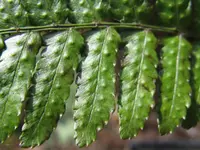
Microgramma reptans Care

Microgramma reptans

About Microgramma reptans

Microgramma reptans is a small epiphytic fern that often grows on tree trunks, rocks, or mossy surfaces. Its thin creeping rhizomes form loose mats covered with simple, narrow fronds. Native to tropical regions of the Americas, it thrives in warm, humid forests where it receives soft, filtered light. The plant’s delicate structure and shallow root system make it sensitive to drying out and to harsh sun. It prefers consistently moist, airy substrates and good air circulation, which can be challenging in very dry homes. Understanding how to care for Microgramma reptans helps keep it stable and long-lived indoors or in sheltered outdoor collections.

Main Plant Requirements

Care Difficulty

Moderate Care

Light Preference

Partial Shade

Water Requirements

Keep Soil Moist

Temperature Preference

Tropical / Frost Sensitive

Hardiness Zone

10–12

Soil Texture

Loamy, Peaty, Organic-rich

Soil pH

Acidic (5.5–6.5), Slightly acidic (6.5–7.0)

Soil Drainage

Moist but well-drained

Fertilization

Minimal (feed rarely)

Get Personalized Care Plan

Scan your plant to receive care tips personalized for your specific plant

Available on iOS and Android

How to Care for the Microgramma reptans

This fern prefers soft, forest-like light and is sensitive to harsh direct sun.

  • Provide 3–5 hours of gentle morning sun or bright filtered light each day, such as under high tree canopy or 30–50% shade cloth.
  • Protect from strong midday and afternoon sun, which can scorch fronds, cause pale patches, and crisped edges, especially in hot, dry weather.
  • In darker spots, expect looser, more extended growth; increase light gradually in spring to avoid shock when days lengthen, especially for Microgramma reptans moved from shade.

This species prefers evenly moist but never waterlogged conditions around its shallow roots and rhizomes.

  • Water when the top 1–2 cm of substrate feels barely dry, then moisten thoroughly so water runs through, allowing excess to drain away completely.
  • Reduce frequency in cooler months, letting the surface dry slightly more, and increase checks during hot, windy weather that speeds evaporation.
  • Watch for yellowing, mushy rhizomes as a sign of overwatering or poor drainage, and curling, crisp fronds as a sign the plant has stayed too dry for several days, which guides how to take care of Microgramma reptans.

This fern thrives in consistently warm, frost-free conditions with only gentle seasonal shifts.

  • Aim for 65–80°F (18–27°C) for best growth, similar to a warm, humid understory; growth slows noticeably below this range but usually resumes when warmth returns.
  • Protect from temperatures below 50°F (10°C); brief dips to 45°F (7°C) may be tolerated, but freezing causes severe frond damage and can kill exposed rhizomes.
  • In hot spells above 85°F (29°C), increase shade and humidity and avoid hot, reflective surfaces, as prolonged heat stress can cause limp, scorched fronds and reduced new growth.

This fern prefers consistently moist air and reacts quickly to dry indoor conditions.

  • Aim for 60–80% humidity to keep fronds lush and reduce browning tips.
  • It tolerates brief dips to 40–50% but prolonged dry air causes crisping edges and slowed growth.
  • Increase humidity with a nearby humidifier, grouped plants, or a pebble tray rather than frequent misting.

This species performs best in a loose, airy mix that mimics epiphytic forest conditions.

  • Use a chunky mix of fine bark, perlite or pumice, and a small amount of peat or coco coir for moisture retention.
  • Ensure very rapid drainage so water does not pool around the rhizomes and roots.
  • Keep pH slightly acidic to neutral, around 5.5–7.0, which supports nutrient uptake and root health.
  • Avoid dense, clay-heavy, or compacted mixes that reduce aeration and encourage rot in Microgramma reptans.

This fern is well suited to container culture, including shallow or hanging vessels.

  • Choose a wide, shallow pot so creeping rhizomes can spread horizontally without staying waterlogged at depth.
  • Select breathable materials like unglazed terracotta if overwatering is likely, as they allow faster evaporation from the mix.
  • Stabilize hanging or elevated containers securely because the plant can become unevenly weighted as fronds and rhizomes spread.

This fern benefits from modest feeding but remains sensitive to excess salts in the potting mix.

  • Use a balanced liquid fertilizer (around 10-10-10) at 1/4–1/2 strength for Microgramma reptans during active growth.
  • Feed every 4–6 weeks in spring and summer only, skipping any weak or stressed plants.
  • In autumn, reduce feeding to once in 8–10 weeks; do not fertilize in deep winter dormancy.
  • Rinse the substrate with plain water every few months to flush accumulated fertilizer salts.

Pruning is light and mostly cosmetic for this small epiphytic fern.

  • In late winter or early spring, remove dead, yellowed, or damaged fronds at their base with clean scissors.
  • Thin crowded or overlapping fronds to improve airflow and reduce fungal issues in humid setups.
  • Trim only the longest, straggling rhizome sections if a tighter, neater shape is desired.
  • Disinfect cutting tools before and after use to prevent spreading disease between Microgramma reptans and other plants.

This fern grows slowly and prefers minimal disturbance to its rhizomes and root system.

  • Repot only when roots circle the pot, growth slows markedly, or the rhizome creeps over the container edge.
  • Plan repotting for spring, about every 2–3 years, so Microgramma reptans can recover during the growing season.
  • Use a shallow pot with a very airy, bark-rich mix; gently tease roots free without breaking the wiry rhizomes.
  • Water lightly after moving, keep humidity high, and shade from strong sun for 1–2 weeks to limit transplant shock.

Division of rhizomes is the most practical way to increase this fern for home growers.

  • In spring or early summer, lift the plant and identify rhizome sections with several healthy fronds and roots.
  • Cut the rhizome into pieces using a sterile knife, ensuring each division carries at least 2–3 fronds.
  • Plant divisions shallowly on a fine orchid bark or fern mix, keeping rhizomes just at the surface.
  • Maintain high humidity, gentle airflow, and stable warmth (68–77°F) while new roots establish on Microgramma reptans.

This fern is frost sensitive and requires mild conditions during winter, especially in containers.

  • Keep temperatures above 55°F; growth slows below this and tissue damage occurs near freezing.
  • Move potted plants indoors or into a greenhouse before first frost and provide bright, indirect light.
  • Reduce watering so the mix stays slightly moist, never waterlogged, to avoid root rot in cool conditions.
  • In very dry heated rooms, increase humidity with trays or a humidifier to prevent frond tip dieback.

Care Tips

Mounting technique

Attach the rhizomes firmly to cork bark or hardwood using soft ties or biodegradable string, then cover lightly with long-fiber sphagnum so they stay in close contact with the surface while roots establish.

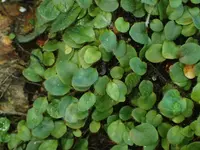
Rhizome direction

When mounting or repotting, orient the creeping rhizomes toward open space on the slab or pot surface so new growth can spread freely instead of circling back on itself.

Moisture buffering

Place a thin layer of fine orchid bark or chopped sphagnum over the root zone to slow evaporation and create a more even moisture profile without keeping the substrate soggy.

Airflow management

Position the plant where it receives gentle, constant air movement from an oscillating fan or open vent to reduce fungal issues on fronds and rhizomes while still avoiding direct drafts from heaters or AC units.

Division timing

Divide only actively growing plants in late spring or early summer, cutting rhizomes into sections with at least 2–3 fronds each and keeping them under slightly higher humidity for 2–3 weeks while they re-root; this is one of the most reliable ways of growing Microgramma reptans for long-term vigor.

Common Pests and Diseases

Scale insects

This pest feeds on fronds and rhizomes, often appearing as tiny brown or tan bumps tightly attached to the surface. Symptoms include yellowing fronds, sticky honeydew, and sooty mold on affected areas.

Solution

Remove heavily infested fronds and gently scrape or wipe insects from rhizomes and leaf midribs with a cotton swab dipped in 70% isopropyl alcohol. For larger populations, wash the plant thoroughly under lukewarm water, then use a horticultural oil spray labeled safe for ferns, repeating at 7–10 day intervals while keeping the plant shaded and well ventilated.

Rhizome mealybugs

These insects hide in the creeping rhizomes and under bark-like scales, forming white cottony clusters that sap plant vigor. Symptoms include slow growth, dull fronds, and weak new shoots that fail to elongate along mounting surfaces.

Solution

Unpot or unmount sections if possible and physically remove mealybugs with a soft brush or cotton swab dipped in 70% isopropyl alcohol, focusing on rhizome crevices. Rinse the plant thoroughly, then apply an insecticidal soap or systemic insecticide labeled for fern use, and isolate the plant while monitoring for reinfestation as part of careful Microgramma reptans plant care.

Fern aphids

These insects colonize young fronds and tender rhizome tips, sucking sap and causing distortion or curling. Symptoms include sticky honeydew, deformed new growth, and increased attraction of ants.

Solution

Shower the plant gently with lukewarm water to dislodge colonies, repeating several times over a week. If populations persist, use an insecticidal soap spray on both upper and lower leaf surfaces and around growing tips, and improve air movement to discourage reinfestation.

Rhizoctonia blight

This disease attacks the rhizomes and lower fronds, especially under constantly wet, stagnant conditions. Symptoms include brown, sunken lesions at the rhizome, blackened frond bases, and a gradual collapse of creeping sections.

Solution

Cut away and discard all affected fronds and rhizome portions, using sterilized tools and avoiding contact with healthy tissue. Allow the mounting material or substrate to dry slightly between waterings, increase airflow, and if necessary drench the growing medium with a fungicide labeled for Rhizoctonia on ornamentals while keeping overhead wetting to a minimum.

Leaf spot fungi

This disease appears on fronds as small water-soaked spots that enlarge into tan, brown, or dark purple lesions, often with a yellow halo. Symptoms include thinning foliage, premature frond drop, and a patchy, uneven canopy on the creeping mat of foliage.

Solution

Remove and discard affected fronds, avoiding splashing water onto remaining foliage, and sterilize cutting tools between plants. Improve air circulation, water at the base or from below, and if spots continue to spread, apply a broad-spectrum fungicide safe for ferns according to label directions until new growth emerges clean.

Interesting Facts

Miniature creeping fern

Microgramma reptans is a very small epiphytic fern whose fronds often stay under 5 cm long and form thin creeping mats over bark, rocks, or moss in humid forests.

Distinct sterile and fertile fronds

This species has dimorphic fronds, meaning the spore‑bearing fertile fronds are narrower and more elongated than the sterile ones, a feature that helps botanists identify it in the field.

Specialized climbing rhizomes

Its slender rhizomes have clinging scales and roots that allow the plant to anchor tightly to tree trunks and branches, helping it withstand rain and wind in exposed canopy microhabitats.

FAQs about Microgramma reptans

This species spreads rather than climbs. It creeps along surfaces using thin rhizomes, forming low mats. Given time, it can cover rocks, wood, or substrate, but remains relatively shallow and not structurally tall.

Grow Healthy Plants with Botan Care

Keep your plants happy and healthy with plant identification, disease detection, and easy care guidance.

Botan plant care app — identify plants on mobile

Explore More Plants