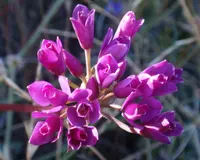
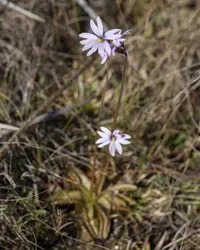
twoleaf miterwort Care (Mitella diphylla)

Also known as: Twoleaf Mitrewort, twoleaf bishop's-cap
twoleaf miterwort

About twoleaf miterwort

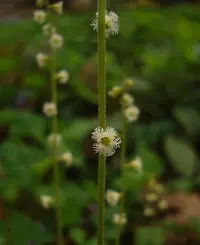
Twoleaf miterwort (Mitella diphylla) is a small woodland perennial native to eastern North America. It naturally grows in cool, shaded forests and along moist ravines. The plant forms low clumps of soft green, heart-shaped basal leaves, with one pair of opposite leaves higher on the slender flowering stems. In spring, it produces airy spikes of tiny, fringed white flowers that give a delicate, lace-like look. It is generally easy to grow where conditions stay consistently cool, shaded, and moist, but it struggles in heat and drought. Gardeners who care for twoleaf miterwort should focus on shade, humus-rich soil, and steady moisture to keep it long-lived.

Main Plant Requirements

Care Difficulty

Moderate Care

Light Preference

Partial Shade

Water Requirements

Keep Soil Moist

Temperature Preference

Cold Hardy

Hardiness Zone

3–8

Soil Texture

Loamy, Silty, Organic-rich

Soil pH

Acidic (5.5–6.5), Slightly acidic (6.5–7.0)

Soil Drainage

Moist but well-drained

Fertilization

Minimal (feed rarely)

Get Personalized Care Plan

Scan your plant to receive care tips personalized for your specific plant

Available on iOS and Android

How to Care for the twoleaf miterwort

This woodland perennial prefers cool, shaded light similar to a deciduous forest floor.

  • Provide dappled or filtered light with 1–3 hours of gentle morning sun and bright shade the rest of the day.
  • Avoid direct midday or afternoon sun, which can scorch foliage and dry the soil too quickly, especially in summer.
  • In summer, shift twoleaf miterwort to deeper shade if leaves pale or crisp at the edges; in early spring, brief extra sun is usually tolerated.

This species prefers consistently moist, cool soil without prolonged drying or waterlogging.

  • Water when the top 2–3 cm of soil feels slightly dry, aiming to keep the root zone evenly moist, especially in active growth.
  • Use humus-rich, well-drained soil; pooling water, sour smell, or soft, yellowing leaves suggest overwatering or poor drainage.
  • In spring and early summer, moisture demand is higher; in late summer or dry spells, watch for wilting or dull, limp leaves as a sign to water Mitella diphylla.

This temperate woodland plant is cold-hardy but dislikes hot, exposed conditions.

  • Optimal growth occurs around 55–70°F (13–21°C), typical of cool spring and early summer under tree canopy shade.
  • Mitella diphylla tolerates winter cold down to about -20°F (-29°C) when planted in the ground with leaf litter or mulch protection.
  • In heat waves above 80–85°F (27–29°C), increase shade and soil moisture; prolonged temperatures above 90°F (32°C) can cause leaf scorch and stress.

This woodland perennial prefers cool, moderately moist air and does not demand high humidity.

  • Aim for 40–60% humidity, similar to most temperate homes, while keeping the root zone consistently moist but not waterlogged.
  • Twoleaf miterwort tolerates short dry-air spells if the soil does not dry out completely at the same time.
  • Crisping leaf edges and drooping foliage in spite of moist soil indicate low-humidity stress combined with heat.
  • Increase humidity locally with grouped shade plants and an evaporative pebble tray placed beneath, not under, the pot base.

Mitella diphylla thrives in loose, humus-rich substrates that mimic moist forest floors.

  • Use a mix of roughly 50% compost or leaf mold, 30–40% loam, and 10–20% coarse sand or fine grit for structure and drainage.
  • Keep the soil consistently moist yet free draining so water moves through rather than pooling around the crown and roots.
  • Aim for slightly acidic to neutral pH, around 5.8–7.0, which supports nutrient availability and healthy root development.
  • Avoid heavy clay, compacted ground, or pure sand; amend with organic matter and mineral grit to improve both aeration and drainage.

This species can be grown in containers if the setup maintains cool, evenly moist conditions similar to shaded woodland soil.

  • Choose a wide, shallow container that allows its spreading root system to form a groundcover-like mat rather than deep taproots.
  • Use a heavier clay or ceramic pot outdoors to keep the substrate cooler and slow moisture loss in partial to full shade.
  • Raise the pot slightly on feet or bricks so drainage holes stay clear, preventing water from backing up during heavy rain.

Mitella diphylla is a woodland perennial that needs only light feeding in average garden soil.

  • Apply a thin layer of leaf mold or compost in early spring to mimic rich forest humus.
  • Use a mild, balanced NPK fertilizer at 1/4–1/2 strength once in spring if growth appears weak.
  • Avoid synthetic high-nitrogen products that encourage soft, floppy foliage over flowers.
  • Do not feed in late fall or winter, when the plant is naturally dormant.

Mitella diphylla benefits from light pruning to keep clumps tidy and support flowering performance.

  • Cut back spent flower stalks after blooming to direct energy into roots and foliage.
  • Remove dead, damaged, or diseased leaves whenever noticed, using clean, sharp scissors or pruners.
  • In late fall, trim away tattered foliage, leaving the crown at soil level intact.
  • Avoid heavy cutting into the crown, since this can weaken the plant and reduce next year’s bloom.

This species is usually grown in the ground, so care focuses on careful transplanting rather than frequent repotting.

  • Transplant in early spring or early fall when temperatures are mild and soil is evenly moist.
  • Move clumps only when growth is weak, overcrowded, or shading becomes too dense.
  • Lift plants with a broad trowel, keeping a generous soil ball to reduce root disturbance.
  • Replant at the same depth, water thoroughly, then keep shaded and evenly moist for 1–2 weeks.

Mitella diphylla is most often multiplied by seed or gentle division of established clumps.

  • Sow fresh seed outdoors in fall; natural winter chilling improves germination in spring.
  • For division, dig mature clumps in early spring and separate into small sections with healthy roots.
  • Replant divisions into moist, humus-rich, shaded soil and water well to settle soil around roots.
  • Allow some flower stalks to set seed if a self-sown, naturalistic colony is desired.

This woodland perennial is cold hardy in much of North America and usually needs minimal winter care.

  • Tolerates typical winter frost once well established in the ground.
  • Apply a 3–5 cm layer of leaf mold or shredded bark mulch to insulate the root zone.
  • Leave fallen leaves around clumps where possible to mimic natural woodland protection.
  • For container plants, move pots to a sheltered, unheated but frost-sheltered location.

Care Tips

Leaf litter mulch

Leave a thin, loose layer of shredded leaves around clumps to mimic woodland duff, which keeps roots cool, suppresses weeds, and slowly improves the soil without smothering the crowns.

Gentle colony division

Every 3–4 years, lift and divide congested clumps in early spring while the soil is moist, replanting small sections with intact roots and some surrounding soil to maintain a natural, spreading colony.

Moisture buffer edging

Install a shallow, low edging or log border on the downhill side of a planting bed to slow water runoff and help the thin surface roots access more consistent moisture in sloped or fast-draining sites.

Protect spring rosettes

Mark planting spots with discreet labels in fall so emerging spring rosettes are not stepped on or disturbed during early-season cleanup or when adding other woodland plants nearby.

Understory companion choice

Pair plants with shallow-rooted, non-aggressive woodland companions such as ferns, tiarella, or heuchera so they do not outcompete the fine roots, which makes caring for twoleaf miterwort easier over time.

Common Pests and Diseases

Powdery mildew

This disease appears as a white, powdery coating on leaves, stems, and sometimes flower stalks, especially in shaded, humid woodland beds with poor air movement. Symptoms include slow growth and premature yellowing or browning of affected foliage.

Solution

Remove and discard heavily infected leaves to reduce spore load, then improve air circulation by thinning dense companion plantings and avoiding overhead watering. If conditions remain favorable for infection, apply a sulfur or potassium bicarbonate fungicide labeled for ornamental perennials, following directions carefully and spacing waterings so foliage dries quickly.

Leaf spot

This disease causes small, irregular brown or dark purple spots on leaves, sometimes with a yellow halo, which can merge into larger dead patches under persistently damp conditions. Symptoms include a thinning clump and reduced vigor in shaded, moisture-retentive woodland settings.

Solution

Prune and discard affected leaves promptly and clear fallen debris around the plants to limit pathogen spread. Water at soil level in the morning, keep the crown from staying wet, and if spotting continues, use a copper-based or chlorothalonil fungicide labeled for landscape perennials during wet periods.

Slugs and snails

These pests feed on the tender foliage, leaving irregular holes, notches along the leaf edges, and silvery slime trails, particularly in cool, moist woodland sites that favor Mitella diphylla plant care. Symptoms include ragged leaves and reduced ornamental value, especially on young plants.

Solution

Hand-pick slugs and snails during the evening or early morning and remove nearby hiding places such as boards, dense mulch, and debris. Use iron phosphate slug baits placed around, not on, the clumps, or create physical barriers such as copper tape or gritty mulch to reduce feeding damage.

Aphids

These insects cluster on flower stalks and tender growth, sucking sap and causing leaf curling, distortion, and occasional yellowing. This pest may also leave sticky honeydew on foliage, which can attract sooty mold fungi.

Solution

Rinse colonies off flower stems and leaves with a firm stream of water, repeating as needed over several days. If populations persist, use insecticidal soap or a light horticultural oil, coating the insects thoroughly while avoiding treatments during full sun or high heat to prevent leaf burn.

Interesting Facts

Fringed star flowers

The tiny white flowers have deeply cut, fringe-like petals that create a starburst pattern, an adaptation thought to help attract small early-season pollinators in dim forest light.

Woodland seep specialist

This species naturally grows in cool, moist, shaded habitats such as forest ravines and seeps, often forming sparse colonies on rich, humus-rich soil over limestone or other base-rich substrates.

Early forest bloomer

It typically flowers in mid to late spring before the forest canopy fully closes, taking advantage of higher light levels on the woodland floor during that short seasonal window.

Botan icon

Did you know?

Twoleaf miterwort is named for the paired basal leaves and the old term miterwort, which refers to the seed capsule shape that resembles a bishop’s miter, a type of ceremonial hat.

FAQs about twoleaf miterwort

This woodland perennial spreads slowly by short rhizomes and self-seeding. It usually forms small, loose clumps rather than dense mats. In typical shaded beds, it is considered a gentle spreader and rarely becomes a management problem.

Grow Healthy Plants with Botan Care

Keep your plants happy and healthy with plant identification, disease detection, and easy care guidance.


Botan plant care app — identify plants on mobile

Explore More Plants