
Black Morel Identification (Morchella elata)

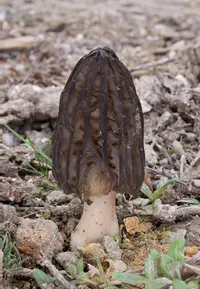
To recognize Black Morel, look for a tall, narrow cap with deep vertical pits and ridges that darken to nearly black. The cap is attached directly to the stem at the base.

Fruiting bodies are usually 2 to 4 inches (5 to 10 cm) tall, with a hollow interior from cap through stem.

Morchella elata Identification

Check Your Plant ID

Take or upload a photo to confirm your plant ID with Botan.

Clear images work best. Avoid photos taken too close or too far away

  • 1 free identification
  • No sign-up
  • 30,000+ plants in database

Check Morchella elata for a tall, narrow, honeycombed cap on a pale stem.

  • Cap is conical to elongated, often taller than wide, with a pointed or blunt tip.
  • Surface has deep pits and raised ridges, forming a regular honeycomb pattern.
  • Ridges are dark brown to blackish, while the pits are usually paler inside.
  • Cap is attached directly to the stem at the base, without a hanging skirt.
  • Stem is stout, pale cream to whitish, and usually 1-4 inches (2.5-10 cm) tall.

A hollow stem and hollow cap interior support the identification.

Morchella elata shows clear visual shifts as the fruiting body expands and matures.

  • Young plant: Early fruit bodies are compact, with a short stem and a narrow conical cap; pits and ridges are shallow and less strongly contrasting.
  • Mature plant: The fruit body elongates to about 2-4 inches (5-10 cm), and the cap becomes more distinctly tapered with deeper pits and darker ridges.
  • Fruiting stage: At full development, the hollow stem and cap are continuous inside; the surface appears more open, and ridges often darken as spores mature.

Morchella elata is mainly a spring sight. The fruiting body appears above ground for a short period, which makes season an important identification clue. In spring, expect dark, conical morels with deep pits and ridges. As they age, the surface often darkens further and may dry or shrivel. Outside the fruiting period, there is usually no visible above-ground structure to identify.

A few fungi are regularly mistaken for Morchella elata.

half-free morel(Morchella punctipes)

It shares a dark, pitted cap, but the cap hangs partly free from the stem. In M. elata, the cap is attached lower down, not skirt-like.

false morel(Gyromitra esculenta)

Its dark brown cap can suggest a black morel at a glance. The cap is wrinkled or brain-like, not made of deep vertical pits and ridges.

bell morel(Verpa conica)

This spring mushroom is tall and dark with a conical cap. The cap is smooth to lightly wrinkled and attached only at the top of the stem, unlike a true morel.

Morchella elata is reported from temperate parts of Europe and North America, but names in the black morel group have been used inconsistently, so habitat is often more useful than geography alone. For identification, look in montane conifer woods, burned forest sites, and disturbed ground in spring. Finding a black morel in those settings helps narrow it toward the elata group rather than unrelated morels.

  • Misidentification risk: This mushroom has a serious ingestion risk because true morels can be confused with poisonous false morels, especially Gyromitra species. A key check is the cap and stem interior: Morchella elata is hollow, while many Gyromitra are chambered or stuffed inside.
  • Not proof of safety: Because wrong identification can lead to poisoning in humans, visual resemblance alone should not be treated as evidence that a collected mushroom is edible.

Scan. Check. Confirm.

Use Botan to identify or verify it from a photo, which helps reduce mix-ups before you rely on an initial guess.

FAQ

It has a tall, conical cap with deep pits and vertical ridges that darken brown to nearly black. The cap is attached directly to the stem at the base, and the whole fruiting body is hollow.

More Plant Identification Guides

From Plant ID to Plant Info

Identify it from a photo with Botan, then review species details, safety notes, and common problems that match the result.

Botan app identifying a plant from a photo
How to Mulch in the Fall and When to Wait Until Spring

5 min read · 12 Nov 2026

How to Mulch in the Fall and When to Wait Until Spring

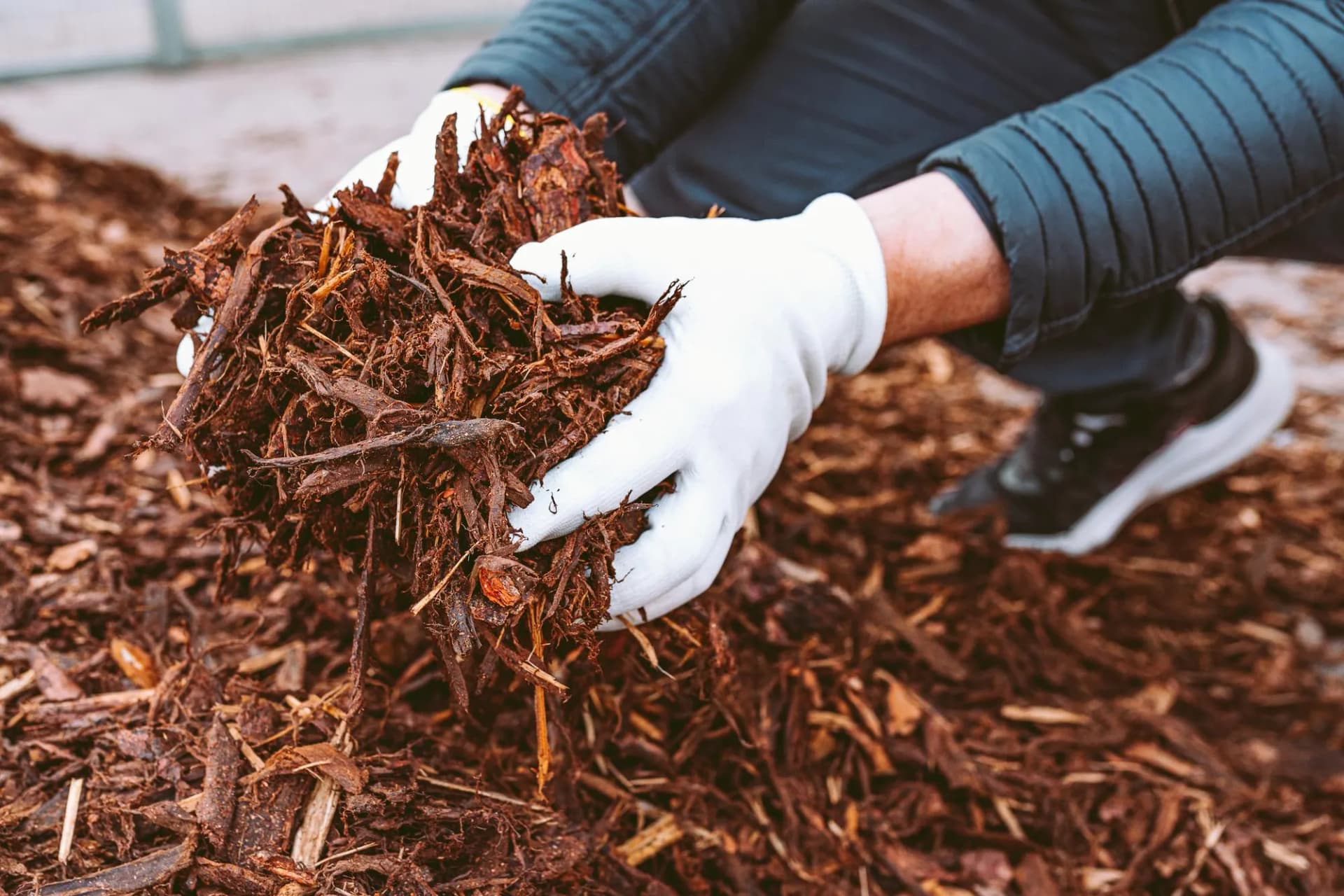
In the fall, mulch gives the roots of trees and shrubs insulation and more stable conditions through winter. In the spring, it mainly suppresses weeds and keeps moisture in the soil during the growing season.

Beginner Guides

How to Mulch in the Fall and When to Wait Until Spring
Banana Peel Water for Plants: 5 Things to Know Before Trying It

5 min read · 9 Jul 2026

Banana Peel Water for Plants: 5 Things to Know Before Trying It

Banana water can provide potassium and some nutrients that may support plant growth, but it is not a universal fix. Use it carefully and only when the plant actually shows signs of nutrient deficiency rather than as a routine treatment.

Plant Care
Banana Peel Water for Plants: 5 Things to Know Before Trying It
Planting Grass Seed in Summer – What Works and What Fails

7 min read · 6 Aug 2026

Planting Grass Seed in Summer – What Works and What Fails

Summer seeding succeeds when the grass type suits the season, and the soil stays moist. Find out how to prepare the seedbed and choose a safe window for planting.

Plant Care
Planting Grass Seed in Summer – What Works and What Fails