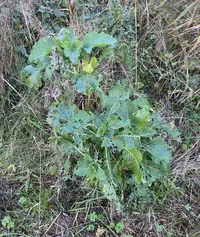
Early wind training
Expose young plants to light, regular air movement or gentle outdoor breezes to encourage sturdier pseudostems that are less likely to snap in storms once the plant is larger.

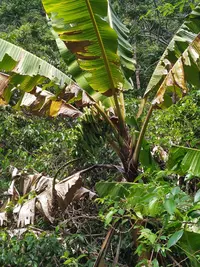
Musa banksii is a wild banana species forming tall, leafy clumps with arching green leaves and showy flower spikes that develop into small, inedible fruits. It has a fast, lush growth habit that gives a strong tropical look.
This species occurs naturally in northeastern Australia and nearby regions, often along moist forest edges and stream banks. In cultivation it prefers warm conditions, consistently moist but well-drained soil, and shelter from strong winds.
Its vigorous growth and tolerance of humidity make it fairly manageable for growers who can provide warmth and regular water. Understanding how to care for Musa banksii mainly involves meeting its needs for light, moisture, and protection from cold.

Care Difficulty
Moderate Care

Light Preference
Full Sun

Water Requirements
Keep Soil Moist

Temperature Preference
Tropical / Frost Sensitive

Hardiness Zone
10–12

Soil Texture
Loamy, Sandy, Organic-rich

Soil pH
Acidic (5.5–6.5), Slightly acidic (6.5–7.0)

Soil Drainage
Moist but well-drained

Fertilization
Moderate (every 2–4 weeks)
Scan your plant to receive care tips personalized for your specific plant
Available on iOS and Android
This species prefers bright, warm conditions similar to a tropical clearing.
This plant needs steadily moist but not waterlogged soil for strong growth.
This banana thrives in consistently warm, frost-free conditions.
This species prefers consistently high air humidity to maintain large, healthy leaves.
This banana prefers deep, well-aerated, fast-draining but moisture-retentive soil.
This species can grow successfully in large containers if stability and drainage are managed carefully.
This species benefits from moderate feeding during its active warm-season growth.
Pruning helps keep Musa banksii tidy and directs energy to strong, healthy stems.
Musa banksii responds well to timely transplanting when roots become crowded or growth slows.
This species is most commonly propagated by division of suckers rather than from seed.
This banana is frost-sensitive and benefits from simple winter protection in cooler climates.

Plant Health Check
Not sure what's wrong with your plant? Check your plant's health inside the app.
This species is naturally found along riverbanks and moist lowland forests in northeastern Australia and New Guinea, where its clumping habit helps stabilize soil in flood-prone areas.
Compared with many tropical Musa species, this plant tolerates slightly cooler conditions and seasonal temperature fluctuations typical of parts of coastal eastern Australia.
Musa banksii is considered part of the wild banana complex that contributed genetic material to some modern cultivated bananas, providing traits related to vigor and environmental tolerance.

In its native habitat, this species often forms dense stands that create a humid, shaded understory microclimate, which supports a high diversity of ferns, seedlings, and moisture-loving invertebrates that depend on its canopy and leaf litter structure.
Brown edges usually result from low humidity, irregular watering, or excess fertilizer salts. Improve humidity, water deeply but not constantly, and flush the potting mix occasionally to remove built‑up salts, especially if using tap water.
Keep your plants happy and healthy with plant identification, disease detection, and easy care guidance.