
garden grape-hyacinth Identification (Muscari armeniacum)

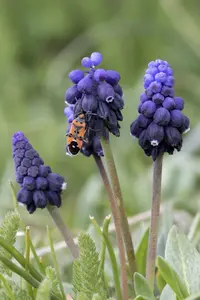
Recognize garden grape-hyacinth by its narrow, strap-like leaves rising in a basal clump and its leafless flower stem, usually 6 to 10 inches tall (15 to 25 cm).

Each stem carries a dense, oval cluster of small, urn-shaped blue flowers packed tightly like beads, often with a thin pale rim at the mouth.

Muscari armeniacum Identification

Identify Your Plant with Botan

Take or upload a photo to confirm your plant ID with Botan.

Clear images work best. Avoid photos taken too close or too far away

Check the flower spike and leaves first on Muscari armeniacum.

  • Forms a dense, upright cluster of many small urn-shaped flowers packed into a narrow spike.
  • Each flower has a tight opening with 6 tiny lobes, often edged pale or white.
  • Flowering stems are leafless and usually reach about 6 to 8 inches (15 to 20 cm) tall.
  • Leaves are all basal, strap-like, and arching, usually 4 to 8 inches (10 to 20 cm) long.

A clump habit with leafless flower stems helps confirm the ID.

Muscari armeniacum shows clear visual shifts from straplike leaves to dense flower spikes.

  • Young plant: Early growth appears as a small tuft of narrow, fleshy, straplike basal leaves, often arching or slightly channeled, with no central flowering stem visible.
  • Mature plant: Nonflowering mature clumps show several basal leaves emerging together from the bulb, creating a denser fountain-like tuft about 4-8 inches (10-20 cm) tall.
  • Flowering stage: A leafless central scape rises above the leaves, carrying a compact raceme of urn-shaped deep blue florets with a paler rim, unlike the purely leafy stages.
  • Fruiting stage: After flowers fade, the spike loses its bright color and shows small upright seed capsules in the same clustered arrangement, while the scape remains standing.

Several garden grape-hyacinth selections are easy to separate by flower color, doubleness, or overall stature.

  • 'Blue Spike': Flowers are double, with crowded blue florets that give each spike a fuller, ruffled look than the usual single flowers.
  • 'Album': Flower spikes are white instead of the typical cobalt to violet-blue, while keeping a similar compact shape.
  • 'Saffier': Buds stay greenish-blue and sterile, so spikes hold a two-tone green-and-blue look rather than opening into normal fertile flowers.
  • 'Fantasy Creation': Flower spikes are double and broader, with green-tipped blue florets that create a layered, tufted appearance.
  • 'Valerie Finnis': Flowers are a paler soft blue than the standard form, often with a more pastel overall look.

In late fall to winter, narrow strap-like leaves often emerge and persist as low green tufts. This early foliage can make dormant bulbs identifiable before flowering. In spring, Muscari armeniacum sends up short stems topped with dense blue flower clusters. After bloom, the leaves yellow and die back by early summer, leaving the plant temporarily absent above ground.

Several spring bulbs can be mistaken for garden grape-hyacinth at a glance.

feather hyacinth(Muscari comosum)

Often confused because both make dense blue-purple flower spikes from grassy basal leaves. Feather hyacinth has a looser spike with a tufted, feathery top of sterile flowers, not the tight urn-shaped cluster of Muscari armeniacum.

spring starflower(Ipheion uniflorum)

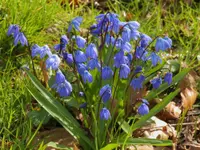
Can overlap in size and blue color in early spring. Its flowers are open, six-pointed stars, usually one per stem, while Muscari armeniacum carries many small bell-like flowers packed on one upright spike.

Muscari armeniacum is native to the eastern Mediterranean and western Asia, including Turkey, the Caucasus, and nearby parts of the Balkans. That range helps separate it from some similar garden bulbs that come from different parts of Europe or farther east. In the wild, it occurs in open woodland edges, meadows, scrub, and rocky slopes, often in montane areas. Seeing it associated with sunny, well-drained, stony ground can support an identification, especially outside heavily managed garden settings.

  • Toxic bulbs: The bulbs are the main concern. Ingestion can cause stomach upset in humans and pets, including dogs and cats.
  • Do not confuse with edible grape hyacinths: Some Muscari species have been eaten, but visual ID alone is not a safe basis for consumption. Keep Muscari armeniacum out of reach of children and pets to avoid accidental ingestion.

Not Sure About the ID?

Use Botan to identify or confirm the plant from a photo, which helps avoid mix-ups with similar plants.

FAQ

Flowers are usually visible in spring, often from early to mid-spring depending on climate. Each leafless stalk carries a dense cluster of small, urn-shaped blue flowers, a key feature for identifying garden grape-hyacinth.

More Plant Identification Guides

Know Your Plant Better

Identify it from a photo with Botan, then review plant details, care information, and common problems for that species.

Botan app identifying a plant from a photo
12 Most Wanted Rare Houseplants to Grow at Home

6 min read · 21 Sept 2026

12 Most Wanted Rare Houseplants to Grow at Home

Rare houseplants can turn an ordinary corner in your apartment into a living botanical collection. This guide covers 12 most admired picks, what makes them special, and how to grow them successfully at home.

Plant Recommendations
12 Most Wanted Rare Houseplants to Grow at Home
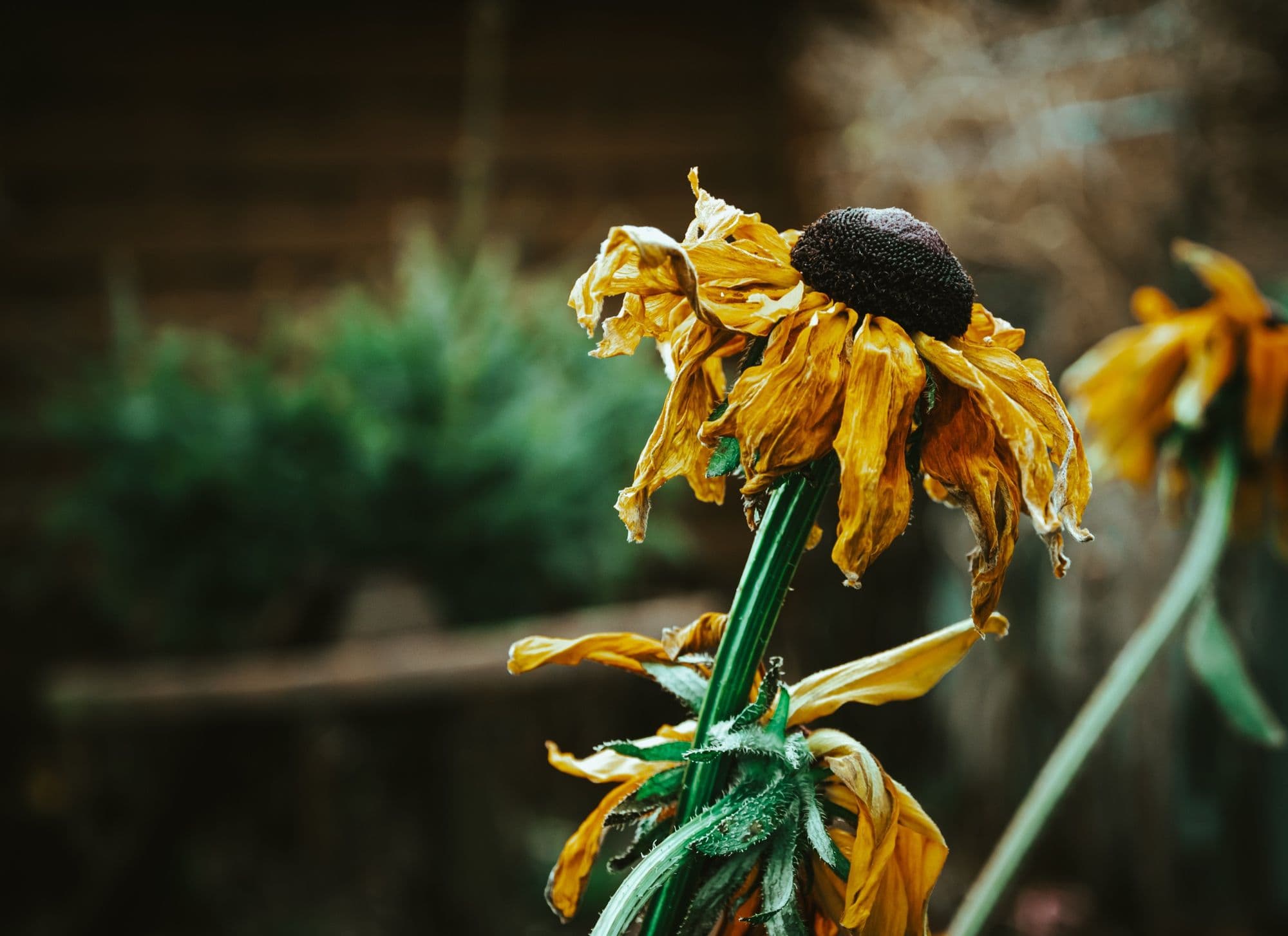
How to Tell if a Plant Is Dead

6 min read · 19 Aug 2026

How to Tell if a Plant Is Dead

A plant can lose its leaves, stop growing, or collapse and still remain alive. A closer look at the stems, roots, bulbs, and tubers can show whether the plant still has a chance to recover.

Beginner Guides
How to Tell if a Plant Is Dead
Top 5 Best Indoor Plants for Air Quality

5 min read · 11 Sept 2026

Top 5 Best Indoor Plants for Air Quality

Indoor plants can make a room feel fresher thanks to their air-purifying qualities. Here are 5 of the most suitable choices for your routine and living space.

Plant Recommendations
Top 5 Best Indoor Plants for Air Quality