Substrate wood choice
Use well-soaked, partially decomposed hardwood sticks or chips from species like oak, beech, or maple, as this mimics the fine woody debris the fungus naturally colonizes and improves the chance of successful fruiting.

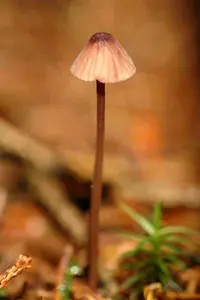
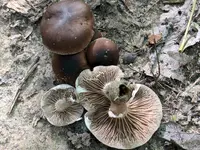
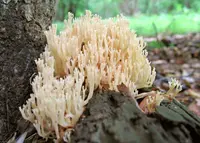
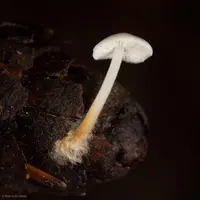
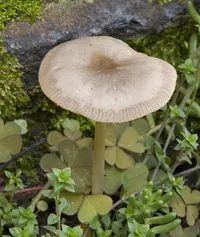
Pinkedge bonnet (Mycena capillaripes) is a small, delicate woodland mushroom, not a leafy houseplant. It forms slender stems topped with pale caps that often show a faint pinkish edge, especially when fresh. Fruiting bodies usually appear in clusters on leaf litter or decaying wood.
This fungus is native to temperate forests in parts of North America, Europe, and Asia, where it helps break down organic material. It is challenging to cultivate at home because it depends on specific woodland substrates and microclimates. For those who want to care for Pinkedge Bonnet in controlled conditions, stable moisture, cool temperatures, and shaded, humus-rich material are essential starting points.

Care Difficulty
Hard Care

Light Preference
Shade

Water Requirements
Keep Soil Moist

Temperature Preference
Cool Climate

Hardiness Zone
Unknown

Soil Texture
Loamy, Silty, Organic-rich

Soil pH
Acidic (5.5–6.5)

Soil Drainage
Moist but well-drained

Fertilization
Minimal (feed rarely)
Scan your plant to receive care tips personalized for your specific plant
Available on iOS and Android
This small woodland fungus prefers low, filtered light typical of shaded forest floors.
This species depends on consistently moist, but not waterlogged, woodland substrate.
This fungus prefers cool to mild conditions typical of shaded, temperate woodlands.
This delicate woodland mushroom needs consistently moist, high-humidity conditions to form and maintain fruiting bodies.
Mycena capillaripes fruits best on loose, decaying organic matter rather than standard potting soil.
This species can be grown in containers mainly for experimental or educational purposes, not as a conventional ornamental plant.
Mycena capillaripes is a small woodland fungus that gains nutrients from decaying organic matter and normally does not need added fertilizer in cultivation.
Mycena capillaripes does not require true pruning, but spent fruiting bodies can be tidied for hygiene and observation.
This species is usually grown on a stable substrate rather than in traditional pots, so focus on renewing the medium instead of frequent repotting.
Reproducing this fungus relies on spores and controlled substrate colonization rather than typical plant propagation methods.
Outdoor colonies of this woodland fungus are naturally cold tolerant and normally need no special winter care.

Plant Health Check
Not sure what's wrong with your plant? Check your plant's health inside the app.
This species produces very small, delicate fruiting bodies with caps often only a few millimeters wide, making them easy to overlook in leaf litter despite their distinctive coloration.
The slender stem typically shows a characteristic pinkish to reddish tinge, especially toward the upper part, which helps distinguish it from many similar pale mycenoid fungi in mixed woodland habitats.
It is commonly found fruiting on well-decayed leaf litter and small plant debris in temperate forests, contributing to the breakdown of organic matter and nutrient cycling in the upper soil layer.
This small mushroom is not considered edible. It is very insubstantial, and there is limited information on its safety. It should be treated as inedible and left for observation rather than consumption.
Keep your plants happy and healthy with plant identification, disease detection, and easy care guidance.