Blackedge Bonnet Care (Mycena pelianthina)

Blackedge Bonnet

About Blackedge Bonnet

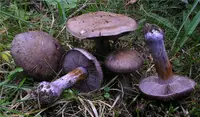
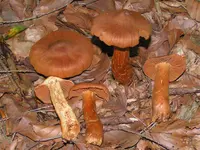
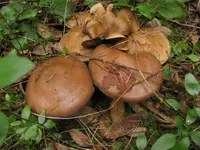
Blackedge bonnet, Mycena pelianthina, is a small saprotrophic fungus that decomposes leaf litter and woody debris in forests. It is not a houseplant in the usual sense but sometimes interests specialized growers. Caps are lilac to grayish with a dark, sharply defined margin, and the slender stems are often similarly tinted, giving the species a distinctive, elegant look. It typically forms scattered clusters on the forest floor rather than dense groups. In nature it occurs mainly in temperate woodlands of Europe and parts of North America, favoring moist, shaded sites rich in organic matter. Attempts to care for Blackedge Bonnet at home are challenging because it relies on complex forest-floor conditions that are difficult to reproduce in containers.

Main Plant Requirements

Care Difficulty

Hard Care

Light Preference

Shade

Water Requirements

Keep Soil Moist

Temperature Preference

Cool Climate

Hardiness Zone

Unknown

Soil Texture

Loamy, Silty, Organic-rich

Soil pH

Strongly acidic (4.5–5.5), Acidic (5.5–6.5)

Soil Drainage

Moist but well-drained

Fertilization

Minimal (feed rarely)

Get Personalized Care Plan

Scan your plant to receive care tips personalized for your specific plant

Available on iOS and Android

How to Care for the Blackedge Bonnet

This woodland fungus prefers low light that mimics a shaded forest floor.

  • Provide full shade to very dappled light, avoiding more than 1–2 hours of direct sun, as caps can dry and discolor quickly.
  • Site Blackedge Bonnet under trees, shrubs, or on the shaded side of logs so it receives filtered light rather than strong midday or afternoon sun.
  • In summer, ensure consistent shade; in late autumn, brief weak sun is tolerated, but exposure to bright, dry conditions shortens fruiting duration.

This saprophytic fungus depends on consistently moist, not saturated, substrate rather than direct watering.

  • Maintain leaf litter, wood, or soil evenly moist to a depth of 2–5 cm; surface should feel damp but not waterlogged or slimy.
  • Increase moisture during dry spells by gently misting the surrounding substrate, not the caps, and improve drainage if standing water persists more than 24 hours.
  • Signs of overwet conditions include foul odors and slimy decay, while shrinking, brittle caps and cracked substrate indicate that Mycena pelianthina is too dry.

This species favors cool, moist conditions and is sensitive to both hard frost and intense heat.

  • Ideal fruiting occurs around 50–60°F (10–16°C), with stable, cool temperatures supporting longer-lasting mushroom clusters.
  • Growth usually slows below 40°F (4°C) and may stop with repeated hard frosts; direct freezing of young fruiting bodies often causes collapse.
  • Sustained heat above 75°F (24°C), especially with low humidity, leads to rapid drying and deformation, so shelter from hot, exposed sites during warmer months.

This fungus needs consistently cool, very humid air close to forest-floor conditions.

  • Aim for 80–95% humidity, using a closed terrarium or humidity tent rather than open-room air.
  • Dry air causes caps to shrivel, gills to pale or crack, and fruiting to stop on Blackedge Bonnet clusters.
  • Increase humidity with frequent fine misting of the substrate surface and by limiting ventilation openings without fully sealing air exchange.

This species fruits best in a loose, moist, organic-rich substrate that mimics decaying woodland litter.

  • Use finely shredded hardwood chips, decayed leaf mold, and a small amount of compost to create a soft, crumbly, high-organic base.
  • Ensure very high moisture retention but not waterlogging by mixing in 10–20% coarse material such as fine bark or perlite for aeration.
  • Keep pH slightly acidic, roughly 5.0–6.5, which suits the natural woodland environment of Mycena pelianthina.
  • Avoid dense garden soil, heavy clay, or sterilized peat-only mixes that compact easily and restrict air around developing mycelium.

This species is difficult but possible to maintain in containers when mimicking a cool, stable forest-floor microhabitat.

  • Select a wide, shallow tub that allows a broad surface area for mushroom formation while keeping substrate depth moderate and evenly moist.
  • Use a container with small, side-level drain holes or a drainage layer so excess water can escape without drying the upper substrate too fast.
  • Choose opaque or dark-sided containers to reduce light penetration and surface heating, which helps keep conditions cool and prevents substrate from drying rapidly.

This woodland fungus gains most nutrition from decaying organic matter and usually does not need added fertilizer in gardens or containers.

  • If grown in a controlled substrate, mix in a small amount of well-rotted compost rather than synthetic balanced NPK fertilizer.
  • Avoid frequent feeding; excess nutrients encourage competing molds and bacteria, which can suppress Blackedge Bonnet.
  • During cooler, less active periods, do not add fertilizer or compost amendments to the substrate.

Pruning is not a standard practice for Mycena pelianthina, since each mushroom is short-lived and naturally replaced by new fruiting bodies.

Transplanting focuses on moving the colonized substrate rather than individual mushrooms, which are delicate and short-lived.

  • Transplant only when the mycelium has fully run through a log, woodchips, or leaf litter, showing dense white threads at the edges.
  • Best timing is during mild, moist weather in spring or fall, when temperature and humidity shifts are less stressful.
  • Lift and move intact blocks of colonized material, disturbing the mycelium as little as possible and keeping it evenly moist.
  • Place the transplanted substrate into a similar shaded, organic-rich site, then water gently to settle air gaps and reduce shock.

Propagation of Mycena pelianthina relies on spreading mycelium rather than using cuttings or divisions like a typical garden plant.

  • Use colonized woodchips, leaf litter, or small substrate blocks as spawn to inoculate a new shaded, organic-rich area.
  • Best results come in cool, moist seasons such as spring or fall, which support mycelial expansion.
  • Bury the inoculated material just below the surface, maintaining consistent moisture but avoiding waterlogging.
  • Limit disturbance of the substrate so the fine mycelial network can extend and eventually form new fruiting bodies.

This woodland fungus is naturally adapted to cool conditions and generally needs no special winter protection in temperate climates.

  • In very cold regions, a thin mulch of leaves over colonized substrate can moderate freeze–thaw cycles.
  • Ensure the substrate does not dry out completely during mild winter spells, topping up moisture when the ground is not frozen.
  • Container-grown cultures in shallow trays benefit from being moved to a cold, frost-free shed or unheated garage.

Care Tips

Sterile Substrate Handling

Use freshly sterilized hardwood sawdust or woodchip mix and handle it with clean gloves or tools to reduce contamination from competing fungi and bacteria when growing Blackedge Bonnet.

Shaded Microclimate Setup

Create a cool, shaded microclimate by placing the culture box inside a ventilated outer container with moist sphagnum or damp towels around (not touching) the substrate to buffer against rapid humidity and temperature swings.

Minimal Disturbance Policy

After colonization, avoid moving or opening the container frequently, since vibrations, drafts, and drying of the surface layer can interrupt primordia formation and cause malformed fruiting bodies.

Targeted Air Exchange

Provide gentle, brief air exchange 1–2 times a day by slightly cracking the lid or using small filtered holes, which helps prevent CO₂ buildup without allowing the substrate surface to dry out.

Observation-Based Harvest

Harvest clusters when caps are fully expanded but before edges begin to curl upward, cutting at the base with a sterile blade so the remaining mycelium is left intact for possible subsequent flushes.

Common Pests and Diseases

Fungal competitor overgrowth

This disease occurs when faster-growing forest fungi overtake the substrate and suppress Mycena pelianthina mycelium. Symptoms include weak or patchy fruiting, off-colour mycelium, and visible growth of other mushroom species on the same wood or leaf litter.

Solution

Remove and discard heavily overrun substrate and, if cultivating, start again with fresh, clean hardwood or leaf litter. For more stable results when growing Blackedge Bonnet, keep substrate pieces small, avoid mixing too many wild-collected materials, and maintain steady moisture rather than frequent soaking, which favors competitors.

Mite infestation

These insects are tiny soil or substrate mites that feed on mycelium and developing fruiting bodies. Symptoms include distorted, aborted caps, pitted stems, and fine speckling on the mushroom surface, often accompanied by very small moving dots on close inspection.

Solution

Isolate affected culture trays or containers and discard heavily infested material. In small, enclosed setups, reduce excess organic debris, keep the area cooler and drier between flushes, and use fine mesh or tight-fitting lids with air filters to limit mite entry.

Bacterial blotch

This disease is caused by opportunistic bacteria that colonize wet caps and stems. Symptoms include greasy, water-soaked spots, yellow to brown discoloration on caps, and soft tissues that break down quickly.

Solution

Improve air movement around fruiting bodies, avoid overhead misting, and water only the substrate, not the caps. Remove and dispose of affected mushrooms promptly, and clean growing containers and tools with hot water and a mild disinfectant before the next cycle.

Green mold contamination

This disease is caused mainly by Trichoderma species that produce bright green patches on substrate and can overrun Mycena pelianthina mycelium. Symptoms include rapid green coloration on the surface, stalled mushroom development, and a strong earthy or musty odor.

Solution

Physically remove and discard any substrate showing green patches, as this mold spreads quickly. For future batches, pasteurize or briefly heat-treat substrate materials, keep handling tools clean, and avoid splashing contaminated debris into clean areas.

Interesting Facts

Purple-edged gills

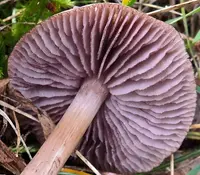
This species is easily recognized by its pale lilac to gray gills that develop a sharp, dark purple to almost black edge, a combination rarely seen in other small bonnet mushrooms.

Strong radish odor

The fruiting bodies often emit a distinct radish-like or farinaceous (mealy) smell, which mycologists use as a key field character for identification.

Toxic pigment chemistry

It contains toxic compounds, likely associated with its dark violet pigments, and is considered inedible or poisonous despite its delicate appearance.

Botan icon

Did you know?

Under the microscope, this species shows amyloid spores, meaning the spore walls turn blue-black in Melzer’s reagent, a chemical test that helps separate it from similar bonnet fungi in detailed taxonomic studies.

FAQs about Blackedge Bonnet

This mushroom is considered inedible and potentially mildly toxic. It contains compounds that may cause gastrointestinal upset if eaten. It should not be collected for food and is best appreciated only for observation and study.

Grow Healthy Plants with Botan Care

Keep your plants happy and healthy with plant identification, disease detection, and easy care guidance.

Botan plant care app — identify plants on mobile

Explore More Plants